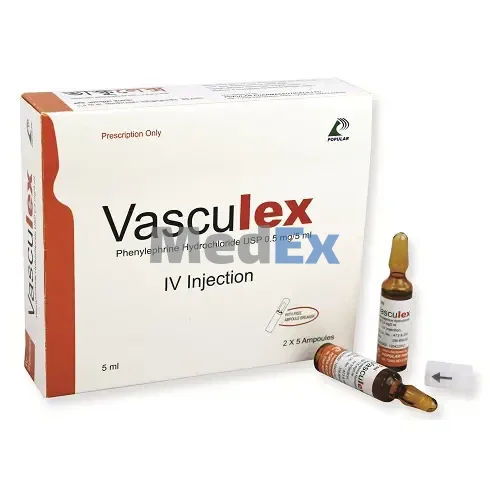
Vasculex
Cheaper & Alternative Brands
Same generic (Phenylephrine Hydrochloride), same form (IV Injection)No other brands currently registered with this exact active generic and dosage form.
Clinical Prescribing Information
Medical monograph and safety information for healthcare professionals & patients.Indications & Clinical Uses
Vasculex injection is indicated for the treatment of clinically important hypotension resulting primarily from vasodilation in the setting of anesthesia.
Dosage & Administration
Dosing for treatment of hypotension during anesthesia
: The recommended initial dose is 40 to 100 mcg administered by intravenous bolus. Additional boluses may be administered every 1-2 minutes as needed; not to exceed a total dosage of 200 mcg in a single administration. Do not use if the solution is colored or cloudy or if it contains particulate matter. Discard any unused portion.
Side Effects & Adverse Reactions
Adverse reactions to Vasculex are primarily attributable to excessive pharmacologic activity. Adverse reactions reported in published clinical studies, observational trials, and case reports of Vasculex are reflex bradycardia, ischemia, hypertension, vomiting, nausea, neck pain & tremors by body system.
Warnings & Precautions
Exacerbation of Angina, Heart Failure, or Pulmonary Arterial Hypertension
: Because of its increasing blood pressure effects, Vasculex can precipitate angina in patients with severe arteriosclerosis or history of angina, exacerbate underlying heart failure, and increase pulmonary arterial pressure.
Bradycardia
: Vasculex can cause severe bradycardia and decreased cardiac output.
Renal Toxicity
: Vasculex can increase the need for renal replacement therapy in patients with septic shock. Monitor renal function.
Pharmacology & Mechanism of Action
Phenylephrine is an α-1 adrenergic receptor agonist. Following Phenylephrine intravenous administration, increases in systolic and diastolic blood pressures and arterial blood pressure are observed. The onset of blood pressure increase is rapid, typically within minutes.
Following phenylephrine hydrochloride intravenous administration, increases in systolic and diastolic blood pressures, mean arterial blood pressure, and total peripheral vascular resistance are observed. The onset of blood pressure increase following an intravenous bolus phenylephrine hydrochloride administration is rapid, typically within minutes. As blood pressure increases following intravenous administration, vagal activity also increases, resulting in reflex bradycardia. Phenylephrine has activity on most vascular beds, including renal, pulmonary, and splanchnic arteries.