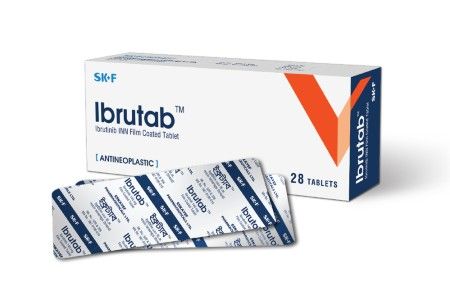
Ibrutab
Cheaper & Alternative Brands
Same generic (Ibrutinib), same form (Tablet)No other brands currently registered with this exact active generic and dosage form.
Clinical Prescribing Information
Medical monograph and safety information for healthcare professionals & patients.Indications & Clinical Uses
Mantle Cell Lymphoma
: Butinib is indicated for the treatment of patients with Mantle Cell Lymphoma (MCL) who have received at least one prior therapy.
Chronic Lymphocytic Leukemia/Small Lymphocytic Lymphoma
: Butinib is indicated for the treatment of patients
... Read more
Mantle Cell Lymphoma
: Butinib is indicated for the treatment of patients with Mantle Cell Lymphoma (MCL) who have received at least one prior therapy.
Chronic Lymphocytic Leukemia/Small Lymphocytic Lymphoma
: Butinib is indicated for the treatment of patients with chronic lymphocytic leukemia. Chronic Lymphocytic Leukemia/Small Lymphocytic Lymphoma with 17p deletion Butinib is indicated for the treatment of patients with chronic lymphocytic leukemia.
Waldenstrom Macroglobulinemia (WM)
: Butinib is indicated for the treatment of patients with Waldenstrom Macroglobulinemia (WM).
Marginal Zone Lymphoma
: Butinib is indicated for the reatment of patients with marginal zone lymphoma (MZL) who require systemic therapy and have received at least one prior anti-CD 20-based therapy.
Contraindications
Hypersensitivity to the active substance or to any of the excipients.
Side Effects & Adverse Reactions
The following adverse reactions are discussed in more detail in other sections of the labeling: Hemorrhage, Infections, Cytopenias, Atrial Fibrillation, Hypertension, Second Primary Malignancies and Tumor Lysis Syndrome. Additional Important Adverse Reactions: Diarrhea, Visual Disturbance.
Pharmacology & Mechanism of Action
Ibrutinib is a small-molecule inhibitor of BTK. Ibrutinib forms a covalent bond with a cysteine residue in the BTK active site, leading to inhibition of BTK enzymatic activity. BTK is a signaling molecule of the B-cell antigen receptor (BCR) and cytokine receptor pathways. BTK’s role in signaling through the B-cell surface receptors results in activation of pathways necessary for B-cell trafficking, chemotaxis, and adhesion. Nonclinical studies show that ibrutinib inhibits malignant B-cell proliferation and survival in vivo as well as cell migration and substrate adhesion in vitro.