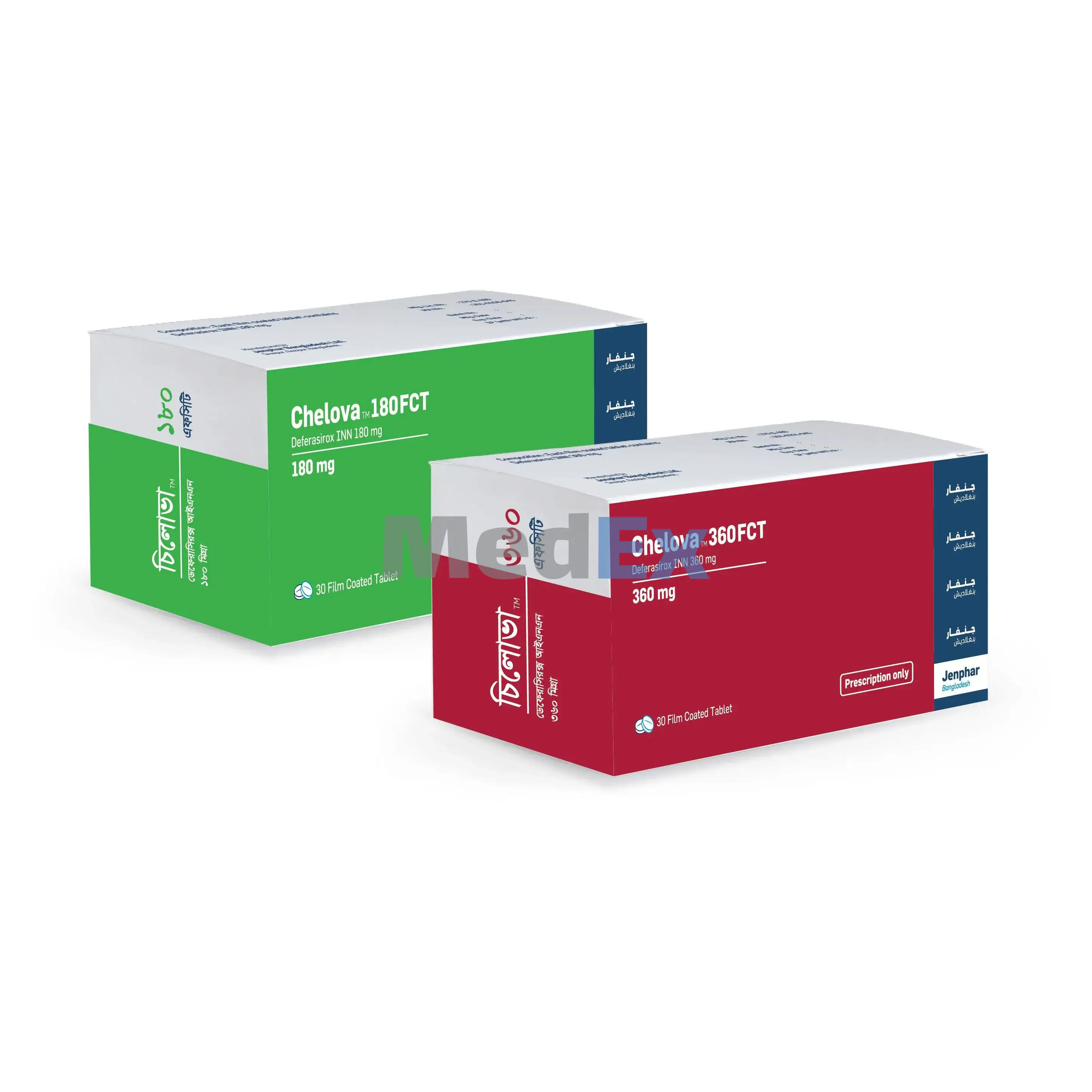
Chelova FCT
Cheaper & Alternative Brands
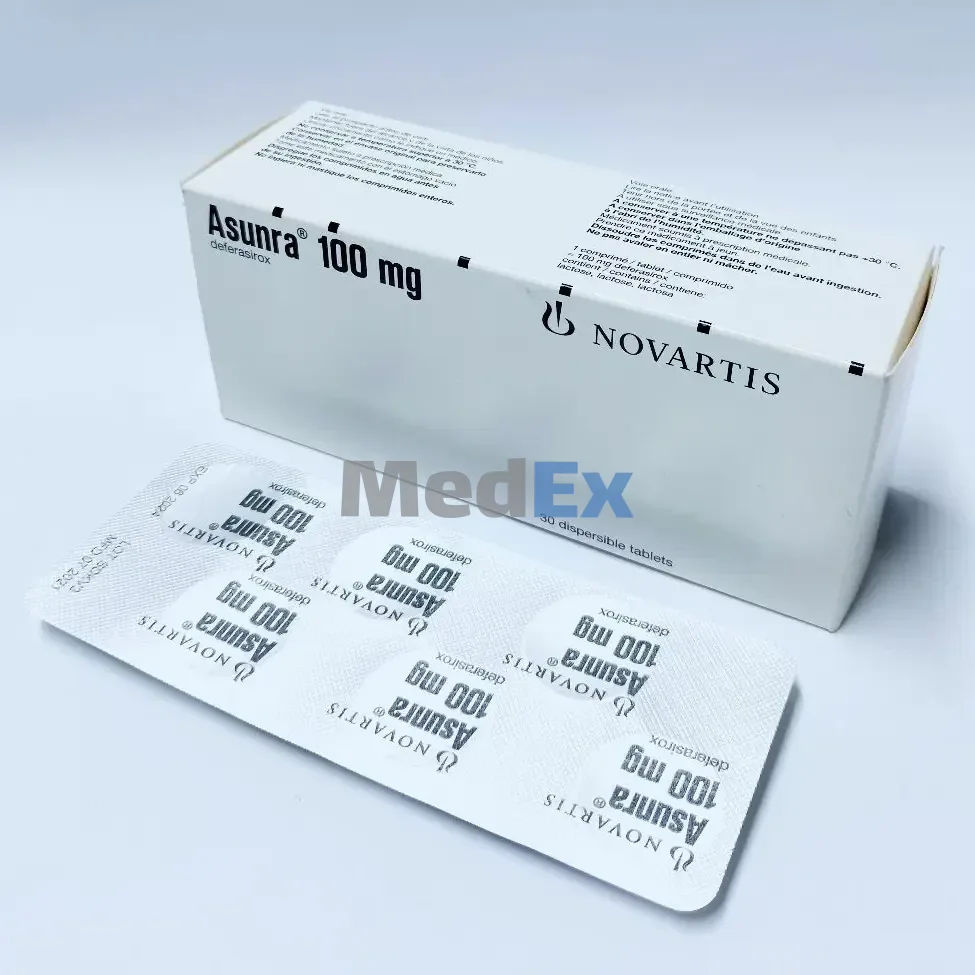
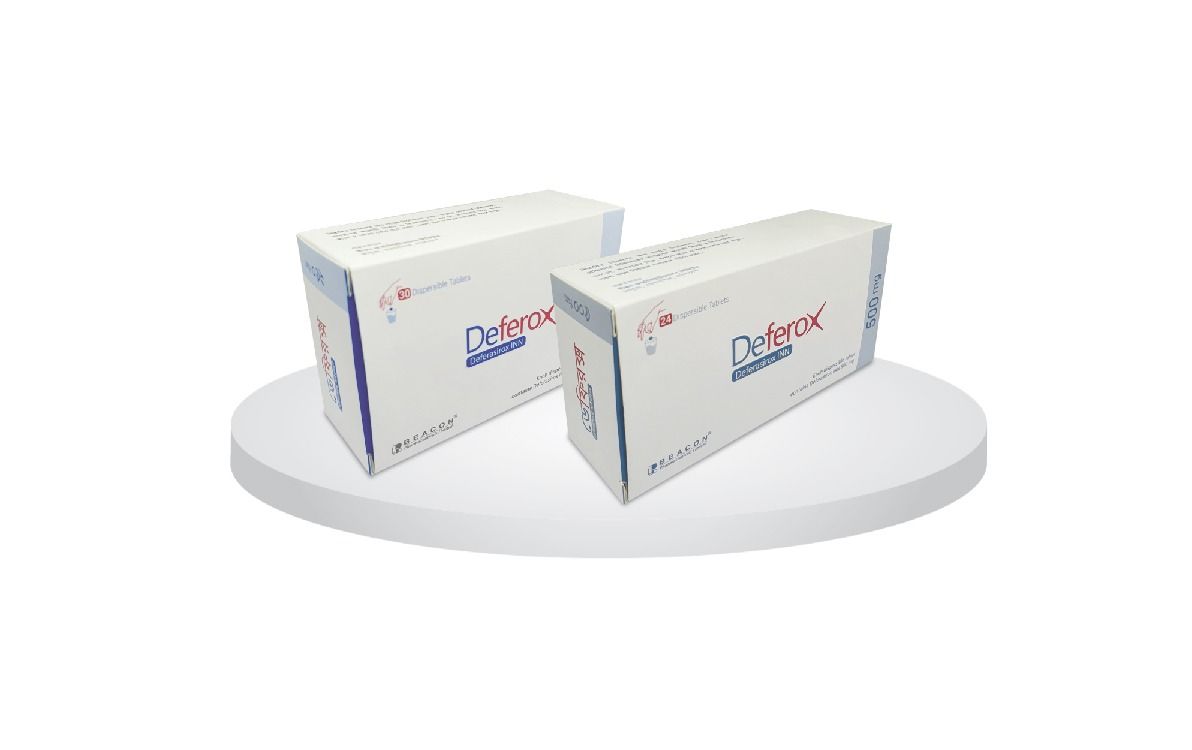
Same generic (Deferasirox), same form (Tablet)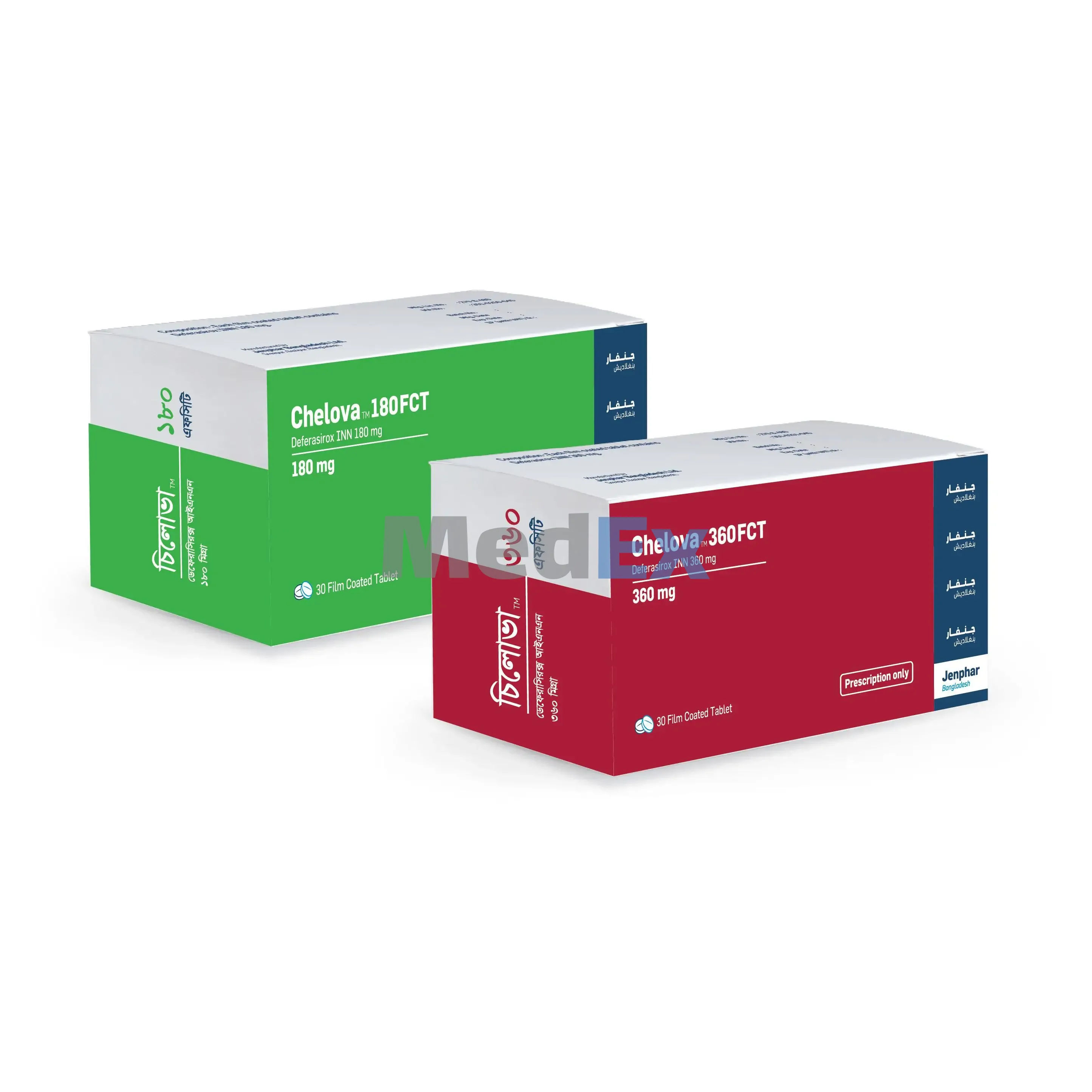

Clinical Prescribing Information
Medical monograph and safety information for healthcare professionals & patients.Indications & Clinical Uses
Chelova is indicated for the treatment of chronic iron overload due to repeated blood transfusions in adult and pediatric patients aged 2 years and over with thalassaemia, sickle cell disease and myelodysplastic syndrome. Also indicated for treating chronic iron overload in patients with non-transfusion-dependent thalassemia syndromes aged 10 years and older.
Contraindications
Deferasirox is contraindicated in hypersensitivity to the active substance or to any of the excipients. Cannot be given when creatinine clearance is less than 40 ml/min or serum creatinine >2 times the upper limit of normal.
Side Effects & Adverse Reactions
Cytopenias may occur diarrhea, constipation, vomiting, nausea, abdominal pain, abdominal distension, dyspepsia upper gastrointestinal ulceration and hemorrhage have been reported. Headache, dizziness and main
CNS involvement. Elevation of hepatic transaminases may occur. Cases of Stevens-Johnson syndrome (SJS) and skin rash have been rarely reported. Auditory and ocular disturbances may occur.
Warnings & Precautions
Fatal and non-fatal gastrointestinal bleeding, ulceration, and irritation may occur during Chelova treatment , Use caution in patients who are taking Chelova in combination with drugs that have known ulcerogenic or hemorrhagic potential, such as NSAIDs, corticosteroids, oral bisphosphonates, and anticoagulants.
Cytopenias, including agranulocytosis, neutropenia and thrombocytopenia have been reported. Monitor blood counts during Chelova therapy.
Serious hypersensitivity reactions have been reported, If reactions are severe, discontinue Chelova and institute appropriate medical intervention.
Pharmacology & Mechanism of Action
Deferasirox is an orally active chelator that is highly selective for iron, It is a tridentate ligand that binds iron with high affinity in a 2:1 ratio. Deferasirox promotes excretion of iron, primarily in the faeces. Deferasirox has low affinity for zinc and copper, and does not cause constant low serum levels of these metals. In an iron balance metabolic study in iron overloaded adult thalassaemia patients, Deferasirox at daily doses of 10, 20 and 40 mg/kg induced the mean net excretion of 0.119, 0.329, and 0,445 mg Fe/kg body weight/day, respectively.