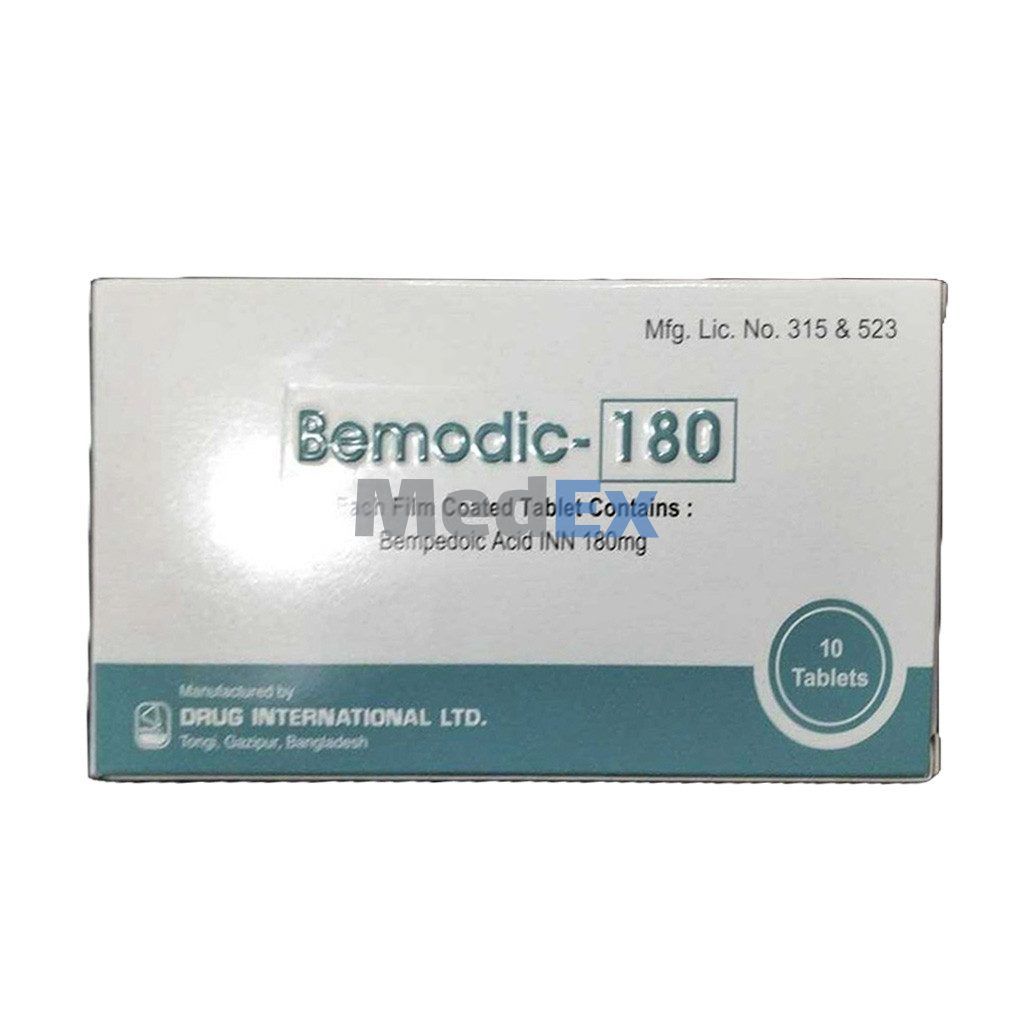
Bemodic
Cheaper & Alternative Brands
Same generic (Bempedoic acid), same form (Tablet)

Clinical Prescribing Information
Medical monograph and safety information for healthcare professionals & patients.Indications & Clinical Uses
Belopid is indicated as an adjunct to diet and maximally tolerated statin therapy for the treatment of adults with heterozygous familial hypercholesterolemia or established atherosclerotic cardiovascular disease who require additional lowering of LDL-C.
Dosage & Administration
Administer 180 mg orally once daily with or without food.
Side Effects & Adverse Reactions
Upper respiratory tract infection
Muscle spasms
Hyperuricemia
Back pain
Abdominal pain or discomfort
Bronchitis
Pain in extremity
Anemia
Elevated liver enzymes
Warnings & Precautions
Elevations in serum uric acid have occurred. Assess uric acid levels periodically as clinically indicated. Monitor for signs and symptoms of hyperuricemia, and initiate treatment with urate-lowering drugs as appropriate. Tendon rupture has occurred. Discontinue Belopid at the first sign of tendon rupture. Avoid Belopid in patients who have a history of tendon disorders or tendon rupture.
Pharmacology & Mechanism of Action
Bempedoic Acid is an adenosine triphosphate-citrate lyase (ACL) inhibitor that lowers low-density lipoprotein cholesterol (LDL-C) by inhibition of cholesterol synthesis in the liver. ACL is an enzyme upstream of 3-hydroxy-3-methyl-glutaryl-coenzyme A (HMG-CoA) reductase in the cholesterol biosynthesis pathway. Bempedoic acid and its active metabolite, ESP15228, require coenzyme A (CoA) activation by very long-chain acyl-CoA synthetase 1 (ACSVL1) to ETC-1002-CoA and ESP15228-CoA, respectively. ACSVL1 is expressed primarily in the liver. Inhibition of ACL by ETC-1002-CoA results in decreased cholesterol synthesis in the liver and lowers LDL-C in blood via upregulation of low-density lipoprotein receptors.