 Oshud
OshudNitrofurantoin
 Systemic Urinary Anti- infective
Brands & Prices (28)
📋 Indications & Uses Dosage & Administration⚠️ Contraindications⚡ Side Effects & Adverse Reactions🛡️ Warnings & Precautions🔬 Pharmacology & Mechanism
Systemic Urinary Anti- infective
Brands & Prices (28)
📋 Indications & Uses Dosage & Administration⚠️ Contraindications⚡ Side Effects & Adverse Reactions🛡️ Warnings & Precautions🔬 Pharmacology & Mechanism
Brand Formulations & Prices
28 brands sorted by unit price
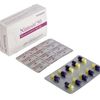
Nintoin
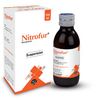
Nitrofur SR

Umactin

Uritro
Euronit

Rantoin

Urobak
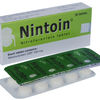
Nintoin
Umactin
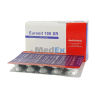
Euronit SR

Furabac

NFT

Nitrobac
Uritro
Urobak SR
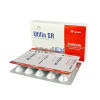
Utifin SR
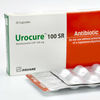
Urocure SR
Nintoin SR
Nitrofur SR
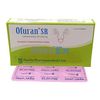
Ofuran SR
Urobak
NFT
Nintoin
Nitrobac
Nitrofur
Umactin

Uritro
Urocure
📖 Official Clinical Monograph
DGDA Approved Prescribing GuidelinesEuronit is specifically indicated for the treatment & prophylaxis of urinary tract infections caused by susceptible strains of Escherichia coli, Enterococci, Staphylococcus aureus, Staphylococcus saprophyticus and certain susceptible strains of Klebsiella and Enterobacter species.
Dosage & AdministrationNitrofurantoin tablet (In adults):
Uncomplicated urinary tract infections
: 50-100 mg four times a day- the lower dosage level is recommended. Therapy should be continued for one week or for at least 3 days after sterility of the urine is obtained.
For long-term suppressive therapy
: In adults, a reduction of dosage to 50-100 mg at bedtime may be adequate.
Nitrofurantoin capsule (In adults):
Acute Uncomplicated Urinary Tract Infections (UTIs)
: 50 mg four times daily for 7 days.
Long term suppression
: 50-100 mg once a day.
Prophylaxis
: 50 mg four times daily for the duration of procedure and for three days thereafter.
Nitrofurantoin SR capsule:
Adults and Children over 12 years
: One 100 mg capsule every 12 hours for seven days.
Genito-urinary surgical prophylaxis
: One capsule twice daily on day of procedure and for next 3 days.
Nitrofurantoin suspension: Children: 5-7 mg/kg/day in four divided doses (contraindicated under one month of age). The average dose of Nintoin suspension for pediatric patients are as follows-
7 to 11 kg: ½ (2.5 ml) teaspoonfuls 4 times daily.
12 to 21 kg: 1 (5 ml) teaspoonfuls 4 times daily.
22 to 30 kg: 1½ (7.5 ml) teaspoonfuls 4 times daily.
31 to 41 kg: 2 (10 ml) teaspoonfuls 4 times daily.
Therapy should be continued for one week or for at least 3 days after sterility of the urine is obtained. For long-term suppressive therapy in children, doses as low as 1 mg/kg per 24 hours, given in a single dose or in two divided doses, may be adequate.
Anuria, oliguria or significant impairment of renal function are contraindications. This drug is contraindicated in pregnant patients at 38-42 weeks, during labor and delivery. Nitrofurantoin is also contraindicated in those patients with known hypersensitivity to Nitrofurantoin.
The most frequent clinical adverse events are nausea, headache, and flatulence. Other less occurred adverse events are diarrhea, dyspepsia, abdominal pain, constipation, emesis, dizziness and drowsiness.
If acute, sub-acute or chronic pulmonary reactions occur, Euronit should be discontinued. Antacid preparations containing magnesium trisilicate should not be taken while taking Euronit.
Nitrofurantoin is an antibacterial agent specific for urinary tract infections. Nitrofurantoin is highly soluble in urine, to which it may impart a brown color. Nitrofurantoin inactivates or alters bacterial ribosomal proteins and other macromolecules. Nitrofurantoin has been shown to be active against the following bacteria: Gram-Positive Aerobes Staphylococcus saprophyticus, Coagulase-negative staphylococci (including Staphylococcus epidermidis), Enterococcus faecalis, Staphylococcus aureus, Streptococcus agalactiae, Group D streptococci, Viridans group streptococci. Gram-Negative Aerobes- Escherichia coli, Citrobacter amalonaticus, Citrobacter diversus, Citrobacter freundii, Klebsiella oxytoca, Klebsiella ozaenae.