Acidic component [HCO3 Hemodialysis Solution]
💊 Brand Formulations & Prices
6 brands sorted by unit price
Renolyte-A
G-Haemodialysis A
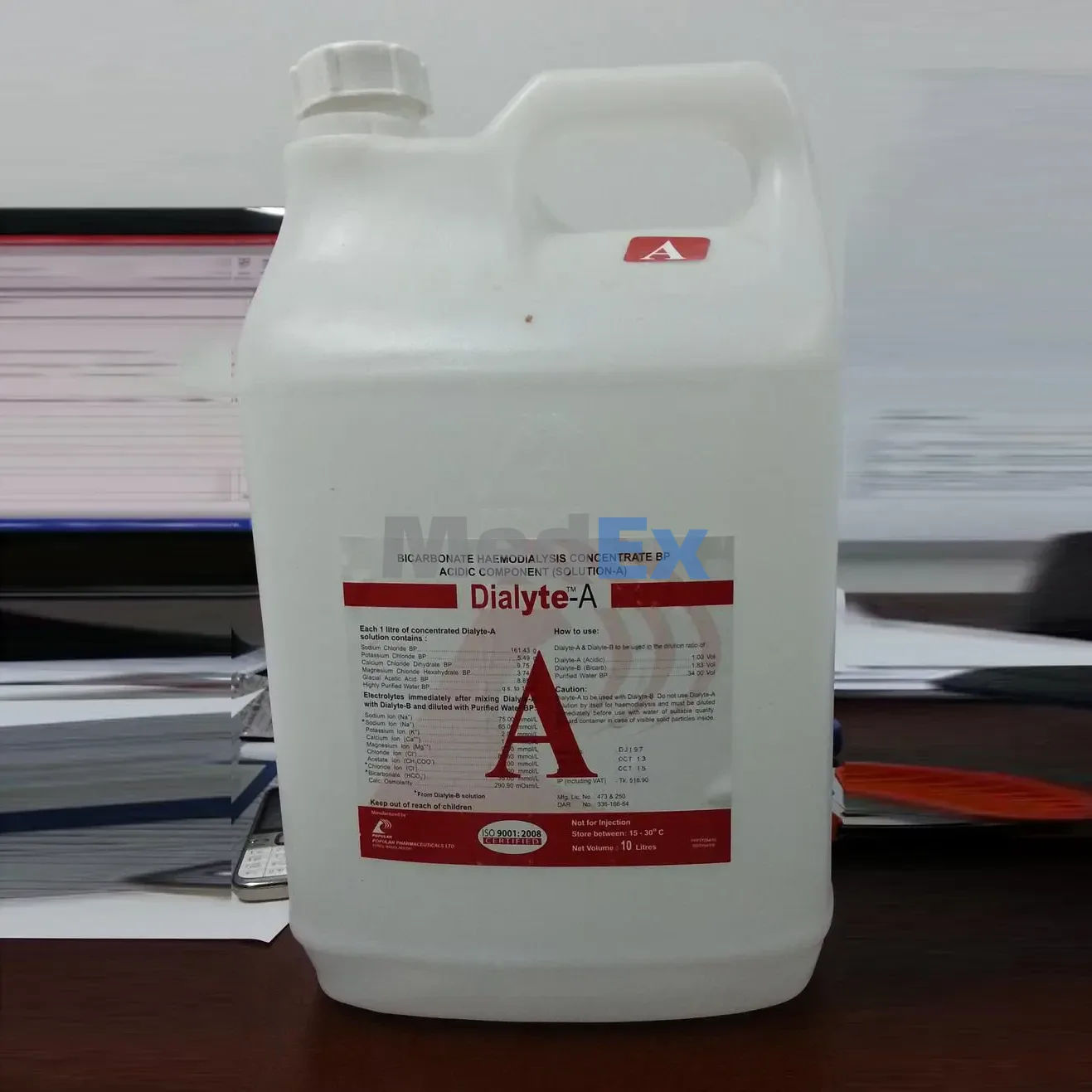
Dialyte-A
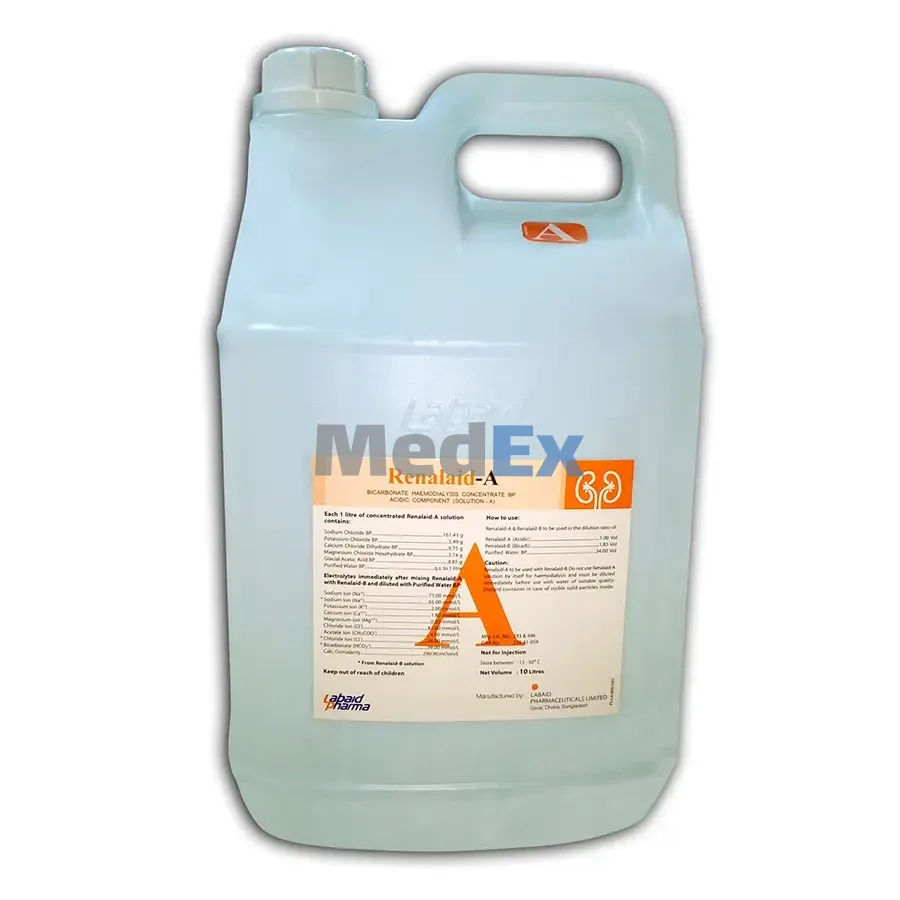
Renalaid-A
Hemosol-A
Renal Care A
📖 Official Clinical Monograph
DGDA Approved Prescribing GuidelinesThis solution is used in Haemodialysis.
Recommended dose
: 5 liters concentrate per dialysis or as required.
Known hypersensitivity to any of the ingredients of this preparation.
Fluid and electrolyte imbalance, hypovolemia, hypotension or muscle cramping may occur.
It is used for hemodialysis purposes only. Do not use solution A or B alone. Discard container in case visible solid particles inside.
Calcium chloride
is used to prevent or treat negative calcium balance. It also regulates action potential excitation threshold to facilitate nerve and muscle performance.
Potassium chloride
is a major cation of the intracellular fluid. It plays an active role in the conduction of nerve impulses in the heart, brain and skeletal muscle; contraction of cardiac skeletal and smooth muscles; maintenance of normal renal function, acid-base balance, carbohydrate metabolism and gastric secretion.
Sodium chloride
is the major extracellular cation. It is important in electrolyte and fluid balance, osmotic pressure control and water distribution as it restores sodium ions. It is used as a source of electrolytes and water for hydration, treatment of metabolic acidosis, priming solution in haemodialysis and treatment of hyperosmolar diabetes. It is also used as diluents for infusion of compatible drug additives.
Magnessium Chloride
acts as cofactor in numerous enzymatic reactions involving protein synthesis and carbohydrate metabolism; depresses CNS, blocks peripheral neuromuscular transmission, produces anticonvulsant effects.