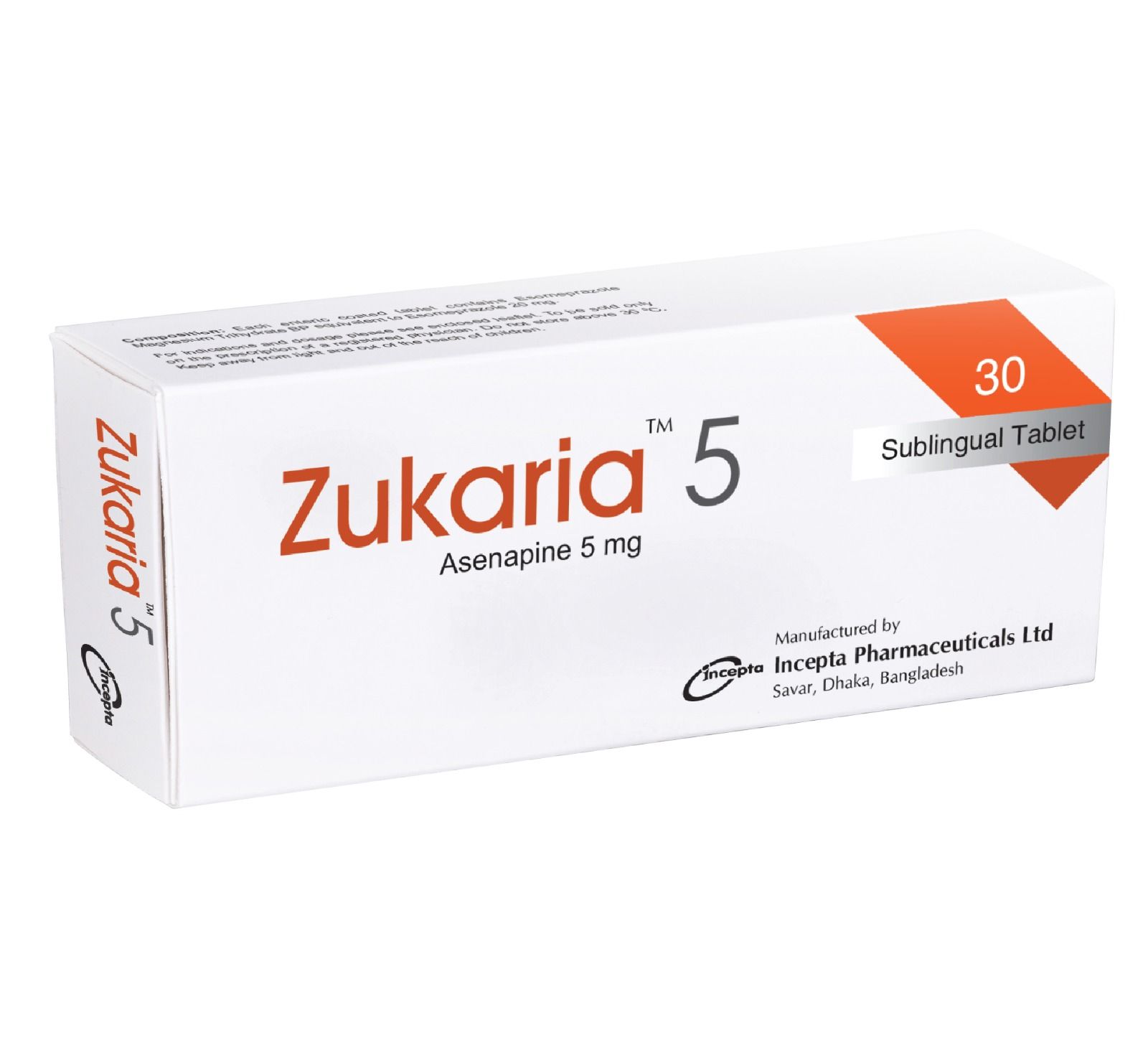
Zukaria
Cheaper & Alternative Brands
Same generic (Asenapine Maleate), same form (Sublingual Tablet)No other brands currently registered with this exact active generic and dosage form.
Clinical Prescribing Information
Medical monograph and safety information for healthcare professionals & patients.Indications & Clinical Uses
Zukaria is indicated for:
Schizophrenia in adults
Bipolar I disorder
Acute monotherapy for manic or mixed episodes in adults and pediatric patients 10 to 17 years of age
Adjunctive treatment to lithium or valproate in adults.
Maintenance monotherapy treatment in adults
Dosage & Administration
Schizophrenia: adults:
Initial dose: 5 mg sublingually, twice daily
Recommended dose: 5 mg sublingually, twice daily
Maximum dose: 10 mg sublingually, twice daily
Schizophrenia maintenance treatment in adults.
Initial dose: 5 mg sublingually, twice daily
Recommended dose: 5-10 mg sublingually, twice daily
Maximum dose: 10 mg sublingually, twice daily
Bipolar mania in adults: acute and maintenance monotherapy.
Initial dose: 5-10 mg sublingually, twice daily
Recommended dose: 5-10 mg sublingually, twice daily
Maximum dose: 10 mg sublingually, twice daily
Bipolar mania in pediatric patients (10-17 years): monotherapy.
Initial dose: 2.5 mg sublingually, twice daily
Recommended dose: 2.5-10 mg sublingually, twice daily
Maximum dose: 10 mg sublingually, twice daily
Bipolar mania in adults: as an adjunct to lithium or valproate
Initial dose: 5 mg sublingually, twice daily
Recommended dose: 5-10 mg sublingually, twice daily
Maximum dose: 10 mg sublingually, twice daily
Sublingual tablets should not be swallowed. It should be placed under the tongue and left to dissolve completely. It will dissolve in saliva within seconds. Eating and drinking should be avoided for 10 minutes after administration.
Contraindications
Asenapine is contraindicated in patients with:
Severe hepatic impairment (Child-Pugh C).
A history of hypersensitivity reactions to asenapine. Reactions have included anaphylaxis, angioedema, hypotension, tachycardia, swollen tongue, dyspnea, wheezing and rash.
Side Effects & Adverse Reactions
The most common adverse reactions to asenapine are akathisia, somnolence, oral hypoesthesia, dizziness, extrapyramidal symptoms, nausea, increased appetite, fatigue, and increased weight.
Warnings & Precautions
Caution should be exercised when asenapine is prescribed in elderly patients with dementia-related psychosis, QT prolongation, neuroleptic malignant syndrome, tardive dyskinesia, metabolic changes, orthostatic hypotension, leukopenia, neutropenia, agranulocytosis, seizures, and the potential for cognitive and motor impairment.
Pharmacology & Mechanism of Action
The mechanism of action of asenapine, in schizophrenia and bipolar I disorder, is unknown. It has been suggested that the efficacy of asenapine in schizophrenia could be mediated through a combination of antagonist activity at D2 and 5-HT 2A receptors.