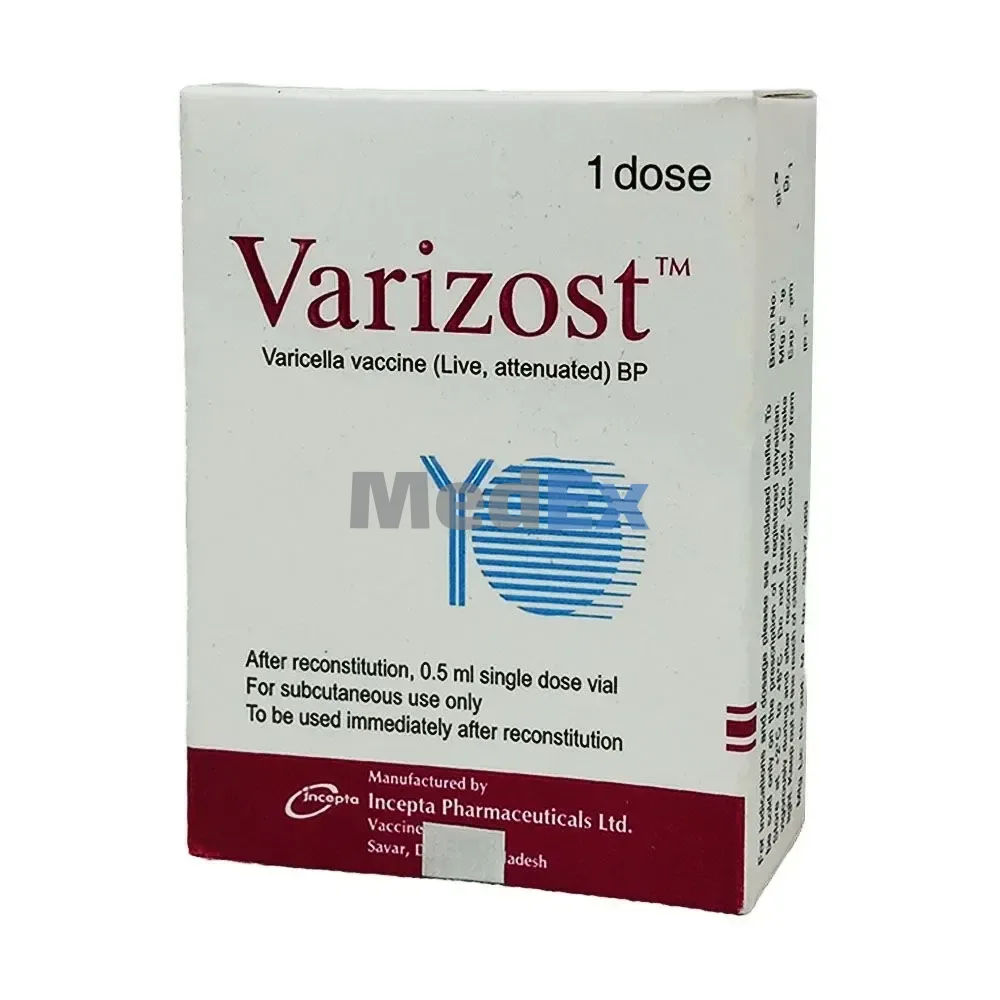
Varizost
Cheaper & Alternative Brands
Same generic (Varicella Virus Vaccine), same form (SC Injection)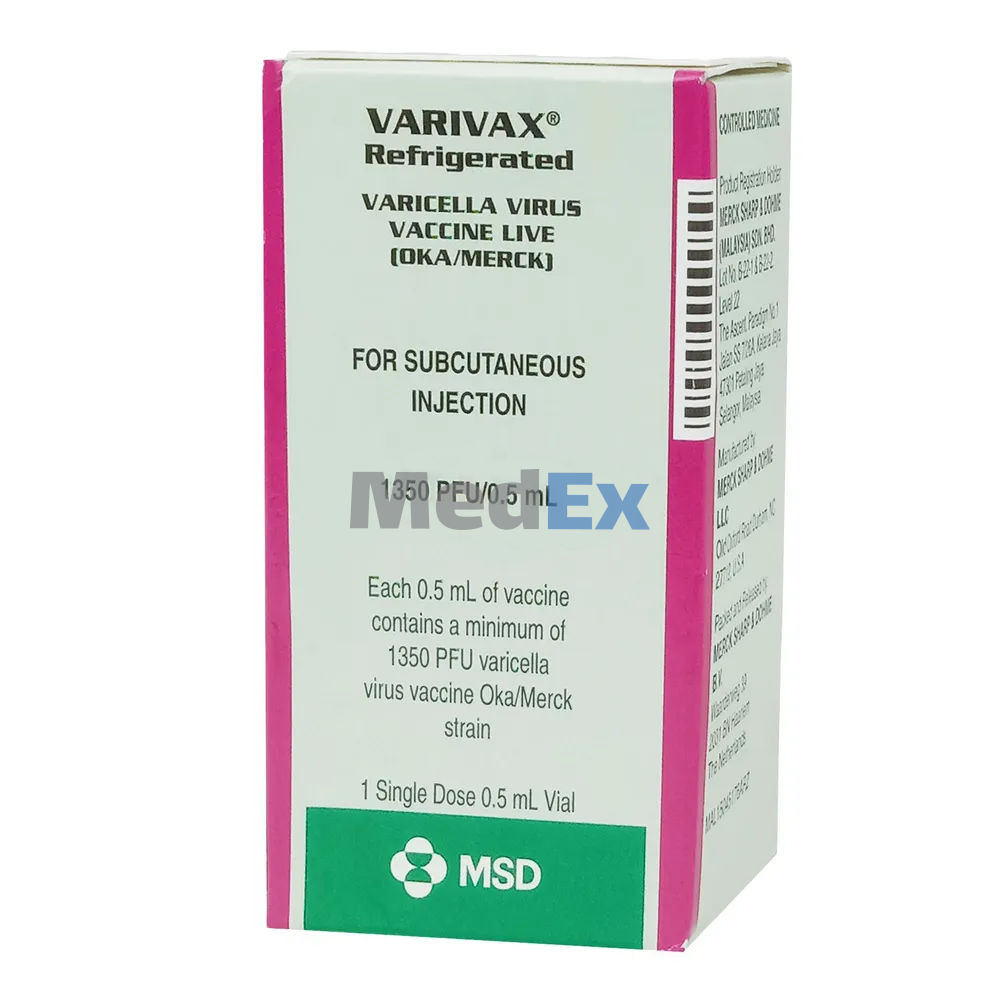
Clinical Prescribing Information
Medical monograph and safety information for healthcare professionals & patients.Indications & Clinical Uses
This is a vaccine indicated for active immunization for the prevention of varicella in individuals 12 months of age and older.
Dosage & Administration
Each 0.5 mL dose of Varicella Virus Vaccine is administered subcutaneously. Inject the vaccine subcutaneously into the outer aspect of the deltoid region of the upper arm or into the higher anterolateral area of the thigh.
Children (12 months to 12 years of age)
: The first dose is administered at 12 to 15 months of age but may be given anytime through 12 years of age. The second dose is administered at 4 to 6 years of age. At least 3 months should elapse between a dose of varicella-containing vaccine. At least 1 month should elapse between a dose of measles-containing vaccine and a dose of Varicella Virus Vaccine if the vaccines are not given concurrently.
Adolescents (≥13 years of age) and Adults
: Two doses of Varicella Virus Vaccine are administered at a minimum interval of 4 weeks.
Contraindications
Severe Allergic Reaction
: Do not administer Varicella Virus Vaccine to individuals with a history of anaphylactic or severe allergic reaction to any component of the vaccine (including neomycin and gelatin) or to a previous dose of a varicella-containing vaccine.
Immunosuppression
: Do not administer Varicella Virus Vaccine to individuals who are immunodeficient or immunosuppressed due to disease or medical therapy. Disseminated varicella disease and extensive vaccine associated rash have been reported in individuals who are immunosuppressed or immunodeficient who were inadvertently vaccinated with a varicella-containing vaccine.
Moderate or Severe Febrile Illness
: Do not administer Varicella Virus Vaccine to individuals with an active febrile illness with fever >38.5°C.
Active Untreated Tuberculosis
: Do not administer Varicella Virus Vaccine to individuals with active, untreated tuberculosis (TB).
Pregnancy
: Do not administer Varicella Virus Vaccine to individuals who are pregnant or planning on becoming pregnant in the next 3 months. Wild-type varicella is known to cause fetal harm.
Side Effects & Adverse Reactions
Frequently reported (≥10%) adverse reactions in children ages 1 to 12 years include:
fever ≥102.0°F (38.9°C) oral: 14.7%
injection-site complaints: 19.3%
Frequently reported (≥10%) adverse reactions in adolescents and adults ages 13 years and older include:
fever ≥100.0°F (37.8°C) oral: 10.2%
injection-site complaints: 24.4%
Other reported adverse reactions in all age groups include:
varicella-like rash (injection site)
varicella-like rash (generalized)
Warnings & Precautions
Evaluate individuals for immune competence prior to administration of Varivax if there is a family history of congenital or hereditary immunodeficiency. Avoid close contact with high-risk individuals susceptible to varicella because of possible transmission of varicella vaccine virus. Immune Globulins (IG) and other blood products should not be given concomitantly with Varivax. Avoid use of salicylates for 6 weeks following administration of Varivax to children and adolescents.
Pharmacology & Mechanism of Action
Varicella Virus Vaccine induces both cell-mediated and humoral immune responses to varicella-zoster virus. The relative contributions of humoral immunity and cell-mediated immunity to protection from varicella are unknown.