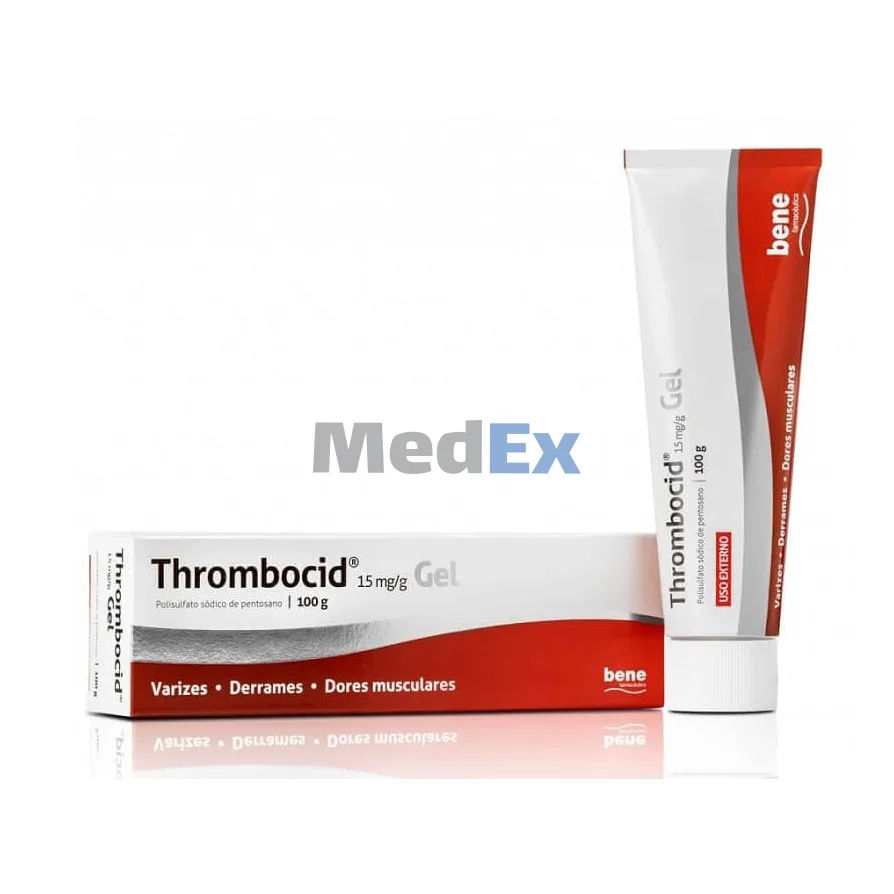
Thrombocid
Cheaper & Alternative Brands
Same generic (Pentosan Polysulfate Sodium), same form (Topical Gel)No other brands currently registered with this exact active generic and dosage form.
Clinical Prescribing Information
Medical monograph and safety information for healthcare professionals & patients.Indications & Clinical Uses
Cystosan is indicated for the relief of bladder pain or discomfort associated with interstitial cystitis.
Dosage & Administration
The recommended dose of Pentosan Polysulfate Sodium is 300 mg/day taken as one 100 mg capsule orally three times daily. The capsules should be taken with water at least 1 hour before meals or 2 hours after meals. Patients receiving Pentosan Polysulfate Sodium should be reassessed after 3 months. If improvement has not occurred and if limiting adverse events are not present, Pentosan Polysulfate Sodium may be continued for another 3 months. The clinical value and risks of continued treatment in patients whose pain has not improved by 6 months is not known.
Pediatric Use: Safety and effectiveness in pediatric patients below the age of 16 years have not been established.
Contraindications
Pentosan Polysulfate Sodium is contraindicated in patients with known hypersensitivity to the drug, structurally related compounds, or excipients.
Side Effects & Adverse Reactions
Cystosan was evaluated in clinical trials involving a total of 2,627 patients (2,343 women, 262 men, and 22 unknown) with a mean age of 47 years (range: 18 to 88), including 581 patients (22%) over 60 years of age. Among these patients, 128 participated in a 3-month trial, while the remaining 2,499 were enrolled in a long-term, unblinded trial. Deaths occurred in 6 out of 2,627 (0.2%) patients who received the drug over a period of 3 to 75 months. These deaths appear to be related to other concurrent illnesses or procedures, except for one patient, for whom the cause of death was unknown.
Adverse Experience in Placebo-Controlled Clinical Trials of Cystosan 100 mg Three Times a Day for 3 Months
The clinical trials revealed adverse experiences, including bleeding events and elevated liver function tests, particularly at higher doses.
Warnings & Precautions
Cystosan is a weak anticoagulant (1/15 the activity of heparin). At a daily dose of 300 mg (n=128), rectal hemorrhage was reported as an adverse event in 6.3% of patients. Bleeding complications of ecchymosis, epistaxis, and gum hemorrhage have been reported. Patients undergoing invasive procedures or having signs/symptoms of underlying coagulopathy or other increased risk of bleeding (due to other therapies such as coumarin anticoagulants, heparin, t-PA, streptokinase, high dose aspirin, or nonsteroidal anti inflammatory drugs) should be evaluated for hemorrhage. Patients with diseases such as aneurysms, thrombocytopenia, hemophilia, gastrointestinal ulcerations, polyps, or diverticula should be carefully evaluated before starting Cystosan. A similar product that was given subcutaneously, sublingually, or intramuscularly (and not initially metabolized by the liver) is associated with delayed immunoallergic thrombocytopenia with symptoms of thrombosis and hemorrhage. Caution should be exercised when using Cystosan in patients who have a history of heparin induced thrombocytopenia. Alopecia is associated with pentosan polysulfate and with heparin products. In clinical trials of Cystosan, alopecia began within the first 4 weeks of treatment. Ninety-seven percent (97%) of the cases of alopecia reported were alopecia areata, limited to a single area on the scalp.
Pharmacology & Mechanism of Action
Pentosan polysulfate is a polymer of xylose hydrogen sulfate and contains two sulfate groups per carbohydrate monomer. It binds Fibroblast growth factors (FGFs) as well as other heparin-binding growth factors. It has been shown to interact also with the heparin-binding site of FGFR-1. It inhibits the growth of SW13 adrenocortical cells transfected with FGF-4 and tumorigenicity of MCF-7 breast carcinoma cells transfected with FGF-1 or FGF-4.