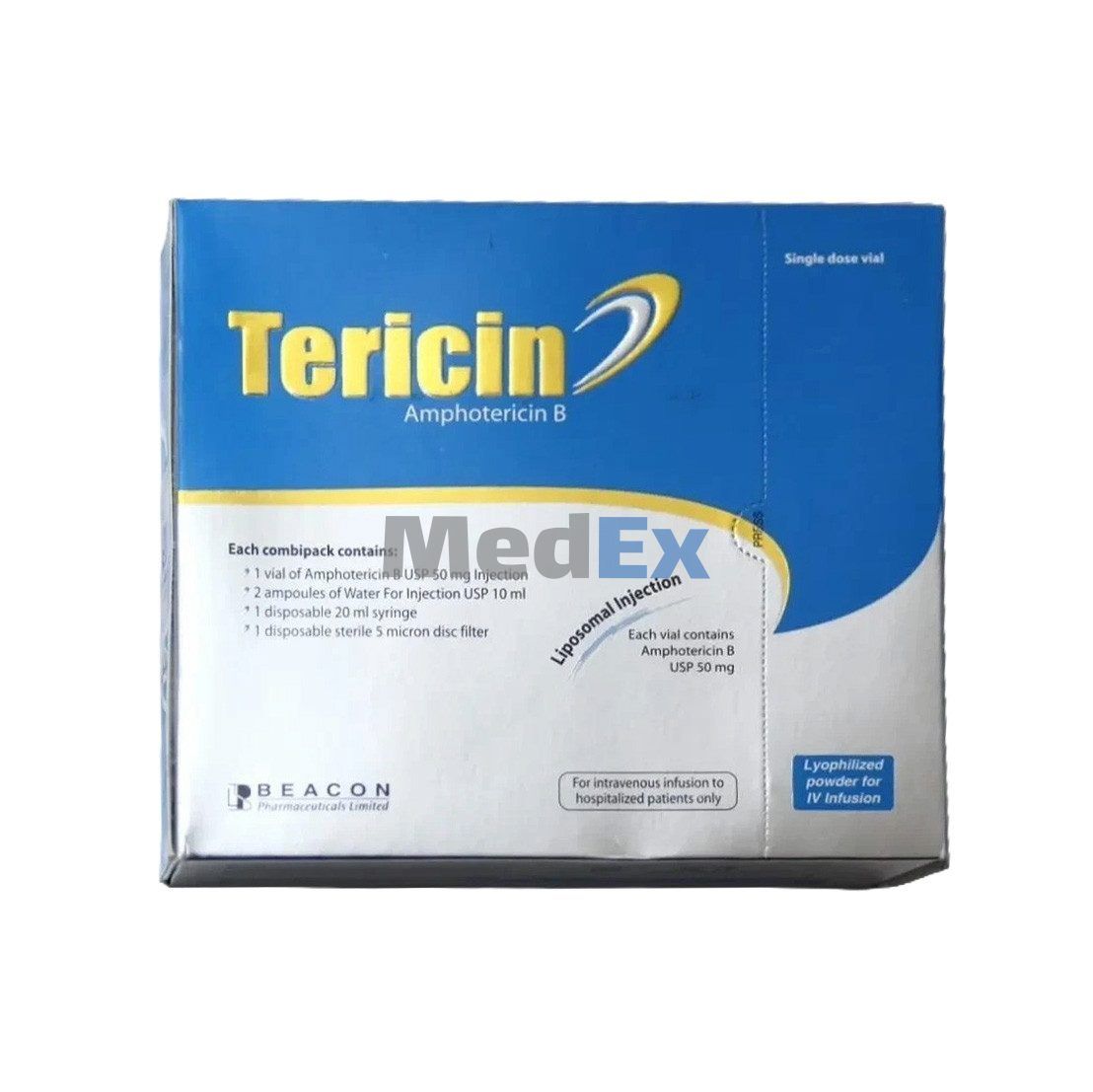
Tericin
Cheaper & Alternative Brands
Same generic (Amphotericin B), same form (IV Infusion)
Clinical Prescribing Information
Medical monograph and safety information for healthcare professionals & patients.Indications & Clinical Uses
Amphoject is indicated for the following:
Empirical therapy for presumed fungal infection in febrile, neutropenic patients.
Treatment of Cryptococcal Meningitis in HIV infected patients
Treatment of patients with Aspergillus species, Candida species and/or Cryptococcus species infections refractory to Amphoject deoxycholate, or in patients where renal impairment or unacceptable toxicity precludes the use of Amphoject deoxycholate.
... Read more
Amphoject is indicated for the following:
Empirical therapy for presumed fungal infection in febrile, neutropenic patients.
Treatment of Cryptococcal Meningitis in HIV infected patients
Treatment of patients with Aspergillus species, Candida species and/or Cryptococcus species infections refractory to Amphoject deoxycholate, or in patients where renal impairment or unacceptable toxicity precludes the use of Amphoject deoxycholate.
Treatment of visceral leishmaniasis. In immunocompromised patients with visceral leishmaniasis treated with Amphoject, relapse rates were high following initial clearance of parasites
Dosage & Administration
Systemic Fungal Infections-
Test dose: 1 mg IV infused over 20-30 min
Load: 0.25-0.5 mg/kg IV infused over 2-6 hour
Maintenance: 0.25-1 mg/kg IV qDay OR up to 1.5 mg/kg IV every other day (may increase gradually by 0.25 mg-increments/day)
Contraindications
Amphotericin B is contraindicated in those patients who have demonstrated or have known hypersensitivity to amphotericin B deoxycholate or any other constituents of the product unless, in the opinion of the treating physician, the benefit of therapy outweighs the risk.
Side Effects & Adverse Reactions
Common side effects are Fever, chills, convulsions, malaise; nausea, vomiting, diarrhoea, anorexia; tinnitus, vertigo, hearing loss; hypotension, hypertension, cardiac arrhythmias; peripheral neuropathy; phloebitis, pain at Inj site, disturbances in renal function and renal toxicity.
Warnings & Precautions
As with any Amphoject-containing product the drug should be administered by medically trained personnel. During the initial dosing period, patients should be under close clinical observation. Amphoject has been shown to be significantly less toxic than Amphoject deoxycholate; however, adverse events may still occur.
Pharmacology & Mechanism of Action
Amphotericin B is fungistatic or fungicidal depending on the concentration obtained in body fluids and the susceptibility of the fungus. The drug acts by binding to sterols (ergosterol) in the cell membrane of susceptible fungi. This creates a transmembrane channel, and the resultant change in membrane permeability allowing leakage of intracellular components. Ergosterol, the principal sterol in the fungal cytoplasmic membrane, is the target site of action of amphotericin B and the azoles. Amphotericin B, a polyene, binds irreversibly to ergosterol, resulting in disruption of membrane integrity and ultimately cell death.