
TAF
Cheaper & Alternative Brands
Same generic (Tenofovir Alafenamide), same form (Tablet)







Clinical Prescribing Information
Medical monograph and safety information for healthcare professionals & patients.Indications & Clinical Uses
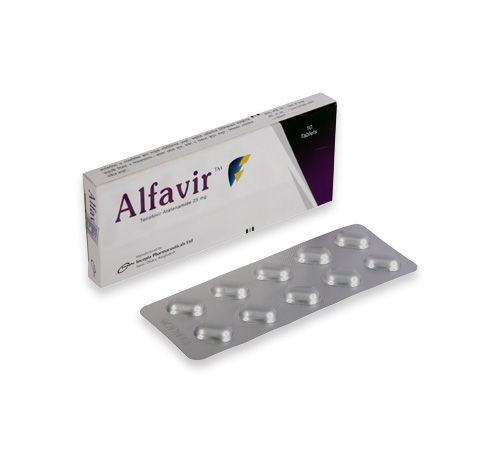
Alfavir is a hepatitis B virus (HBV) nucleoside analog reverse transcriptase inhibitor and is indicated for the treatment of chronic hepatitis B virus infection in adults with compensated liver disease.
Dosage & Administration
Testing Prior to Initiation of Tenofovir alafenamide
: Prior to initiation of Tenofovir alafenamide, patients should be tested for HIV-1 infection. Tenofovir alafenamide alone should not be used in patients with HIV-1 infection.
Recommended Dosage in Adults
: The recommended dosage of Tenofovir alafenamide is 25 mg (one tablet) taken orally once daily with food.
Dosage in Patients with Renal Impairment
: No dosage adjustment of Tenofovir alafenamide is required in patients with estimated creatinine clearance greater than or equal to 15 ml per minute or in patients with end stage renal disease (ESRD; estimated creatinine clearance below 15 ml per minute) who are receiving chronic hemodialysis. On days of hemodialysis administer Tenofovir alafenamide after completion of hemodialysis treatment. Tenofovir alafenamide is not recommended in patients with ESRD who are not receiving chronic hemodialysis.
Dosage in Patients with Hepatic Impairment
: No dosage adjustment of Tenofovir alafenamide is required in patients with mild hepatic impairment (Child-Pugh A). Tenofovir alafenamide is not recommended in patients with decompensated (Child-Pugh B or C) hepatic impairment.
Pediatric Use
: Safety and effectiveness of Tenofovir alafenamide in pediatric patients less than 18 years of age have not been established.
Geriatric Use
: In clinical trials, Tenofovir alafenamide was administered to 89 subjects aged 65 and over. No clinically significant differences in safety or efficacy have been observed between elderly subjects and subjects between 18 and less than 65 years of age.
Side Effects & Adverse Reactions
The following adverse reactions are discussed in other sections of the labeling:
Lactic Acidosis/Severe Hepatomegaly with Steatosis
Severe Acute Exacerbation of Hepatitis B
New Onset or Worsening of Renal Impairment
The most common side effects are headache, stomach pain, tiredness, cough, nausea, back pain
Warnings & Precautions
Severe Acute Exacerbation of Hepatitis B after Discontinuation of Treatment
: Discontinuation of anti-hepatitis B therapy, including Alfavir may result in severe acute exacerbations of hepatitis B. Patients who discontinue Alfavir should be closely monitored with both clinical and laboratory follow-up for at least several months after stopping treatment. If appropriate resumption of antihepatitis B therapy may be warranted.
Risk of Development of HIV-1 Resistance in Patients Coinfected with HBV and HIV-1
: Due to the risk of development of HIV-1 resistance Alfavir alone is not recommended for the treatment of HIV-1 infection. The safety and efficacy of Alfavir have not been established in patients coinfected with HBV and HIV-1. HIV antibody testing should be offered to all HBV-infected patients before initiating therapy with Alfavir and if positive, an appropriate antiretroviral combination regimen that is recommended for patients coinfected with HIV-1 should be used.
New Onset or Worsening Renal Impairment
: Postmarketing cases of renal impairment, including acute renal failure, proximal renal tubulopathy (PRT) and Fanconi syndrome have been reported with TAF-containing products; while most of these cases were characterized by potential confounders that may have contributed to the reported renal events, it is also possible these factors may have predisposed patients to tenofovir- related adverse events. Patients taking tenofovir prodrugs who have impaired renal function and those taking nephrotoxic agents, including non-steroidal anti-inflammatory drugs, are at increased risk of developing renal-related adverse reactions. Prior to or when initiating Alfavir and during treatment with Alfavir on a clinically appropriate schedule, assess serum creatinine, estimated creatinine clearance, urine glucose and urine protein in all patients. In patients with chronic kidney disease, also assess serum phosphorus. Discontinue Alfavir in patients who develop clinically significant decreases in renal function or evidence of Fanconi syndrome.
Lactic Acidosis/Severe Hepatomegaly with Steatosis
: Lactic acidosis and severe hepatomegaly with steatosis including fatal cases have been reported with the use of nucleoside analogs including tenofovir disoproxil fumarate (TDF) another prodrug of tenofovir alone or in combination with other antiretrovirals. Treatment with Alfavir should be suspended in any patient who develops clinical or laboratory findings suggestive of lactic acidosis or pronounced hepatotoxicity (which may include hepatomegaly and steatosis even in the absence of marked transaminase elevations).
Pharmacology & Mechanism of Action
Tenofovir alafenamide is a phosphonamidate prodrug of tenofovir (2’-deoxyadenosine monophosphate analog). Tenofovir alafenamide as a lipophilic cell-permeant compound enters primary hepatocytes by passive diffusion and by the hepatic uptake transporters OATP1B1 and OATP1B3. Tenofovir alafenamide is then converted to tenofovir through hydrolysis primarily by carboxylesterase 1 (CES1) in primary hepatocytes. Intracellular tenofovir is subsequently phosphorylated by cellular kinases to the pharmacologically active metabolite tenofovir diphosphate. Tenofovir diphosphate inhibits HBV replication through incorporation into viral DNA by the HBV reverse transcriptase, which results in DNA chain termination. Tenofovir diphosphate is a weak inhibitor of mammalian DNA polymerases that include mitochondrial DNA polymerase γ and there is no evidence of toxicity to mitochondria in cell culture.