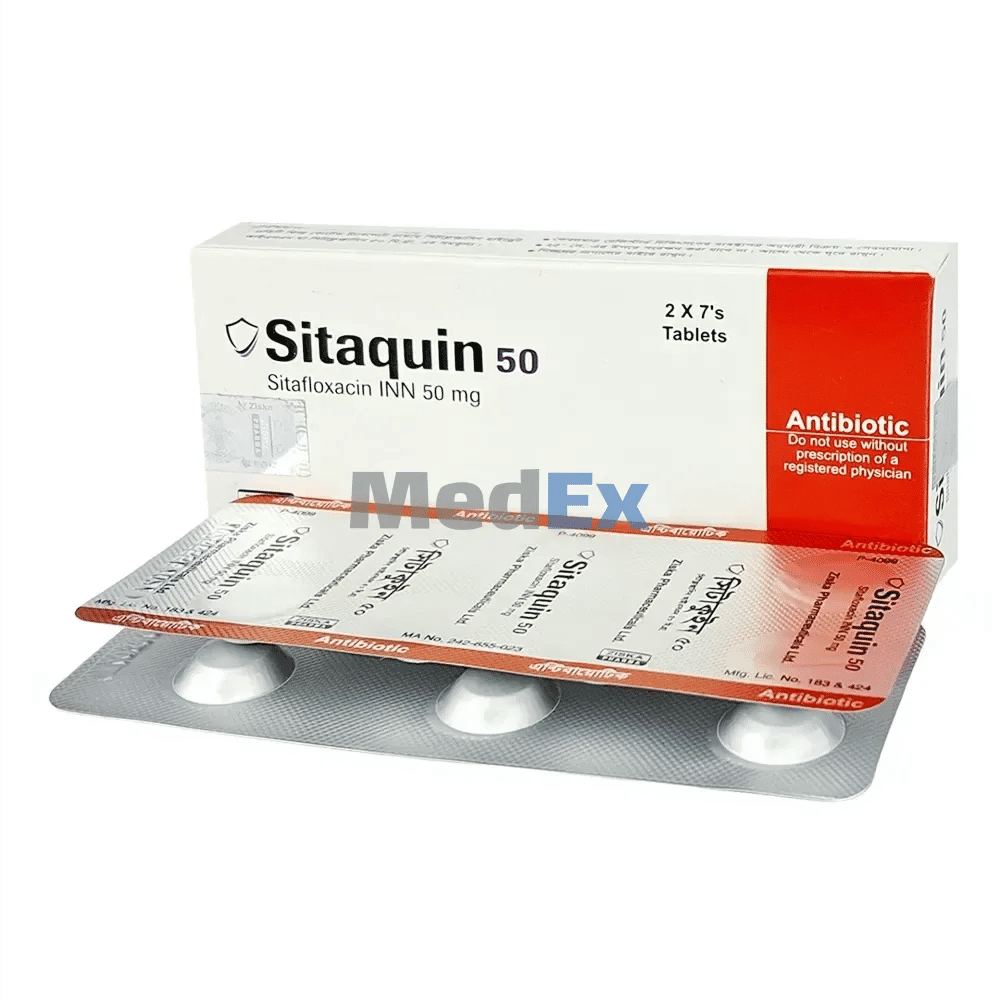
Sitaquin
Cheaper & Alternative Brands
Same generic (Sitafloxacin), same form (Tablet)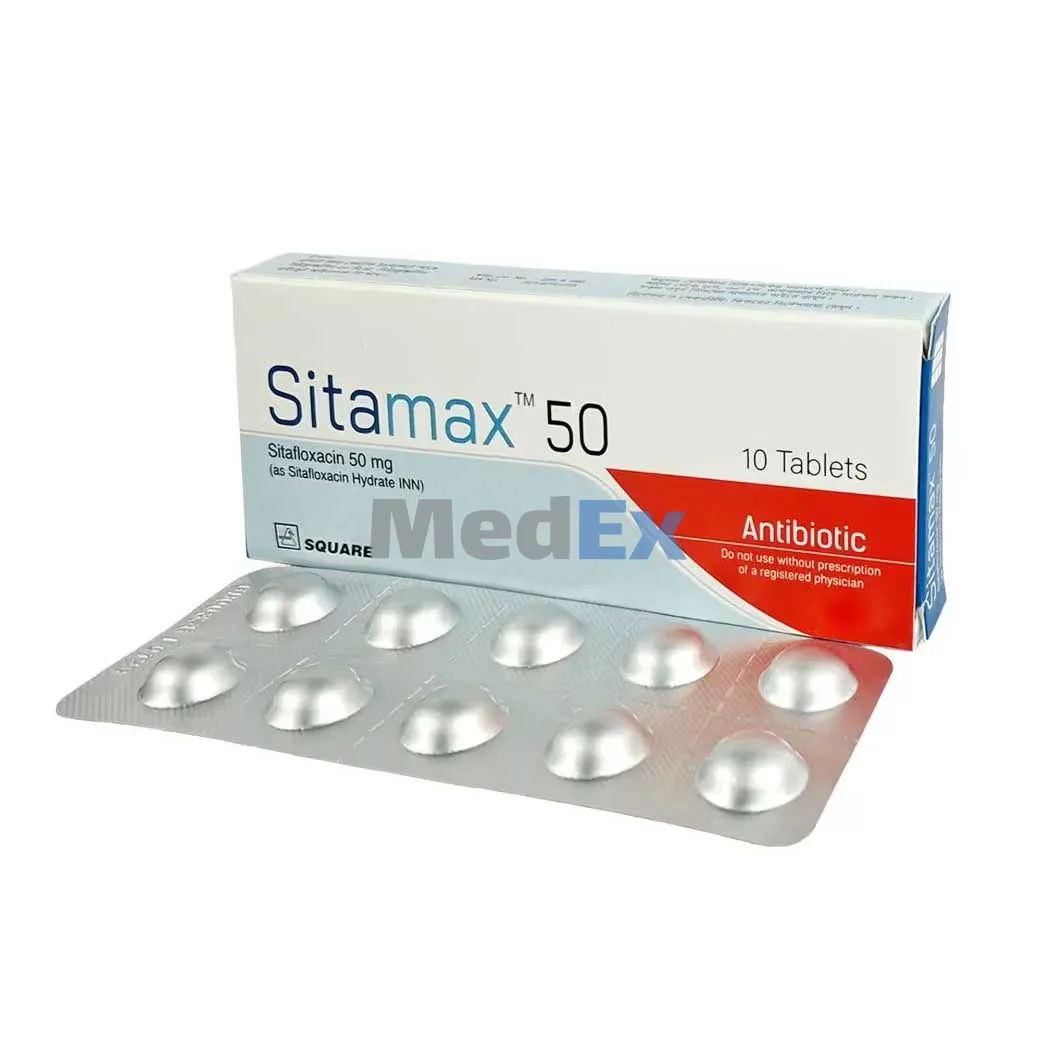
Clinical Prescribing Information
Medical monograph and safety information for healthcare professionals & patients.Indications & Clinical Uses
Sitamax is indicated for bacterial infections like laryngopharyngitis, tonsillitis, acute bronchitis, pneumonia, and secondary infection of chronic respiratory diseases; Cystitis, pyelonephritis, and urethritis; cervicitis; otitis media and sinusitis; periodontitis, pericoronitis, and osteitis of jaw.
Dosage & Administration
Recommended Dose: 50 mg twice daily or 100 mg once daily for all indications:
Laryngopharyngitis, acute bronchitis & tonsillitis: 3-7 days
Pneumonia and secondary infections of chronic respiratory diseases: 7 days
Acute cystitis: 3 days
Acute pyelonephritis & complicated urinary tract infection: 7-14 days
Urethritis and cervicitis: 7 days
Acute otitis media and sinusitis: 7 days
Acute exacerbation of chronic otitis media and sinusitis: 7 days
Periodontitis, pericoronitis and osteitis of jaw: 3-7 days
For patients suspected of having a poor response to the usual dosage, a dosage of Sitafloxacin 50 mg tablet may be increased to 100 mg, administered orally twice daily.
Not for use by children under 18 years.
Renal & Hepatic Impaired Patients
: Careful administration should be taken with renal & hepatic impairment patients and if any abnormal symptoms occur, it should be discontinued and appropriate measure should be taken.
Contraindications
It is contraindicated in the following patients
: Patients with a history of hypersensitivity to any ingredients of Sitafloxacin or other quinolones.
Pediatric patients
: The safety of Sitafloxacin in low-birth-weight infants, newborn infants, infants and toddlers, children and adolescents has not been established.
Side Effects & Adverse Reactions
Most commonly reported adverse reactions include rash, dizziness, headache, diarrhea, loose stool, stomach discomfort, abdominal bloating, abdominal pain, constipation, indigestion, nausea and stomatitis. If any of these symptoms occur, consult with your doctor or pharmacist.
Warnings & Precautions
Sitamax should be used with caution in patients with convulsive diseases such as epilepsy or with a history of convulsive diseases, patients with myasthenia gravis, patients complicated with aortic aneurysm or aortic dissection, or patients who have a previous history, positive family history, or risk factors of aortic aneurysm or aortic dissection., elderly patients generally have reduced physiological function.
Pharmacology & Mechanism of Action
Sitafloxacin has a broad spectrum of antibacterial activity against aerobic and anaerobic Gram-positive and Gram-negative bacteria, as well as atypical bacteria. The mechanism of action of Sitafloxacin involves inhibition of bacterial DNA gyrase and topoisomerase IV. Bactericidal activity of Sitafloxacin results from inhibition of these enzymes. The inhibitory activity of Sitafloxacin against these enzymes was higher than that of the other quinolone antimicrobials used as comparators. Sitafloxacin also has a potent inhibitory activity against enzymes from quinolone-resistant bacteria.