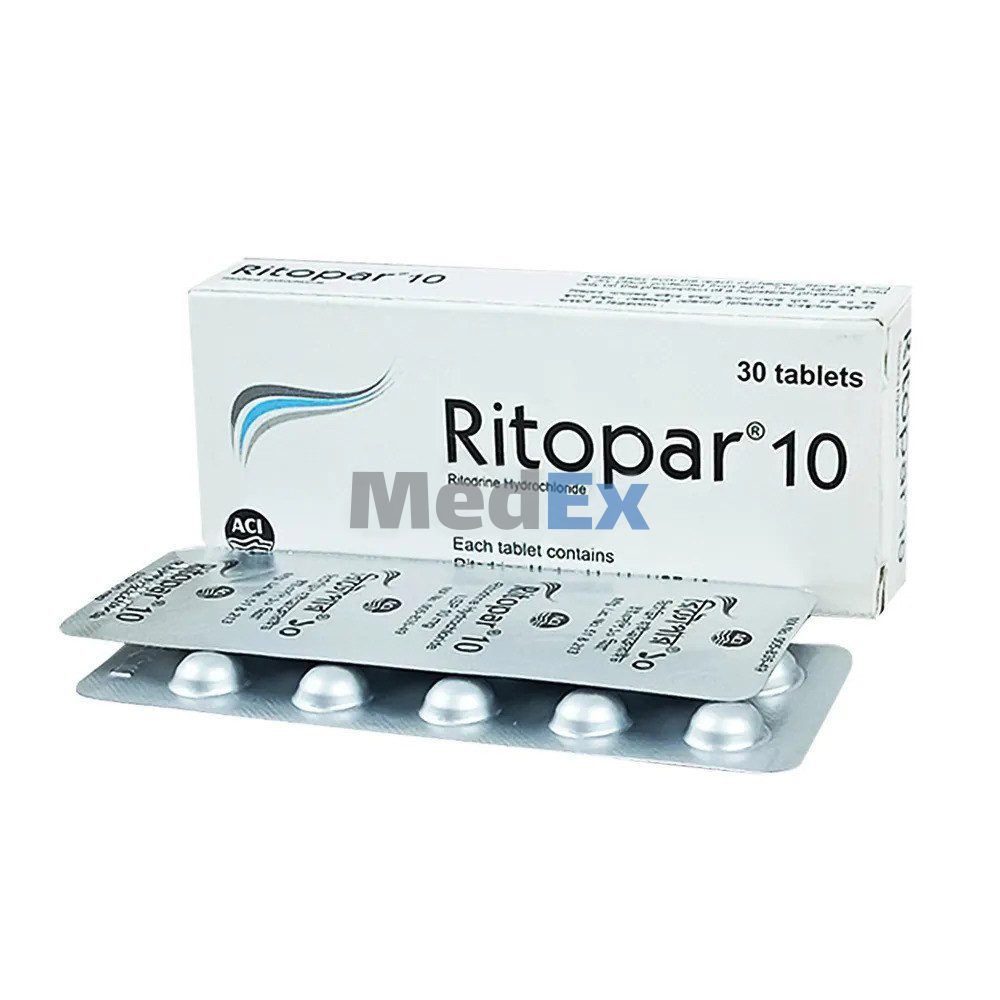
Ritopar
Cheaper & Alternative Brands
Same generic (Ritodrine Hydrochloride), same form (Tablet)No other brands currently registered with this exact active generic and dosage form.
Clinical Prescribing Information
Medical monograph and safety information for healthcare professionals & patients.Indications & Clinical Uses
Ritopar tablet is indicated for the treatment of uncomplicated premature labour.
Dosage & Administration
By intravenous infusion
: Initially 50 mcg/minute, increased gradually according to response by 50 mcg/minute every 10 minutes until contractions stop or maternal heart rate reaches 140 beats/minute; continue for 12-48 hours after contractions cease (usual rate 150-350 mcg/minute); maximum rate 350 mcg/minute.
Intramuscular injection
: 10 mg in every 3-8 hours continued for 12-48 hours after contractions have ceased; then by mouth.
Oral maintenance treatment
: One tablet (10 mg) may be given approximately 30 minutes before termination of intravenous therapy, repeated every 2 hours for 24 hours, followed by 10-20 mg every 4-6 hours, maximum oral dose 120 mg daily.
Contraindications
It is contraindicated in patients with known hypersensitivity to the active ingredient or any of the excipients of this component. β2-agonists are contra-indicated in cardiac disease and in patients with significant risk factors for myocardial ischaemia; they should also be avoided in antepartum haemorrhage, intra-uterine infection, intra-uterine fetal death, placenta praevia, abruptio placenta, threatened miscarriage, cord compression, and eclampsia or severe preeclampsia.
Side Effects & Adverse Reactions
The common side-effects of Ritopar are nausea, vomiting, flushing, sweating, tremor, hypokalaemia, tachycardia, palpitations, hypotension (left lateral position throughout infusion to minimize risk), uterine bleeding, pulmonary oedema; chest pain or tightness, arrhythmias and salivary gland enlargement. On prolonged administration for several weeks may cause leucopenia and agranulocytosis; liver function abnormalities including increased transaminases and hepatitis.
Warnings & Precautions
It should be used cautiously in patient with suspected cardiac diseases, hypertension, hyperthyroidism, hypokalaemia, diabetes mellitus, mild to moderate preeclampsia, monitor blood pressure and pulse rate and avoid over-hydration during taking Ritopar.
Pharmacology & Mechanism of Action
Ritodrine hydrochloride is a β2–adrenergic agonist. It relaxes the uterus by stimulating the β2–adrenergic receptors of the uterine muscle, which causes a decrease in the intensity and frequency of uterine contractions. Specifically, Ritodrine decreases uterine myometrial contractility by increasing cellular cyclic adenosine monophosphate (cAMP) and increasing cell membrane cytokines that increase and sequester intracellular calcium. Without intracellular calcium, the activation of contractile protein of smooth muscle is prevented and the uterus relaxes.