
Ramicard Plus
Cheaper & Alternative Brands
Same generic (Ramipril + Hydrochlorothiazide), same form (Tablet)
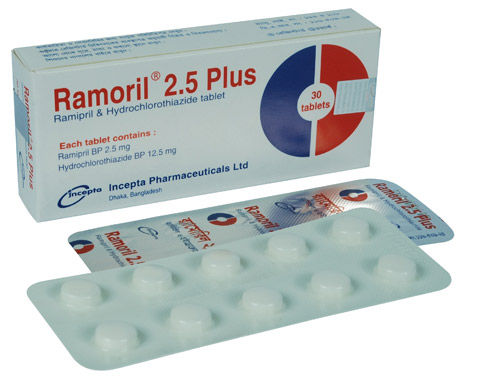

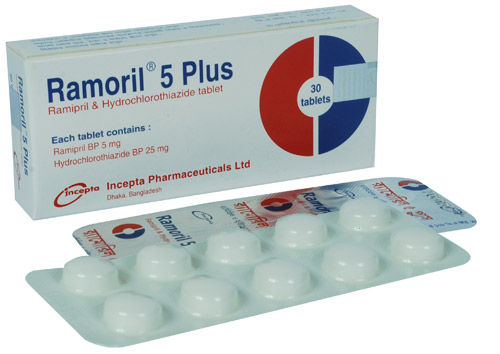
Clinical Prescribing Information
Medical monograph and safety information for healthcare professionals & patients.Indications & Clinical Uses
Protace-H tablet is indicated for the treatment of mild to moderate hypertension in patients (in whom combination therapy is appropriate) who have been stabilised on the individual components given in the same proportion.
Dosage & Administration
A patient whose blood pressure is not adequately controlled with Ramipril (or another ACE inhibitor) alone or with Hydrochlorothiazide (or another thiazide diuretic) alone may be switched to this combination therapy. The usual starting dose is one tablet once daily. If necessary, the dose may be increased to two tablets once daily.
Contraindications
This preparation must not be used in patients with hypersensitivity to ramipril, hydrochlorothiazide or other thiazide diuretics. History of hereditary angioneurotic oedema. Severe impairment of renal function. Haemodynamically relevant unilateral or bilateral renal artery stenosis, mitral stenosis, aortic stenosis, and in patients with low blood pressure (hypotensive patients) or in patients with an unstable circulatory situation (haemodynamically unstable patients) where there might be a risk of life-threatening fall in blood pressure and renal failure. Clinically relevant electrolyte disturbances e.g. hypokalemia, hyponatremia or hypercalcemia which may worsen following treatment.
Side Effects & Adverse Reactions
Ramipril can cause profound hypotension and renal impairment and a persistent dry cough. It may also cause angioedema (onset may be delayed), rash (which may be associated with pouritus and urticaria), pancreatitis and upper respiratory-tract symptoms such as sinusitis, and rhinitis. Gastro-intestinal effects reported with ACE inhibitors include nausea, vomiting. dyspepsia, diarrhoea and constipation. Altered liver function tests, cholestatic jaundice and hepatitis have been reported.Blood disorders including thronbocytopenia, leucopenia, neutropenia and haemolytic anaemia have also been reported. Other reported side-effects include headache, dizziness, fatigue, taste disturbance, bronchospasm, fever, and photosensitivity. Hydrochlorothiazide can cause tachycardia, serum sickness, weight loss, maculopapular rash, photosensitivity, flushing and acidosis.
Warnings & Precautions
This should be used with caution in patients with impaired renal function, hyperkalemia, hypotension, surgery/ anesthesia and impaired hepatic function.
Pharmacology & Mechanism of Action
Ramipril
is an angiotensin converting enzyme (ACE) inhibitor, which after hydrolysis to ramiprilat, blocks the conversion of angiotensin I to the vasoconstrictor substance, angiotensin II. So, inhibition of ACE by ramipril results in decreased plasma angiotensin II, which leads to decreased vasopressor activity and decreased aldosterone secretion. Thus ramipril exerts its antihypertensive activity. It is also effective in the management of heart failure and reduction of the risk of stroke, myocardial infarction and death from cardiovascular events. It is long acting and well tolerated; so, can be used in long term therapy.
Hydrochlorothiazide
is a thiazide diuretic. Thiazides affect the renal tubular mechanisms of electrolyte reabsorption, directly increasing excretion of sodium and chloride in approximately equivalent amounts. Indirectly, the diuretic action of Hydrochlorothiazide reduces plasma volume, with consequent increases in plasma renin activity, increases in aldosterone secretion, increases in urinary potassium loss, and decreases in serum potassium. The renin-aldosterone link is mediated by angiotensin II, so co-administration of anangiotensin converting enzyme (ACE) inhibitor tends to reverse the potassium loss associated with these diuretics.