Pyrex
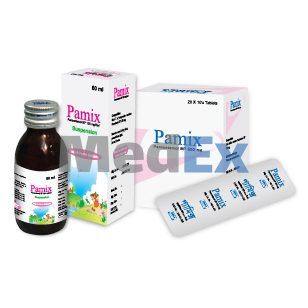
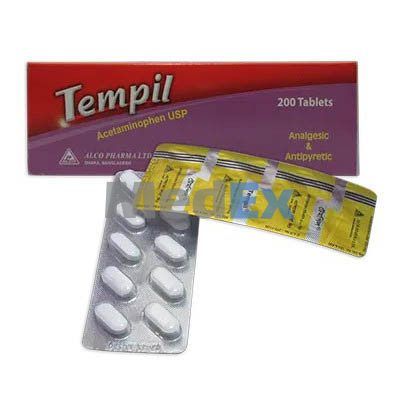
Cheaper & Alternative Brands
Same generic (Paracetamol), same form (Tablet)
Clinical Prescribing Information
Medical monograph and safety information for healthcare professionals & patients.Indications & Clinical Uses
A-One is indicated for fever, common cold and influenza, headache, toothache, earache, bodyache, myalgia, neuralgia, dysmenorrhoea, sprains, colic pain, back pain, post-operative pain, postpartum pain, inflammatory pain and post vaccination pain in children. It is also indicated for rheumatic & osteoarthritic pain and stiffness of joints.
Dosage & Administration
Tablet
:
Adult: 1-2 tablets every 4 to 6 hours up to a maximum of 4 gm (8 tablets) daily.
Children (6-12 years): ½ to 1 tablet 3 to 4 times daily. For long term treatment it is wise not to exceed the dose beyond 2.6 gm/day.
Extended Release Tablet
:
Adults & Children over 12 years: Two tablets, swallowed whole, every 6 to 8 hours (maximum of 6 tablets in any 24 hours).The tablet must not be crushed.
Syrup/Suspension
:
Children under 3 months: 10 mg/kg body weight (reduce to 5 mg/kg if jaundiced) 3 to 4 times daily.
3 months to below 1 year: ½ to 1 teaspoonful 3 to 4 times daily.
1-5 years: 1-2 teaspoonful 3 to 4 times daily.
6-12 years: 2-4 teaspoonful 3 to 4 times daily.
Adults: 4-8 teaspoonful 3 to 4 times daily.
Suppository
:
Children 3-12 months: 60-120 mg,4 times daily.
Children 1-5 years: 125-250 mg 4 times daily.
Children 6-12 years: 250-500 mg 4 times daily.
Adults & children over 12 years: 0.5-1 gm 4 times daily.
Paediatric Drop
:
Children Upto 3 months: 0.5 ml (40 mg)
4 to 11 months: 1.0 ml (80 mg)
7 to 2 years: 1.5 ml (120 mg). Do not exceed more than 5 dose daily for a maximum of 5 days.
Tablet with actizorb technology
: It dissolves up to five times faster than standard Paracetamol tablets. It is a fast acting and safe analgesic with marked antipyretic property. It is specially suitable for patients who, for any reason, can not tolerate aspirin or other analgesics.
Adults and children (aged 12 years and over): Take 1 to 2 Tablets every four to six hours as needed. Do not take more than 8 caplets in 24 hours.
Children (7 to 11 years): Take ½-1 Tablet every four to six hours as needed. Do not take more than 4 caplets in 24 hours. Not recommended in children under 7 years.
IV Infusion
:
Adults and adolescents weighing 50 kg and over: the recommended dosage of Paracetamol IV is 1000 mg every 6 hours or 650 mg every 4 hours, with a maximum single dose of Paracetamol IV of 1000 mg, a minimum dosing interval of 4 hours, and a maximum daily dose of Paracetamol of 4000 mg per day.
Adults and adolescents weighing under 50 kg: the recommended dosage of Paracetamol IV is 15 mg/kg every 6 hours or 12.5 mg/kg every 4 hours, with a maximum single dose of Paracetamol IV of 15 mg/kg, a minimum dosing interval of 4 hours, and a maximum daily dose of Paracetamol of 75 mg/kg per day.
Children >2 to 12 years of age: the recommended dosage of Paracetamol IV is 15 mg/kg every 6 hours or 12.5 mg/kg every 4 hours, with a maximum single dose of Paracetamol IV of 15 mg/kg, a minimum dosing interval of 4 hours, and a maximum daily dose of Paracetamol of 75 mg/kg per day.
Contraindications
It is contraindicated in known hypersensitivity to Paracetamol.
Side Effects & Adverse Reactions
Side effects of A-One are usually mild, though haematological reactions including thrombocytopenia, leucopenia, pancytopenia, neutropenia, and agranulocytosis have been reported. Pancreatitis, skin rashes, and other allergic reactions occur occasionally.
Warnings & Precautions
Care is advised in the administration of A-One to patients with severe renal or severe hepatic impairment. The hazard of overdose is greater in those with non-cirrhotic alcoholic liver disease. Do not exceed the stated dose. Patients should be advised not to take other A-One-containing products concurrently. A-One should only be used by the patient for whom it is prescribed when clearly necessary.
Administration of A-One in doses higher than recommended may result in hepatic injury, including the risk of severe hepatotoxicity and death. Do not exceed the maximum recommended daily dose of A-One. Use caution when administering A-One in patients with the following conditions: hepatic impairment or active hepatic disease, alcoholism, chronic malnutrition, severe hypovolemia (e.g., due to dehydration or blood loss), or severe renal impairment (creatinine clearance < 30 ml/min). There were infrequent reports of life-threatening anaphylaxis requiring emergent medical attention. Discontinue A-One IV immediately if symptoms associated with allergy or hypersensitivity occurs. Do not use A-One IV in patients with A-One allergy.
Pharmacology & Mechanism of Action
Paracetamol exhibits analgesic action by peripheral blockage of pain impulse generation. It produces antipyresis by inhibiting the hypothalamic heat-regulating centre. Its weak anti-inflammatory activity is related to inhibition of prostaglandin synthesis in the CNS.
Paracetamol (Acetaminophen) is thought to act primarily in the CNS, increasing the pain threshold by inhibiting both isoforms of cyclooxygenase, COX-1, COX-2, and COX-3 enzymes involved in prostaglandin (PG) synthesis. Unlike NSAIDs, acetaminophen does not inhibit cyclooxygenase in peripheral tissues and, thus, has no peripheral anti-inflammatory affects. While aspirin acts as an irreversible inhibitor of COX and directly blocks the enzyme's active site, studies have found that acetaminophen indirectly blocks COX, and that this blockade is ineffective in the presence of peroxides. This might explain why acetaminophen is effective in the central nervous system and in endothelial cells but not in platelets and immune cells which have high levels of peroxides. Studies also report data suggesting that acetaminophen selectively blocks a variant of the COX enzyme that is different from the known variants COX-1 and COX-2. This enzyme is now referred to as COX-3. Its exact mechanism of action is still poorly understood, but future research may provide further insight into how it works. The antipyretic properties of acetaminophen are likely due to direct effects on the heat-regulating centres of the hypothalamus resulting in peripheral vasodilation, sweating and hence heat