Povidone
Cheaper & Alternative Brands
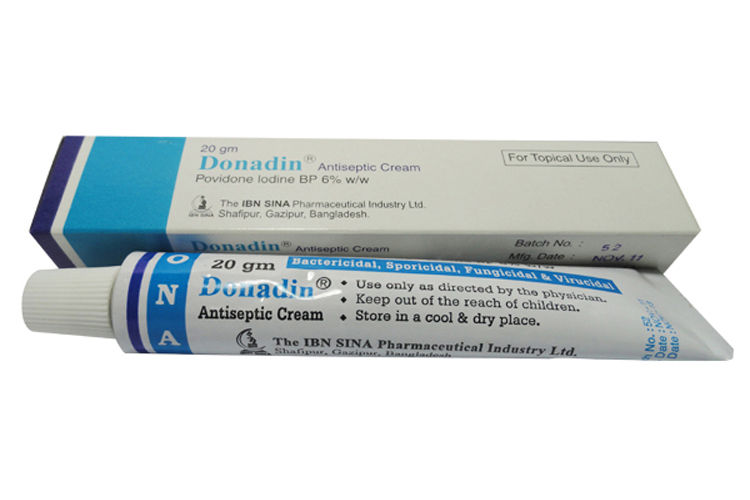
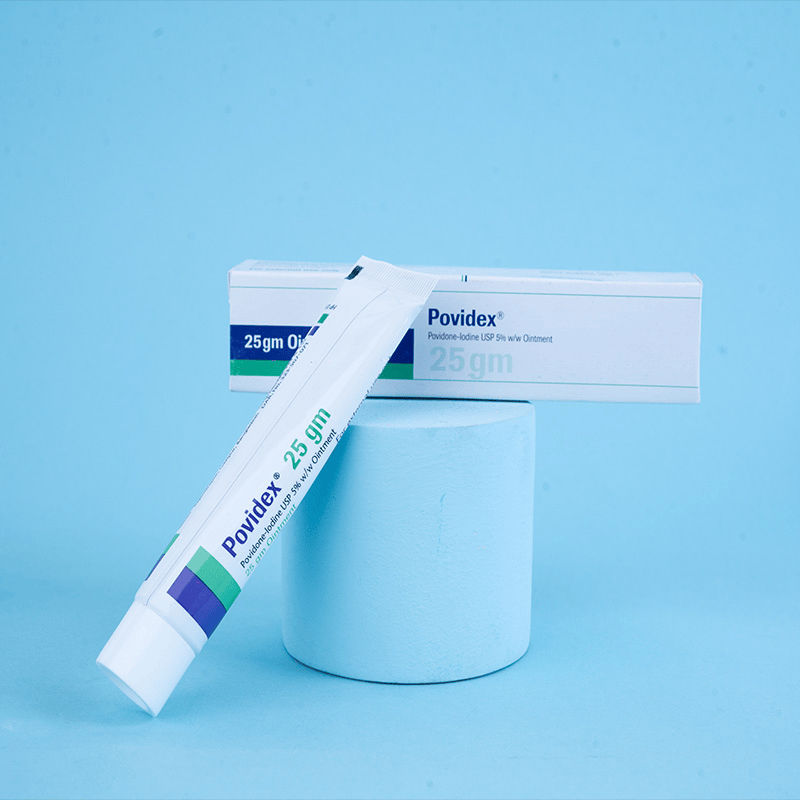
Same generic (Povidone Iodine), same form (Cream)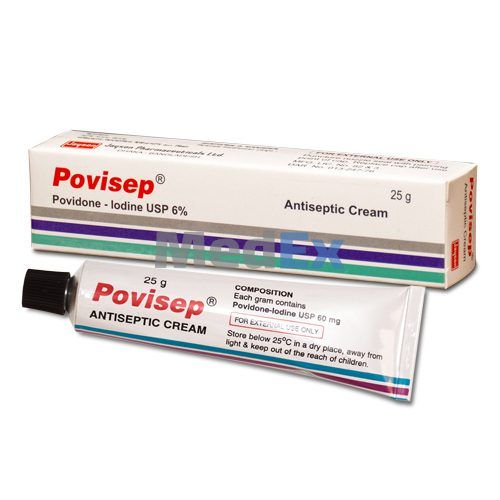
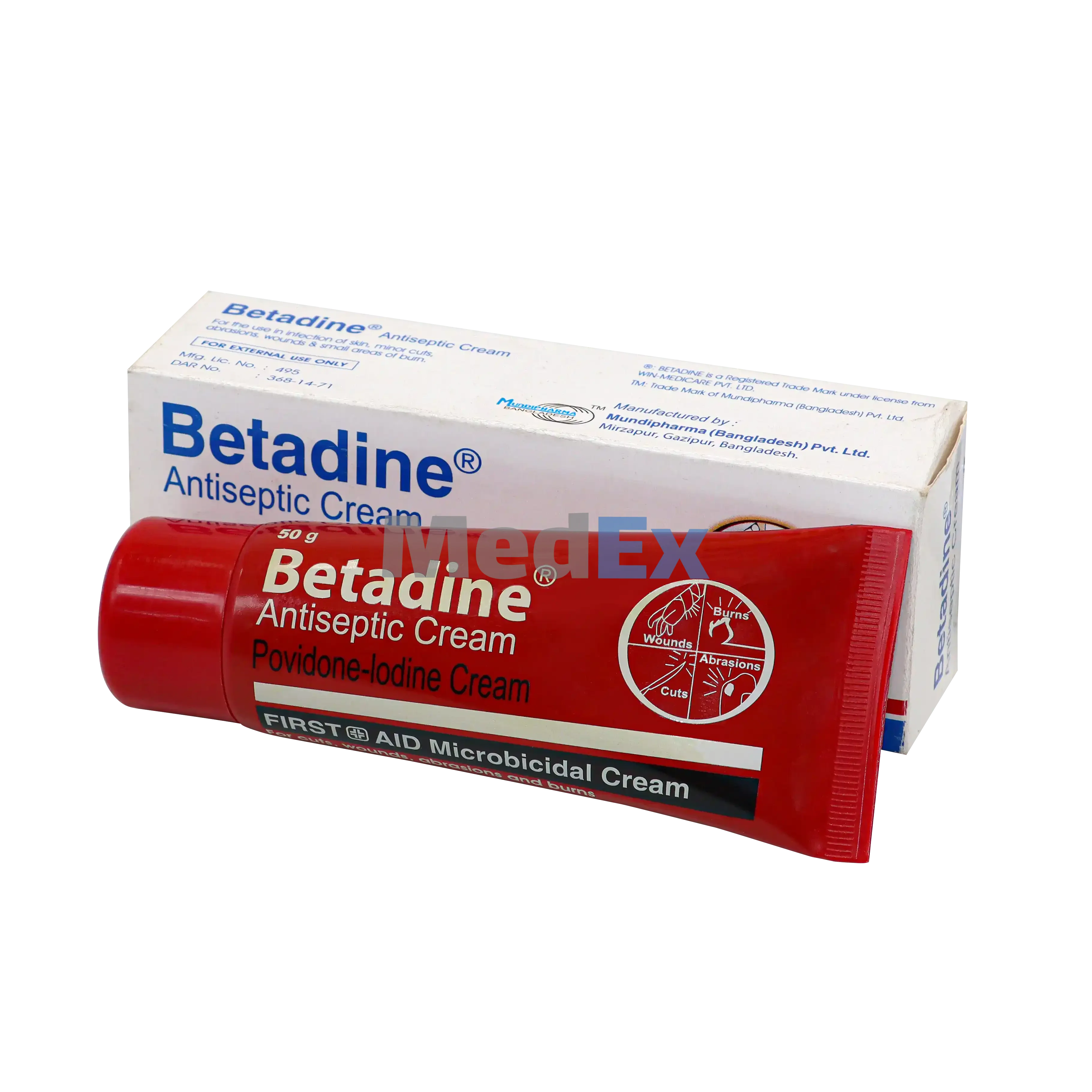
Clinical Prescribing Information
Medical monograph and safety information for healthcare professionals & patients.Indications & Clinical Uses
Cream or ointment
:
Therapeutically: As an adjunct to systemic therapy in the following indications-
Primary or secondary topical infections
Infected surgical incisions
Infected decubitus or stasis ulcers
Pyodermas
Secondarily infected dermatoses
... Read more
Cream or ointment
:
Therapeutically: As an adjunct to systemic therapy in the following indications-
Primary or secondary topical infections
Infected surgical incisions
Infected decubitus or stasis ulcers
Pyodermas
Secondarily infected dermatoses
Infected traumatic lesions
Prophylactically:
To prevent microbial contaminations in burns, incisions and other topical lesions
For degerming skin in hyperalimentation, the umbilical area or circumcision
Its use for abrasions, minor cuts, and wounds prevents the development of infections and permits wound healing.
Solution
:
For the prevention and treatment of surface infections as well as to degerm the skin, mucous membrane and hyperalimentation procedures
For seborrhea
For preoperative and postoperative scrubbing and washing of hospital operating room and equipments
For preoperative prepping of operative site, including the vagina
For disinfection of wounds, burns, lacerations and abrasions
As a prophylactic anti-infective agent in house, hospital & office procedures
Postoperative application to incisions to help prevent infection
In oral moniliasis (thrush); bacterial and mycotic skin infections, decubitus & stasis ulcers
As a preoperative swab in the mouth & throat
Gargle & Mouthwash
:
For the treatment of acute mucosal infections of the mouth and pharynx.
For oral hygiene prior to, during and after dental and oral surgery.
Surgical Scrub
: It is a golden surfactant solution, forms rich, golden lather which is used: As an antiseptic skin cleanser for preoperative and postoperative scrubbing and washing by surgeons and operation theatre staff and preoperative preparation of patients' skin
Powder
: It is used for topical application in the following indications: Superficial wounds, Minor cuts, Burns, Abrasions, Lacerations, In the treatment and prevention of infections.
Ophthalmic Solution
: Apodin is used for the symptomatic treatment of dry eye conditions including keratoconjunctivitis sicca. It is also given as a substitute for tear fluid in case of the unstable tear film or insufficient moistening of the eye surface.
Dosage & Administration
Cream or ointment
:
For the treatment of infection: Apply once or twice daily or at dressing changes for a maximum of 14 days.
For the prevention of infection: Apply once or twice a week for as long as necessary. The affected skin should be cleaned and dried and can be covered with a dressing or bandage.
Solution
: Apply full strength as often as needed as paint, spray, or wet soak. Maybe bandaged (where necessary).
Gargle & Mouthwash
: Adults and children over 6 years of age: Use undiluted or diluted with an equal volume of warm water. Gargle or rinse with up to 10 mL for up to 30 seconds without swallowing. Repeat up to four times daily, for up to 14 consecutive days, or as advised by the Registered Dental Surgeon/Physician.
Surgical Scrub
:
For Preoperative and Postoperative washing by Operating Personnel: Wet hands and forearms with water. Pour about 5 mL of Povidone Iodine Surgical Scrub on the palm of the hand and spread over both hands and forearms. Without adding more water, rub the Scrub thoroughly over all areas for about five minutes. Use a brush if desired. Clean thoroughly under fingernails. Add a little water and develop copious suds. Rinse thoroughly under running water. Complete the wash by scrubbing with another 5 mL of Povidone Iodine Surgical Scrub in the same way.
For Preoperative use on Patients: After the skin area is shaved, wet it with water. Apply Povidone Iodine Surgical Scrub (1 mL is sufficient to cover an area of 20-30 square inches), develop lather and scrub thoroughly for about five minutes. Rinse off by aid of sterile gauze saturated with water.
For use in the Physician's Office: Use for washing whenever a germicidal soap is required.
Powder
: Apply a light dusting of powder to the affected area. When dry, this forms a protective antiseptic layer over the area treated. Or use as advised by the Registered Physician. There are no special dosage recommendations for children or elderly patients.
Ophthalmic Solution
: 1 drop 4 times daily or as required, depending upon the severity of the disease, to be instilled into the conjunctival sac.
Contraindications
It can cause hypersensitivity reactions. Regular use in patients with thyroid disorders (in particular nodular colloid goitre, endemic goitre and Hashimoto's thyroiditis) or those receiving lithium therapy is to be avoided. In severely burnt patients serum iodide levels should be assessed due to possible hepatic and renal impairment. Povidone Iodine Powder should not be used in serious cavities and in Children under the age of 2 years.
Side Effects & Adverse Reactions
Apodin may cause hypersensitivity reactions and irritation of the skin and mucous membranes. The application of Apodin to severe burns or to large areas otherwise denuded of skin may produce systemic adverse effects such as metabolic acidosis, hypernatraemia, and impairment of renal function. It may interfere with thyroid function tests.
Warnings & Precautions
Cream or ointment
: In case of deep or puncture wounds or serious burns, consult Registered Physician. If redness, irritation, swelling or pain persists or increases or if infection occurs, discontinue use and consult Registered Physician.
Solution
: In preoperative prepping, avoid 'pooling' beneath the patient. Prolonged exposure to wet solution may cause irritation or rarely, severe skin reactions. In case of deep or puncture wounds or serious burns, consult Registered Physician. If redness, irritation, swelling or pain persists or increases or if infection occurs, discontinue use and consult Registered Physician.
Gargle & Mouthwash
: Regular use should be avoided as prolonged use may lead to the absorption of a significant amount of iodine. Do not use for more than 14 days. If sores or ulcers in the mouth do not heal within 14 days seek dental or medical advice. It is also not for use in children under 6 years of age. Regular use should be avoided in patients on concurrent lithium therapy.
Surgical Scrub
: Special caution is needed when regular applications to broken skin are made to patients with pre-existing renal insufficiency. Regular use should be avoided in patients on concurrent lithium therapy. It can permanently discolor white gold jewellery and it is recommended that this type of jewellery should be removed before using Apodin.
Powder
: Care must be taken when used on known iodine sensitivity, although do not normally react to Apodin-Iodine. Excess powder can be washed off readily with warm water. It should be used directly from the container. Not to be administered internally.
Ophthalmic Solution
: Patients, who experience blurred vision after application of the eye drops, should not drive or use machinery until their vision has cleared. Contact lenses should not be worn during the instillation of the drug. After instillation, there should be an interval of at least 30 minutes before reinsertion.
Pharmacology & Mechanism of Action
Povidone Iodine is a complex of iodine and an organic polymer, povidone. This polymerization makes Povidone Iodine superior to ordinary elemental iodine. It prolongs the germicidal activity of iodine by liberating elemental iodine slowly. Consequently it has a lower toxicity than elemental iodine. It gives rapid microbicidal activity against both Gram-positive and Gram-negative bacteria, protozoa, viruses and fungi/yeasts. It is also sporicidal. It is the only microbicide with this broad spectrum of activity. It is non-staining, exerts prolong germicidal action and is also active in the presence of soap, blood, serum, pus, mucosal secretions and water.