
Paricap
Cheaper & Alternative Brands
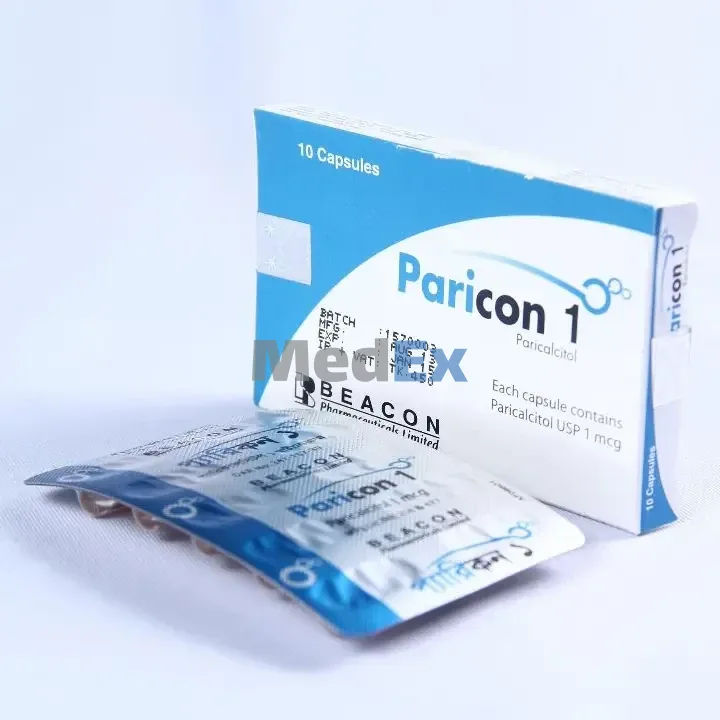
Same generic (Paricalcitol), same form (Capsule)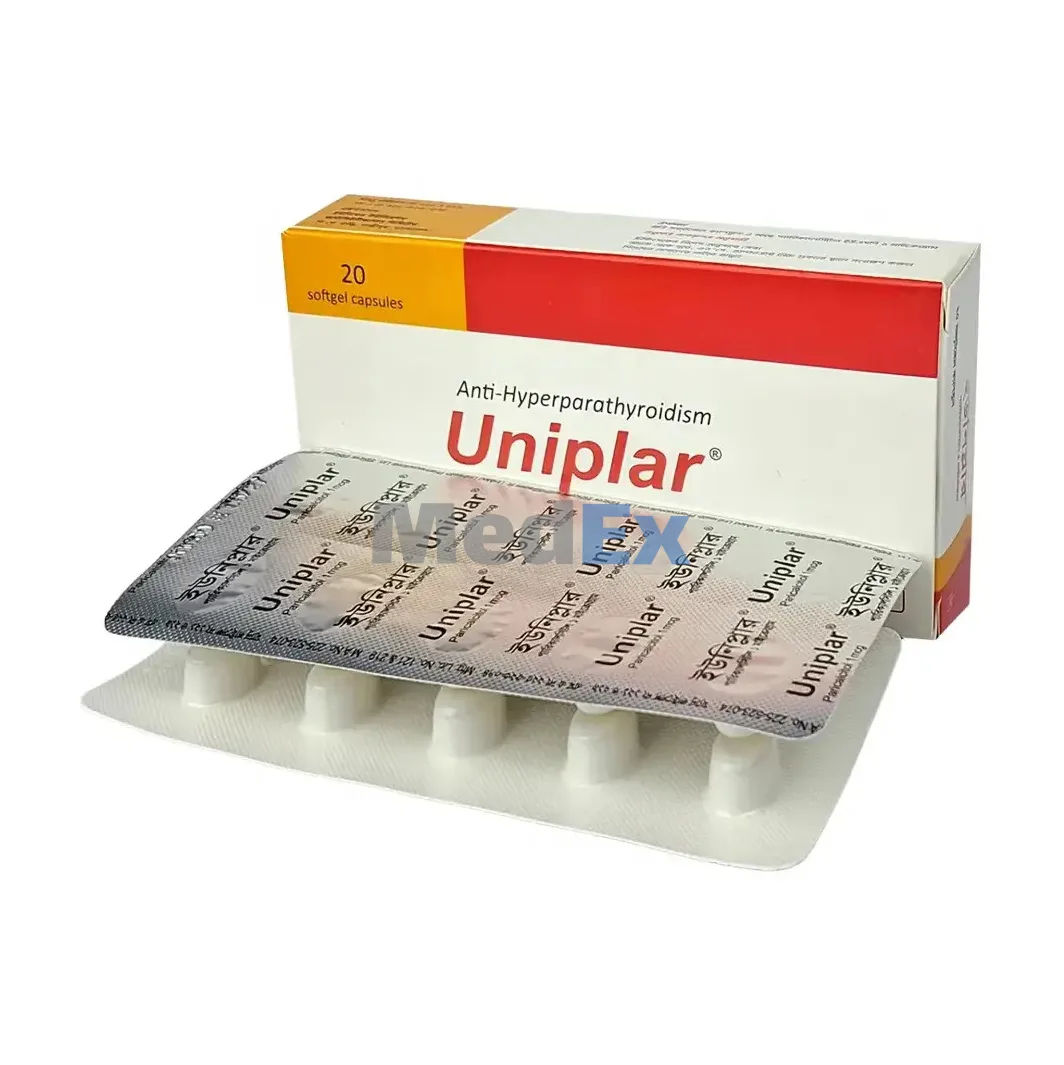
Clinical Prescribing Information
Medical monograph and safety information for healthcare professionals & patients.Indications & Clinical Uses
Chronic Kidney Disease Stages 3 and 4
: Paricap capsules are indicated in adults and pediatric patients 10 years of age and older for the prevention and treatment of secondary hyperparathyroidism associated with Chronic Kidney Disease (CKD) Stages 3 and 4.
Chronic Kidney Disease Stage 5
... Read more
Chronic Kidney Disease Stages 3 and 4
: Paricap capsules are indicated in adults and pediatric patients 10 years of age and older for the prevention and treatment of secondary hyperparathyroidism associated with Chronic Kidney Disease (CKD) Stages 3 and 4.
Chronic Kidney Disease Stage 5
: Paricap capsules are indicated in adults and pediatric patients 10 years of age and older for the prevention and treatment of secondary hyperparathyroidism associated with CKD Stage 5 in patients on hemodialysis (HD) or peritoneal dialysis (PD).
Dosage & Administration
Paricalcitol capsules may be taken without regard to food. Chronic Kidney Disease (CKD) Stages 3 and 4 in Adults: Administration of Paricalcitol soft gel capsules orally once daily or three times a week. When dosing three times weekly, do not administer more frequently than every other day.
Initial Dose
: Recommended Paricalcitol Starting Dose Based Upon Baseline PTH Level-
Baseline intact parathyroid hormone (IPTH) Level: <500 pg/ml
Daily Dose: 1 mcg
Three Times a Week Dose*: 2 mcg
Baseline intact parathyroid hormone (IPTH) Level: >500 pg/ml
Daily Dose: 2 mcg
Three Times a Week Dose*: 4 mcg
Dose Titration
: Recommended Paricalcitol Dose Titration Base upon IPTH Level-
IPTH Level Relative to Baseline: The same, increased or decreased by less than 30%
Daily Dose: Increase dose by 1 mcg
Three Times a Week Dose*: Increase dose by 2 mcg
IPTH Level Relative to Baseline: Decreased by more than or equal to 30% and less than or equal to 60%
Daily Dose: Maintain dose
Three Times a Week Dose*: Maintain dose
IPTH Level Relative to Baseline: Decreased by more than 60% or iPTH less than 60 pg/ml
Daily Dose: Decrease dose by 1 mcg
Three Times a Week Dose*: Decrease dose by 2 mcg
*To be administered not more often than every other day.
If a patient is taking the lowest dose, 1 mcg, on the daily regimen and a dose reduction is needed, the dose can be decreased to 1 mcg three times a week. If a further dose reduction is required, the drug should be withheld as needed and restarted at a lower dosing frequency.
Chronic Kidney Disease Stage 5 in Adults
:
Initial Dose: Administer the dose of Paricalcitol capsules orally three times a week, no more frequently than every other day based upon the following formula: Dose (micrograms) baseline PTH (Pg/ml) divided by 80. Treat patients only after their baseline serum calcium has been adjusted to 9.5 mg/dL or lower to minimize the risk of hypercalcemia.
Dose Titration: Individualize and titrate Paricalcitol dose based on iPTH, serum calcium and phosphorus levels to maintain an iPTH level within target range. Every 4 weeks, each administered Paricalcitol dose may be increased in 1 mcg increments, maintaining the three times per week regimen (e.g., Increase from 1 mcg three times per week to 2 mcg three times per week), At any time, each administered dose may be decreased by 1 mcg. Paricalcitol may be stopped if the patient requires reduction while receiving 1 mcg three times per week, resuming when appropriate.
CKD Stage 5 Initial Dose
-
Administer the dose of Paricalcitol capsules orally three times a week, no more frequently than every other day based upon the following formula:Dose* (micrograms) = baseline iPTH (pg/mL) divided by 120 ( Round down to the nearest whole number )
Dose Titration: Subsequent dosing should be individualized and based on IPTH, serum calcium and phosphorus levels to maintain an iPTH level within target range. Every 4 weeks, each administered Paricalcitol dose may be increased in 1 mcg increments, maintaining the three times per week regimen (e.g., increase from 1 mcg three times per week to 2 mcg three times per week). At any time, each administered dose may be decreased by 2 meg. Paricalcitol may be stopped if the patient requires reduction while receiving 2 mcg three times per week or 1 mcg three times per week, resuming when appropriate.
Monitoring
: Monitor serum calcium and phosphorus levels closely after initiation of Paricalcitol, during dose titration periods and during co-administration with strong CYP3A inhibitors. If hypercalcemia is observed, the dose of Paricalcitol should be reduced or withheld until these parameters are normalized.
Contraindications
Paricalcitol capsules should not be given to patients with evidence of hypercalcemia or vitamin D toxicity.
Side Effects & Adverse Reactions
Because clinical studies are conducted under widely varying conditions, adverse reaction rates observed in the clinical studies of a drug cannot be directly compared to rates in the clinical studies of another drug and may not reflect the rates observed in practice.
Warnings & Precautions
Hypercalcemia
: Progressive hypercalcemia due to overdosage of vitamin D and its metabolites may be so severe as to require emergency attention Acute hypercalcemia may exacerbate tendencies for cardiac arrhythmias and seizures and may potentiate the action of digitalis. Chronic hypercalcemia can lead to generalized vascular calcification and others soft tissue calcification Concomitant administration of high doses of calcium-containing preparations or thiazide diuretics with Paricap may increase the risk of hypercalcemia, High intake of calcium and phosphate concomitant with vitamin D compounds may lead to serum abnormalities requiring more frequent patient monitoring and individualized dose titration. Patients also should be informed about the symptoms of elevated calcium, which include feeling tired, difficulty in thinking clearly, loss of appetite, nausea, vomiting, constipation, increased thirst, increased urination and weight loss. Prescription-based doses of vitamin D and its derivatives should be withheld during Paricap treatment to avoid hypercalcemia.
Digitalis Toxicity
: Digitalis toxicity is potentiated by hypercalcemia of any cause. Use caution when Paricap capsules are prescribed concomitantly with digitalis compounds.
Pharmacology & Mechanism of Action
Paricalcitol is a synthetic, biologically active vitamin D2 analog of calcitriol Preclinical and in vitro studies have demonstrated that paricalcitol’s biological actions are mediated through binding of the VDR, which results in the selective activation of vitamin D responsive pathways. Vitamin D and paricalcitol have been shown to reduce parathyroid hormone levels by inhibiting PTH synthesis and secretion.