
Nifev
Cheaper & Alternative Brands
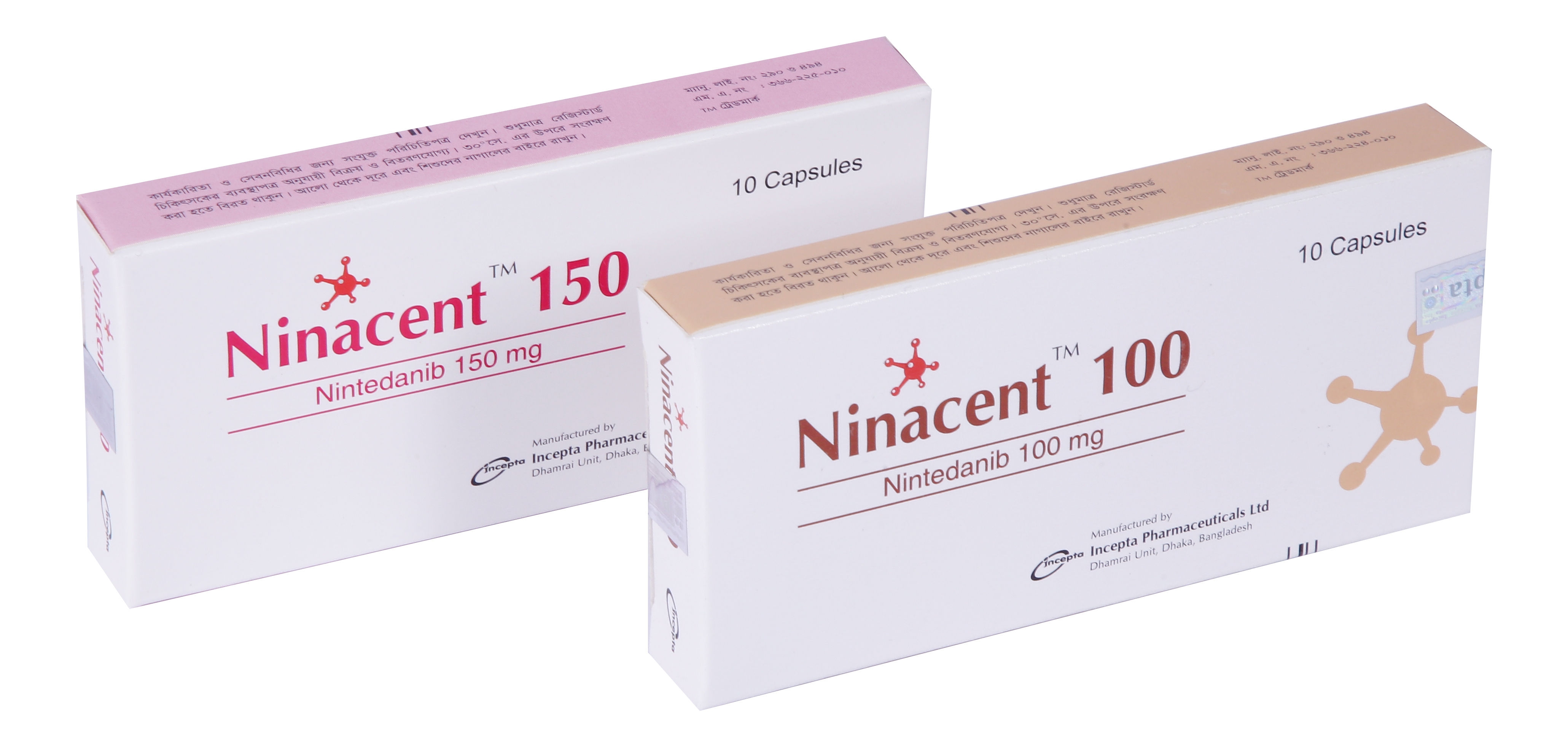
Same generic (Nintedanib), same form (Capsule)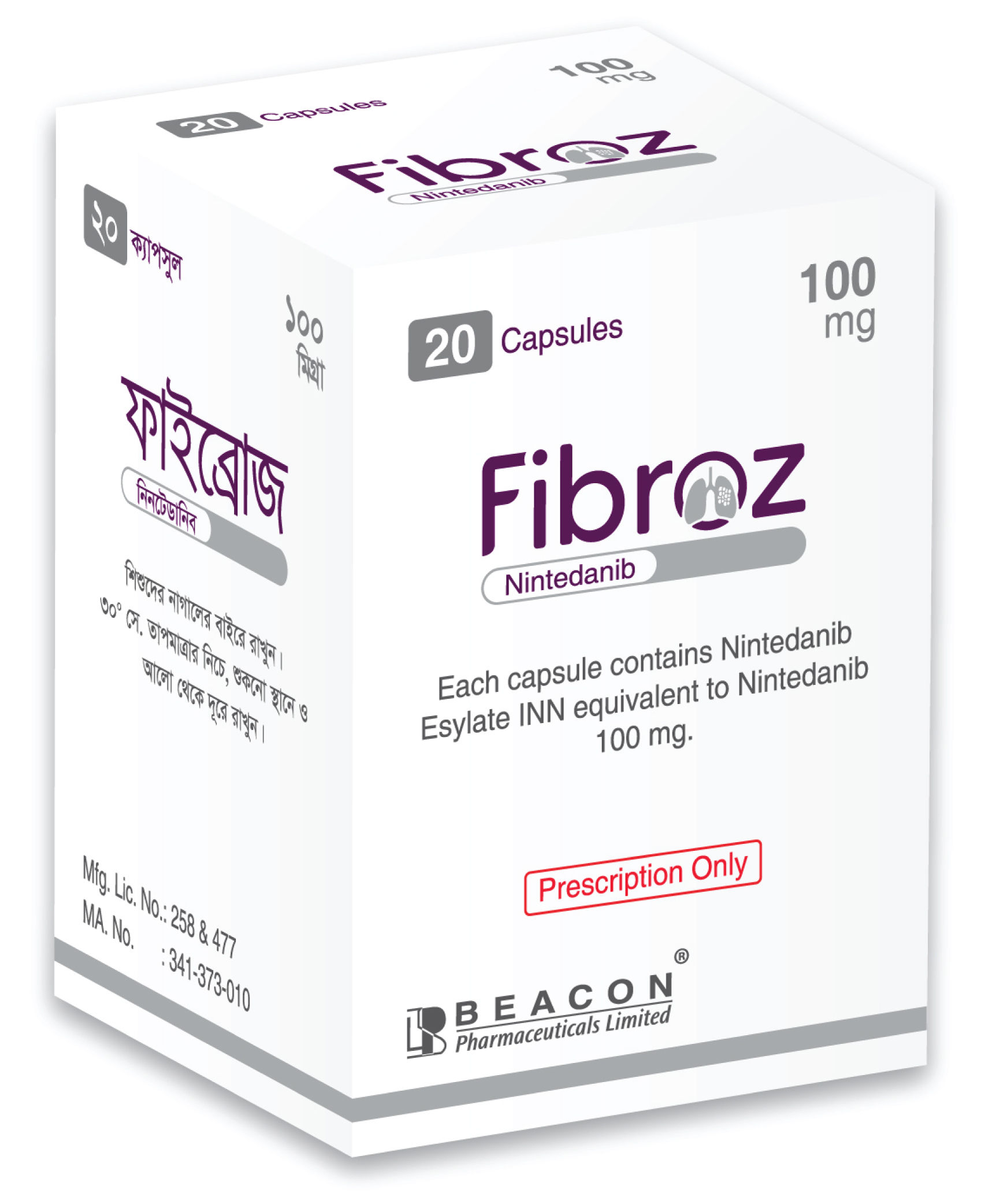

Clinical Prescribing Information
Medical monograph and safety information for healthcare professionals & patients.Indications & Clinical Uses
Fibroz capsule is indicated in-
adults for the treatment of Idiopathic Pulmonary Fibrosis (IPF).
adults for the treatment of chronic fibrosing interstitial lung diseases (ILDs) with a progressive phenotype.
adults for the treatment of systemic sclerosis-associated interstitial lung disease (SSc-ILD).
... Read more
Fibroz capsule is indicated in-
adults for the treatment of Idiopathic Pulmonary Fibrosis (IPF).
adults for the treatment of chronic fibrosing interstitial lung diseases (ILDs) with a progressive phenotype.
adults for the treatment of systemic sclerosis-associated interstitial lung disease (SSc-ILD).
combination with docetaxel for the treatment of adult patients with locally advanced, metastatic or locally recurrent non-small cell lung cancer (NSCLC) of adenocarcinoma tumor histology after first-line chemotherapy.
Contraindications
Hypersensitivity to Nintedanib, to peanut or soya, or to any of the excipients.
Side Effects & Adverse Reactions
Summary of the safety profile: Fibroz has been studied in clinical trials of 1,529 patients suffering from IPF. The safety data provided in the following are based on the two Phase III, randomized, double-blind, placebo-controlled studies in 1,061 patients comparing treatment with Fibroz 150 mg twice daily to placebo for 52 weeks (INPULSIS-1 and INPULSIS-2) and based on data observed during the post-marketing period.
The most frequently reported adverse reactions associated with the use of Fibroz included diarrhea, nausea and vomiting, abdominal pain, decreased appetite, weight decreased and hepatic enzyme increased.
Tabulated list of adverse reactions: The below table provides a summary of the adverse reactions by MedDRA System Organ Class (SOC) and frequency category.
Below table summarizes the frequencies of adverse drug reactions (ADRs) that were reported in the Fibroz group (638 patients) pooled from the two placebo-controlled Phase III clinical trials of 52 weeks duration or from the post-marketing period.
Frequency categories are defined using the following convention: Very common (≥ 1/10), common (≥ 1/100 to < 1/10), uncommon (≥ 1/1,000 to < 1/100), rare (≥ 1/10,000 to < 1/1,000), very rare (< 1/10,000), not known (cannot be estimated from the available data).
Warnings & Precautions
Diarrhoea
: In the INPULSIS trials, diarrhoea was the most frequent gastro-intestinal adverse reaction reported in 62.4% versus 18.4% of patients treated with Fibroz and placebo, respectively. In most patients the adverse reaction was of mild to moderate intensity and occurred within the first 3 months of treatment. Diarrhoea led to dose reduction in 10.7% of the patients and to discontinuation of Fibroz in 4.4% of the patients in clinical trials. Serious cases of diarrhoea leading to dehydration and electrolyte disturbances have been reported in the post-marketing. Patients should be treated at first signs with adequate hydration and anti-diarrhoeal medicinal products, e.g. loperamide, and may require treatment interruption. Fibroz treatment may be resumed at a reduced dose (100 mg twice daily) or at the full dose (150 mg twice daily). In case of persisting severe diarrhoea despite symptomatic treatment, therapy with Fibroz should be discontinued.
Nausea and vomiting
: Nausea and vomiting were frequently reported gastrointestinal adverse reactions. In most patients with nausea and vomiting, the event was of mild to moderate intensity. Nausea led to discontinuation of Fibroz in 2.0% of patients. Vomiting led to discontinuation in 0.8% of the patients. If symptoms persist despite appropriate supportive care (including anti-emetic therapy), dose reduction or treatment interruption may be required. The treatment may be resumed at a reduced dose (100 mg twice daily) or at the full dose (150 mg twice daily). In case of persisting severe symptoms therapy with Fibroz should be discontinued.
Hepatic function
: The safety and efficacy of Fibroz has not been studied in patients with moderate (Child Pugh B) or severe (Child Pugh C) hepatic impairment. Therefore, treatment with Fibroz is not recommended in such patients. Based on increased exposure, the risk for adverse events may be increased in patients with mild hepatic impairment (Child Pugh A). Patients with mild hepatic impairment (Child Pugh A) should be treated with a reduced dose of Fibroz. Cases of drug-induced liver injury have been observed with Fibroz treatment, including severe liver injury with fatal outcome. The majority of hepatic events occur within the first three months of treatment. Therefore, hepatic transaminase and bilirubin levels should be investigated before treatment initiation and during the first month of treatment with Fibroz. Patients should then be monitored at regular intervals during the subsequent two months of treatment and periodically thereafter, e.g. at each patient visit or as clinically indicated. Elevations of liver enzymes (ALT, AST, ALKP, gamma-glutamyl-transferase (GGT) and bilirubin were reversible upon dose reduction or interruption in the majority of cases. If transaminase (AST or ALT) elevations > 3x ULN are measured, dose reduction or interruption of the therapy with Fibroz is recommended and the patient should be monitored closely. Once transaminases have returned to baseline values, treatment with Fibroz may be resumed at the full dose (150 mg twice daily) or reintroduced at a reduced dose (100 mg twice daily) which subsequently may be increased to the full dose. If any liver test elevations are associated with clinical signs or symptoms of liver injury, e.g. jaundice, treatment with Fibroz should be permanently discontinued. Alternative causes of the liver enzyme elevations should be investigated.
Patients with low body weight (<65 kg), Asian and female patients have a higher risk of elevations of liver enzymes. Fibroz exposure increased linearly with patient age, which may also result in a higher risk of developing liver enzyme elevations. Close monitoring is recommended in patients with these risk factors.
Renal Function
: Cases of renal impairment/failure, in some cases with fatal outcome, have been reported with Fibroz use. Patients should be monitored during Fibroz therapy, with particular attention to those patients exhibiting risk factors for renal impairment/failure. In case of renal impairment/failure, therapy adjustment should be considered.
Haemorrhage
: Vascular endothelial growth factor receptor (VEGFR) inhibition might be associated with an increased risk of bleeding. In the INPULSIS trials with Fibroz, the frequency of patients who experienced bleeding AEs was slightly higher in the Fibroz arm (10.3%) than in the placebo arm (7.8%). Non-serious epistaxis was the most frequent bleeding event. Serious bleeding events occurred with low and similar frequencies in the 2 treatment groups (placebo: 1.4%; Fibroz: 1.3%). Patients at known risk for bleeding including patients with inherited predisposition to bleeding or patients receiving a full dose of anti-coagulative treatment were not included in the INPULSIS studies. Non-serious and serious bleeding events, some of which were fatal, have been reported in the post-marketing period (including patients with or without anticoagulant therapy or other drugs that could cause bleeding). Therefore, these patients should only be treated with Fibroz if the anticipated benefit outweighs the potential risk. Post-marketing bleeding events include but are not limited to gastrointestinal, respiratory and central nervous organ systems, with the most frequent being gastrointestinal.
Arterial thromboembolic events
: Patients with a recent history of myocardial infarction or stroke were excluded from the INPULSIS trials. Arterial thromboembolic events were infrequently reported: in 0.7% of patients in the placebo and 2.5% in the Fibroz treated group. While adverse events reflecting ischemic heart disease were balanced between the Fibroz and placebo groups, a higher percentage of patients experienced myocardial infarctions in the Fibroz group (1.6%) compared to the placebo group (0.5%). Caution should be used when treating patients at higher cardiovascular risk including known coronary artery disease. Treatment interruption should be considered in patients who develop signs or symptoms of acute myocardial ischemia.
Venous thromboembolism
: In the INPULSIS trials no increased risk of venous thromboembolism was observed in Fibroz treated patients. Due to the mechanism of action of Fibroz patients might have an increased risk of thromboembolic events.
Gastrointestinal perforations
: In the INPULSIS trials, the frequency of patients with perforation was very low in both treatment groups: 0% placebo, 0.3% Fibroz (involving two patients). Due to the mechanism of action of Fibroz patients might have an increased risk of gastrointestinal perforation. Cases of gastrointestinal perforations, some of which were fatal, have been reported in the post-marketing period. Particular caution should be exercised when treating patients with previous abdominal surgery, previous history of peptic ulceration, diverticular disease or receiving concomitant corticosteroids or NSAIDs. Fibroz should only be initiated at least 4 weeks after abdominal surgery. Therapy with Fibroz should be permanently discontinued in patients who develop gastrointestinal perforation.
Hypertension
: Administration of Fibroz may increase blood pressure. Systemic blood pressure should be measured periodically and as clinically indicated.
Wound healing complication
: No increased frequency of impaired wound healing was observed in the INPULSIS trials. Based on the mechanism of action Fibroz may impair wound healing. No dedicated studies investigating the effect of Fibroz on wound healing were performed. Treatment with Fibroz should therefore only be initiated or – in case of perioperative interruption – resumed based on clinical judgement of adequate wound healing.
Co-administration with Pirfenidone
: In a dedicated pharmacokinetic study, concomitant treatment of Fibroz with Pirfenidone was investigated in patients with IPF. Based on these results, there is no evidence of a relevant pharmacokinetic drug-drug interaction between Fibroz and Pirfenidone when administered in combination. In view of the limited number of patients, this study detected only the most frequent adverse events and showed an increase in gastrointestinal adverse events and a trend toward increased hepatic adverse events. Given the similarity in safety profiles for both medicinal products, additive adverse events, including gastrointestinal and hepatic adverse events, may be expected. The benefit-risk balance of concomitant treatment with Pirfenidone has not been established.
Effect on QT interval
: No evidence of QT prolongation was observed for Fibroz in the clinical trial programme. As some other tyrosine kinase inhibitors are known to exert an effect on QT, caution should be exercised when administered Fibroz in patients who may develop QTc prolongation.
Allergic reaction
: Dietary soya products are known to cause allergic reactions including severe anaphylaxis in persons with soya allergy. Patients with known allergy to peanut protein carry an enhanced risk for severe reactions to soya preparations.
Pharmacology & Mechanism of Action
Nintedanib is a small molecule, competitive, triple angiokinase inhibitor that targets multiple receptor tyrosine kinases (RTKs) and non-receptor tyrosine kinases (nRTKs). Many of these RTKs are implicated in lung fibrosis and tumour angiogenesis, so nintedanib is therefore used in the treatment of proliferative diseases such as idiopathic pulmonary fibrosis, non-small cell lung cancer, and systemic sclerosis-associated interstitial lung disease. The specific RTKs that nintedanib inhibits are platelet-derived growth factor (PDGFR) α and β, fibroblast growth factor receptor (FGFR) 1-3, vascular endothelial growth factor receptor (VEGFR), and Fns-Like tyrosine kinase-3 (FLT3). Nintedanib binds to the ATP-binding pocket of these receptors and inhibits their activity, thereby blocking signalling cascades that result in the proliferation and migration of lung fibroblasts. Nintedanib also inhibits kinase signalling pathways in various cells within tumour tissues, including endothelial cells, pericytes, smooth muscle cells, and cells contributing to angiogenesis, culminating in an inhibition of cell proliferation and apoptosis of affected tumour cells.
In addition to RTK inhibition, nintedanib also prevents the actions of the nRTKs Lck, Lyn, and Src. The contribution of the inhibition of Lck and Lyn towards the therapeutic efficacy of nintedanib is unclear, but inhibition of the Src pathway by nintedanib has been shown to reduce lung fibrosis.