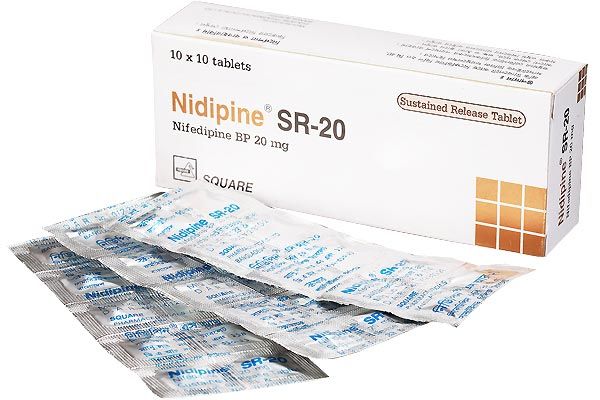
Nidipine SR
Cheaper & Alternative Brands
Same generic (Nifedipine), same form (Tablet (Sustained Release))
Clinical Prescribing Information
Medical monograph and safety information for healthcare professionals & patients.Indications & Clinical Uses
Nidipine SR is a specific and potent calcium-channel blocker with peripheral and coronary vasodilator properties. It reduces peripheral resistance, after load and blood pressure. It is used in the prophylaxis and treatment of angina, Raynauds phenomenon, ischaemic heart disease, hypertension and heart failure.
Dosage & Administration
The starting dose for patients not previously prescribed Nifedipine products, is one tablet once daily. The recommended dose in hypertension and angina prophylaxis is 20 mg twice daily during or after food. Dosage may be adjusted within the range 10 mg twice daily to 40 mg twice daily. Patients with liver dysfunction should commence therapy with 10 mg twice daily with careful monitoring. Patients with renal impairment do not require adjustment of dosage.
Contraindications
Cardiogenic shock, advanced aortic stenosis, nursing mothers, Gl obstruction, inflammatory bowel disease, hypotension and diabetes.
Side Effects & Adverse Reactions
Headache, flushing, lethargy, gravitational oedema rash, nausea, increased frequency of micturation, eye pain, gum hyperplasia, depression, tremor, photosensitivity and few cases of jaundice have been reported. These reactions may regress on discontinuation of therapy. Its introduction may induce attacks of ischaemic pain in some patients with angina pectoris.
Warnings & Precautions
Tablets should be swallowed whole and should not be bitten, chewed or broken up. It should be used with caution in patient whose cardiac reserve is poor. Should be withdrawn if ischaemic pain occurs or existing pain worsens shortly after initiating treatment. Use in diabetic patients requires adjustment of their control. Since the absorption of the drug could be modified by renal disease, caution should be exercised in treating such patients.
Pharmacology & Mechanism of Action
Nifedipine is an inhibitor of Calcium Channel Blocker that blocks the transmembrane influx of Calcium ions into muscle cells. Nifedipine has selective effects as a dilator of arterial vessels. Nifedipine dilates main coronary and systemic arteries. As a result blood pressure falls and this elicits a sympathetic reflex response causing tachycardia and an increased cardiac output. Pulmonary arterial pressure also falls. Nifedipine has direct negative inotropic effects on cardiac muscles and these effects are seen at higher doses than dose which causes arterial vasodilatation.