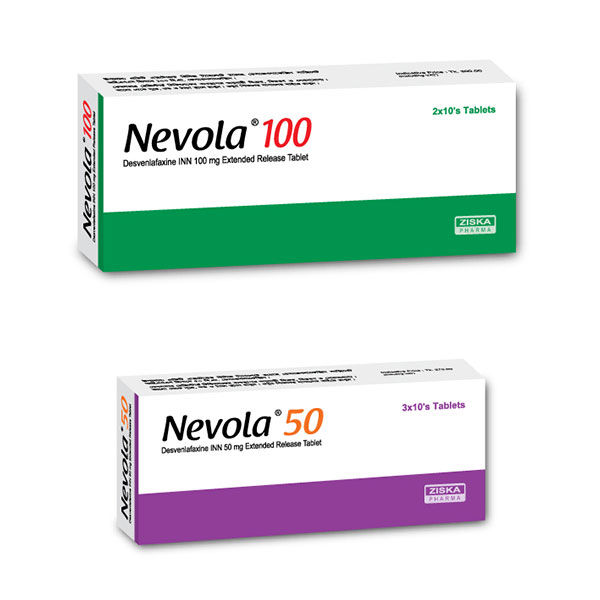
Nevola
Cheaper & Alternative Brands
Same generic (Desvenlafaxine Succinate), same form (Tablet (Extended Release))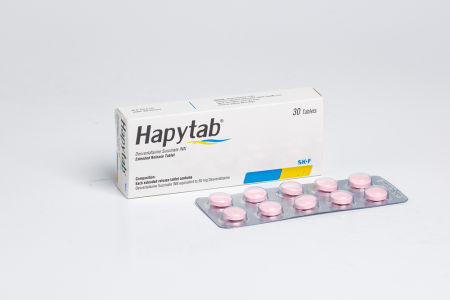
Clinical Prescribing Information
Medical monograph and safety information for healthcare professionals & patients.Indications & Clinical Uses
Hapytab is indicated for the treatment of Major Depressive Disorder (MDD). It is generally agreed that acute episodes of major depressive disorder require several months or longer of sustained pharmacologic therapy. Patients should be periodically reassessed to determine the need for continued treatment.
Dosage & Administration
The recommended dose for Desvenlafaxine Succinate is 50 mg once daily, with or without food. In clinical studies, doses of 50-400 mg/day were shown to be effective. When discontinuing therapy, gradual dose reduction is recommended whenever possible to minimize discontinuation symptoms. Desvenlafaxine Succinate should be taken at approximately the same time each day. Tablets must be swallowed whole with fluid and not divided, crushed, chewed, or dissolved.
Contraindications
Hypersensitivity to Desvenlafaxine Succinate, Venlafaxine Hydrochloride or to any excipients in the Desvenlafaxine formulation. The use of MAOIs (Mono Amine Oxidase Inhibitors) intended to treat psychiatric disorders with Desvenlafaxine or within 7 days of stopping the treatment with Desvenlafaxine is contraindicated. The use of Desvenlafaxine within 14 days of stopping MAOI intended to treat psychiatric disorders is also contraindicated.
Side Effects & Adverse Reactions
Nausea, dizziness, insomnia, hyperhidrosis, constipation, somnolence, decreased appetite, anxiety, dry mouth and specific male sexual function disorders.
Warnings & Precautions
Patients with Major Depressive Disorder (MDD) both adult and pediatric, may experience worsening of their depression and/or the emergence of suicidal ideation and behavior (suicidality) or unusual changes in behavior, whether they are taking antidepressant medications or not and this risk may persist until significant remission occurs. Pooled analysis of short-term placebo-controlled studies of antidepressant drugs (SSRIs and others) showed that these drugs increase the risk of suicidal thinking and behavior (suicidality) in children, adolescents and young adults (aged 18 to 24) with Major Depressive Disorder (MDD) and other psychiatric disorders. Short-term studies did not show an increase in the risk of suicidality with antidepressants compared to placebo in adults beyond age 24.
Pharmacology & Mechanism of Action
Desvenlafaxine is a synthetic form of the isolated major active metabolite of Venlafaxine, and is categorized as a Serotonin-Norepinephrine Reuptake Inhibitor (SNRI). It works by blocking the transporter reuptake protein for key neurotransmitters affecting mood, thereby leaving more active neurotransmitters in the synapse. The neurotransmitters affected are Serotonin (5-hydroxytryptamine) and Norepinephrine (Noradrenaline). It is approximately 10 times more potent at inhibiting Serotonin uptake than Norepinephrine uptake.
The exact mechanism of the antidepressive action of Desvenlafaxine is unknown, but is thought to be related to the potentiation of Serotonin and Norepinephrine in the central nervous system, through inhibition of their reuptake. Non-clinical studies have shown that Desvenlafaxine is a potent Serotonin and Norepinephrine Reuptake Inhibitor (SNRI).