Nalidex
Cheaper & Alternative Brands
Same generic (Nalidixic Acid), same form (Oral Suspension)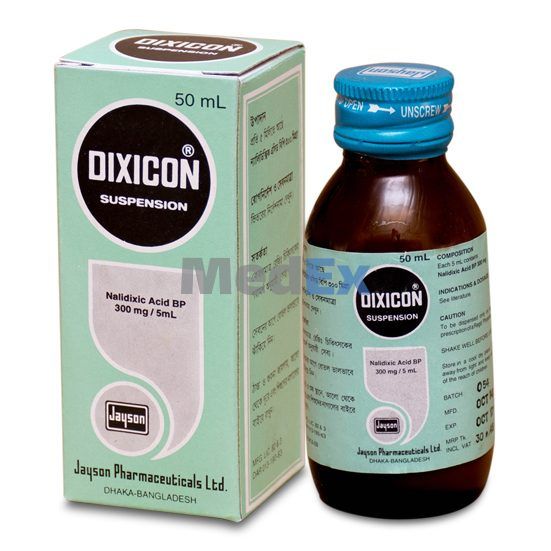

Clinical Prescribing Information
Medical monograph and safety information for healthcare professionals & patients.Indications & Clinical Uses
Dixicon is indicated in the treatment of urinary tract infection caused by susceptible Gram-negative organisms, including Proteus species, Klebsiella species, Enterobacter species and Escherichia coli.
Dosage & Administration
Adult
: initially is 1 g every 6 hours for 7 days reducing to 500 mg every 6 hours.
Children
: Infants and children 3 month of age and over Initial: Oral 13.75 mg per kg body weight every six hours for one or two weeks. Maintenance: Oral 8.25 mg per kg body weight every six hours or as prescribed by the physician.
Contraindications
Nalidixic acid is contraindicated in the following cases- Infants under 3 months, epilepsy, CNS lesions.
Side Effects & Adverse Reactions
Gastro-intestinal disturbances including nausea, vomiting, diarrhoea, haemolysis in G6PD deficiency, allergic reaction including urticaria, rashes, fever, arthralgia, eosinophilia, also myalgia, muscle weakness, phototoxicity, jaundice, visual disturbances and convulsions.
Warnings & Precautions
Risk-benefit must be considered during the first trimester of pregnancy and during breast feeding, impaired renal or hepatic function.
Pharmacology & Mechanism of Action
Nalidixic acid is a synthetic narrow spectrum antibacterial. It is bacteriostatic or bactericidal depending on the concentration. Nalidixic acid appears to act by inhibiting bacterial DNA synthesis, possibly by interfering with DNA polymerization. It is rapidly and completely absorbed from the G.I. Tract. Parent drug and active metabolites are distributed to most tissues specially to the kidney and to the urine. During normal renal function, half-life is 1.1 to 2.5 hours and when renal function is impaired, half-life is up to 21 hours. It is rapidly and almost completely excreted within 24 hours.