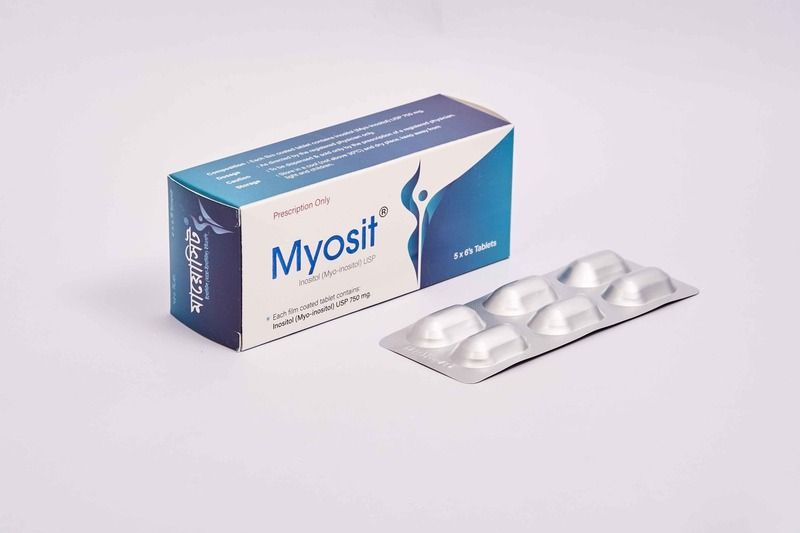
Myosit
Cheaper & Alternative Brands
Same generic (Myo-inositol), same form (Tablet)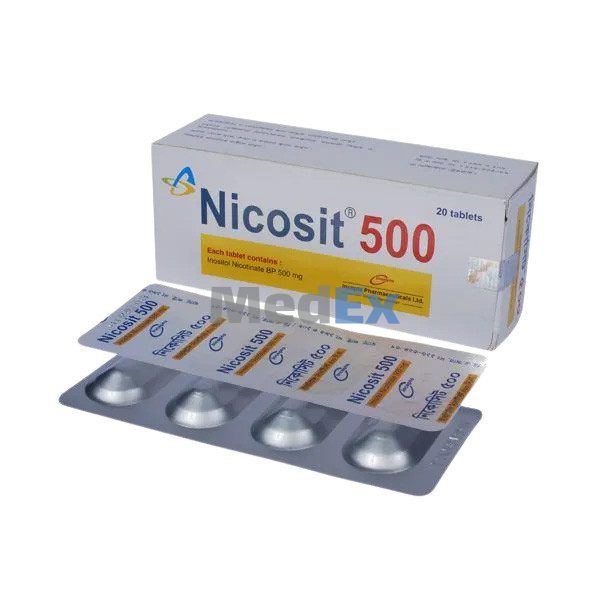

Clinical Prescribing Information
Medical monograph and safety information for healthcare professionals & patients.Indications & Clinical Uses
Myosit tablet is indicated in adults for the treatment of:
Polycystic ovary syndrome (PCOS)
Anovulation
Menstrual disorders such as amenorrhea
Hyperandrogenism complaints such as hirsutism, alopecia, acanthosis nigricans, acne
Ovarian hyperthecosis
Insulin resistance
Male infertility
Dosage & Administration
Recommended dosage for lipid-lowering and improving conditions related to peripheral vascular insufficiency ranges from 1500 mg to 4000 mg daily, in divided dosages of two to three times daily with or without food for at least 3 months.
Use in children and adolescents
: There is a lack of long-term safety data to support the safe use of Inositol (Myo-inositol) in children and adolescents.
Contraindications
Patients with a known hypersensitivity to any component of this product.
Side Effects & Adverse Reactions
Common: Well tolerated in recommended dose. Only mild gastrointestinal side effects can be shown with higher doses.
Warnings & Precautions
Patient with diabetes should be cautious about use of this medication.
Pharmacology & Mechanism of Action
Inositols are important molecules in promoting female fertility and in sustaining physiological pregnancy. Myo-inositol, a major form of Inositol, has an established role in human physiology. Myo-inositol represents the most abundant inositol isomer in humans, and it is commonly found in almost every tissue, particularly in brain, blood, fat, kidney, lung, ovaries, and testes, where it participates in several cellular pathways,
Inositol (Myo-inositol) as second messenger of gonadotropins and insulin, it guarantees the correct development of oocytes and the progression of embryogenesis. Available evidence demonstrates that the supplementation with Inositol (Myo-inositol) enhances the probability of achieving pregnancy and reduces the onset of adverse maternal effects and neonatal outcomes. Specifically, in the pursuit of pregnancy, Inositol (Myo-inositol) proved to induce ovulation and restore the physiological menstrual cycle in infertile women, particularly in those with Polycystic ovary syndrome (PCOS). Moreover, Inositol (Myo-inositol) supplementation is also useful for women undergoing Assisted reproductive technology (ART), improving oocyte and embryo quality. During pregnancy, Inositol (Myo-inositol) reduces the risk of altered metabolic conditions like Gestational Diabetes Mellitus (GDM), which may lead to miscarriages or stillborn babies. In addition, Inositol (Myo-inositol) seems to reduce the risk of Neural tube defects (NTDs) in folate-resistant women.