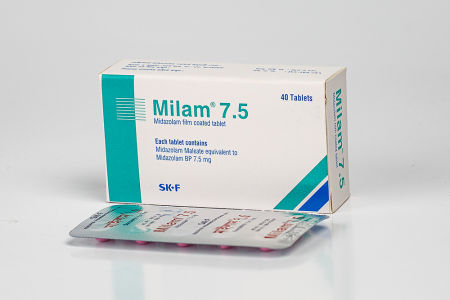
Milam
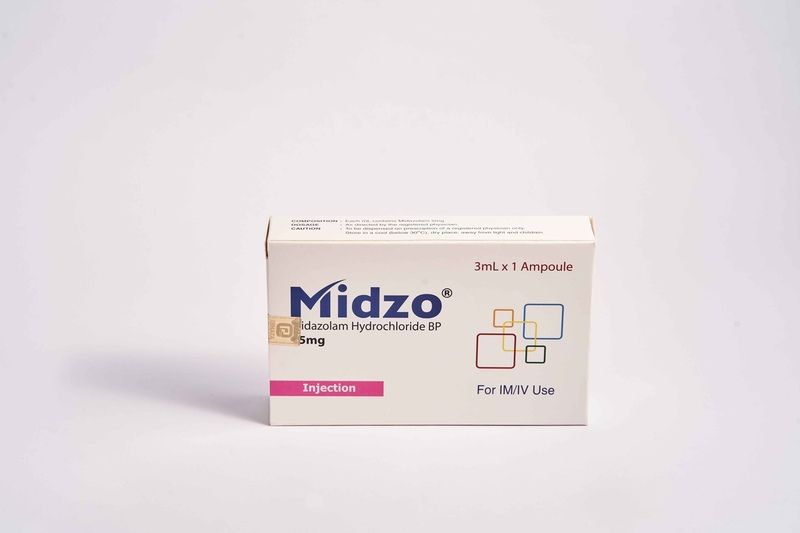
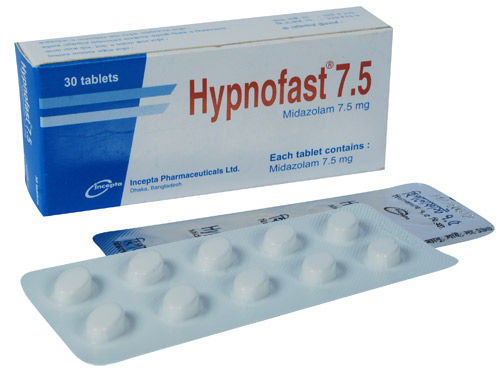
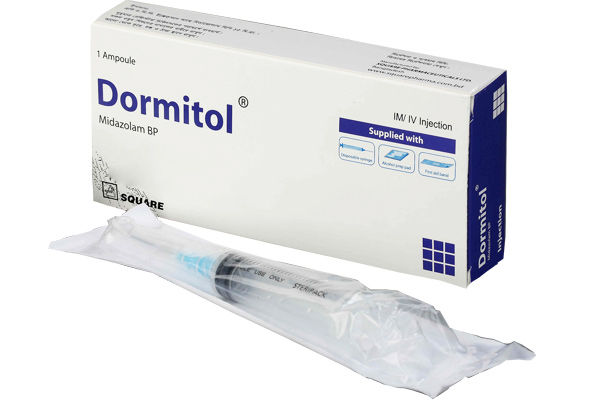
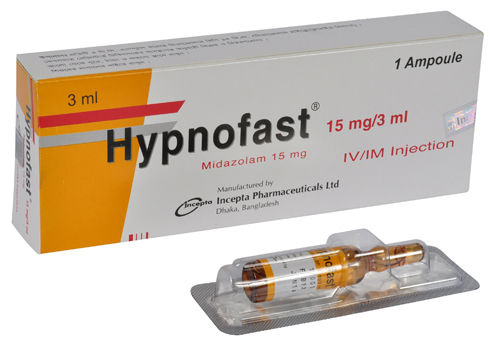
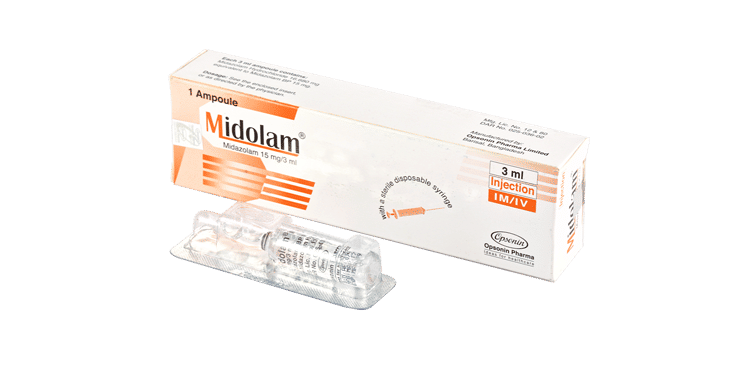
Cheaper & Alternative Brands
Same generic (Midazolam), same form (IM/IV Injection)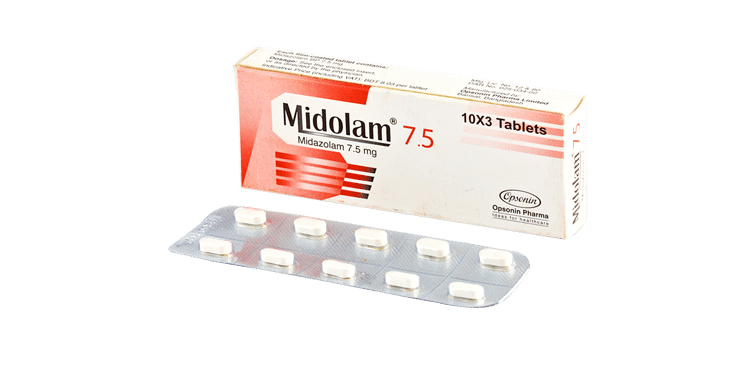


Clinical Prescribing Information
Medical monograph and safety information for healthcare professionals & patients.Indications & Clinical Uses
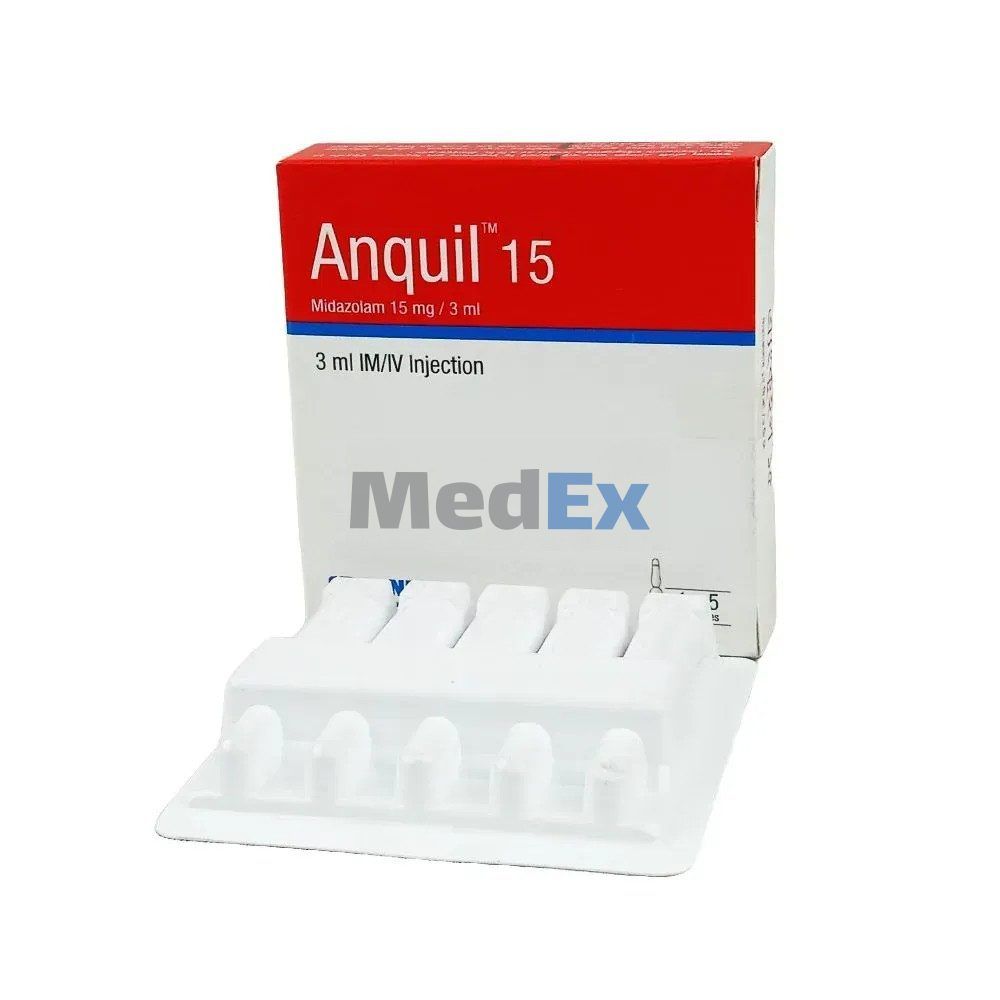
Anquil is indicated in-
Short-term treatment of insomnia.
Sedation in premedication before surgical or diagnostic procedures.
Dosage & Administration
Oral dosage:
For adults
: 7.5-15 mg daily.
In elderly and debilitated patients
: The recommended dose is 7.5 mg.
In premedication
: 15 mg of Midazolam should be given 30-60 minutes before the procedure.
Intravenous administration:
Endoscopic or Cardiovascular Procedures
: In healthy adults, the initial dose is approximately 2.5 mg. In cases of severe illness and in elderly patients, the initial dose must be reduced to 1 to 1.5 mg.
Induction of Anesthesia
: The dose is 10-15 mg.
Intramuscular administration:
Adult
: 0.07-0.1 mg/kg body weight. The usual dose is about 5 mg.
Children
: 0.15-0.20 mg/kg
Elderly and debilitated patients
: 0.025-0.05 mg/kg
Rectal administration in children:
For preoperative sedation
: Rectal administration of the ampoule solution (0.35-0.45 mg/kg) 20-30 min. before induction of general anesthesia.
Contraindications
Midazolam must not be given to patients with severe respiratory insufficiency, severe hepatic insufficiency, myasthenia gravis, sleep apnea syndrome and with known hypersensitivity to benzodiazepines or to any component of the product
Side Effects & Adverse Reactions
At the start of therapy, drowsiness during daytime, confusion, fatigue, headache and muscle weakness may occur which usually disappear with repeated administration. Following parenteral (IV or IM) administration of Anquil, fluctuations in vital signs have been noted including respiratory depression, apnea, variations in blood pressure and pulse rate.
Warnings & Precautions
Anquil IV should be administered very slowly.
Pharmacology & Mechanism of Action
The actions of benzodiazepines such as midazolam are mediated through the inhibitory neurotransmitter gamma-aminobutyric acid (GABA), which is one of the major inhibitory neurotransmitters in the central nervous system. Benzodiazepines increase the activity of GABA, thereby producing a sedating effect, relaxing skeletal muscles, and inducing sleep, anesthesia, and amnesia. Benzodiazepines bind to the benzodiazepine site on GABA-A receptors, which potentiates the effects of GABA by increasing the frequency of chloride channel opening. These receptors have been identified in different body tissues including the heart and skeletal muscle, although mainly appear to be present in the central nervous system.