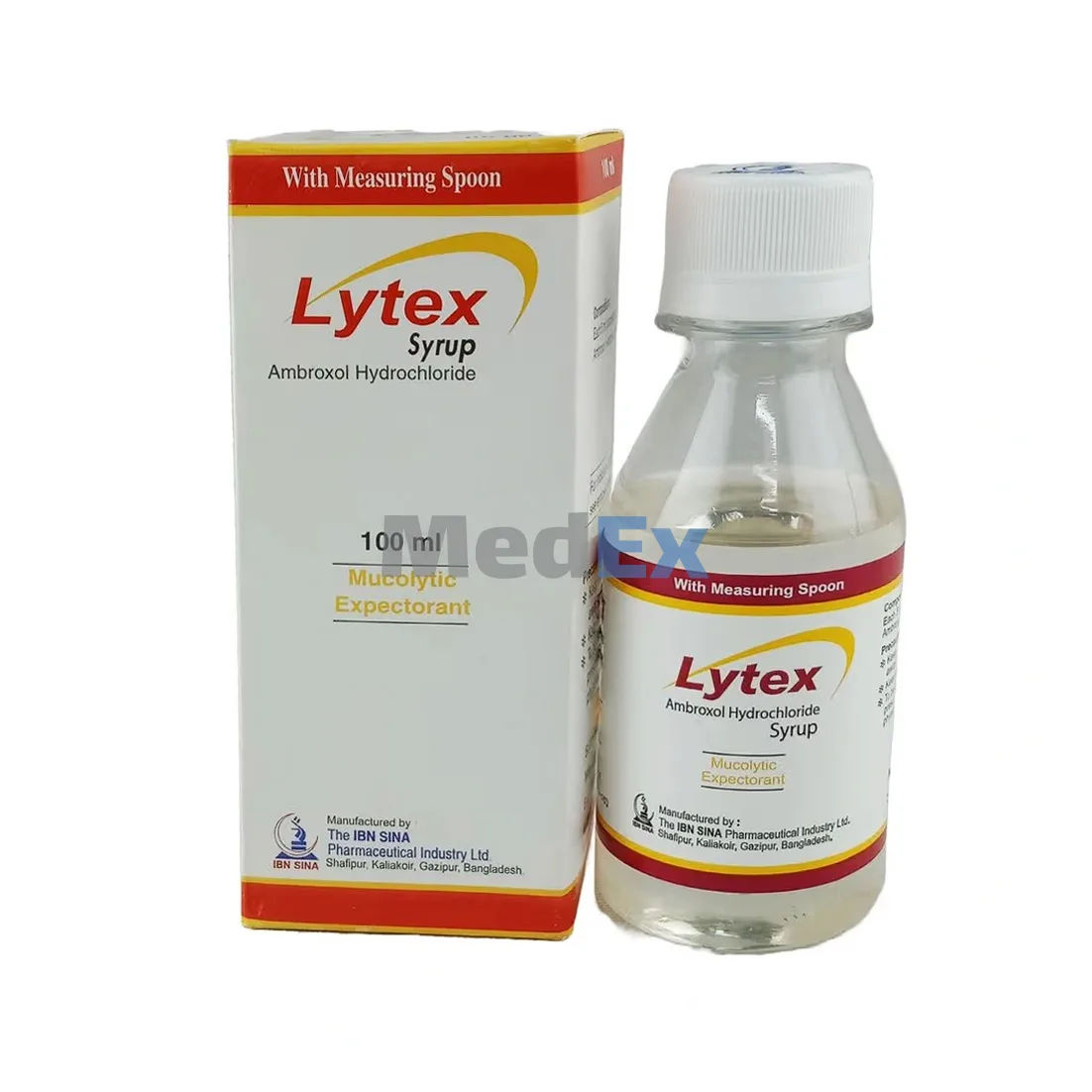
Lytex
Cheaper & Alternative Brands
Same generic (Ambroxol Hydrochloride), same form (Syrup)
Clinical Prescribing Information
Medical monograph and safety information for healthcare professionals & patients.Indications & Clinical Uses
Acorex is indicated in-
Productive cough
Acute and chronic inflammatory disorders of upper and lower respiratory tracts associated with viscid mucus including acute and chronic bronchitis
Inflammatory disease of rhinopharyngeal tract (laryngitis, pharyngitis, sinusitis and rhinitis) associated with viscid mucus
Asthmatic bronchitis bronchial asthma with thick expectoration
Bronchiectasis
Chronic pneumonia etc.
Dosage & Administration
Average daily dose (preferably after meal):
Pediatric Drops:
0-6 months
: 0.5 ml 2 times a day
6-12 months
: 1 ml 2 times a day
1-2 years
: 1.25 ml 2 times a day
Syrup:
2-5 years
: 2.5 ml (1/2 teaspoonful) 2-3 times a day
5-10 years
: 5 ml (1 teaspoonful) 2-3 times a day
10 years and adults
: 10 ml (2 teaspoonful) 3 times a day.
Sustained release capsule: Adult and children over 12 years old: 1 capsule once daily.
Contraindications
Contraindicated in known hypersensitivity to Ambroxol or Bromhexine.
Side Effects & Adverse Reactions
Gastrointestinal side effects like epigastric pain, stomach overfill feeling may occur occasionally. Rarely allergic responses such as eruption, urticaria or angioneurotic edema have been reported.
Warnings & Precautions
Acorex should be given cautiously to patients with gastric and duodenal ulceration or convulsive disorders. Patients with hepatic and renal insufficiency should take it with caution.
Pharmacology & Mechanism of Action
Ambroxol is the active metabolite of bromhexine and it has been proven that this metabolite possesses a greater bronchosecretolytic effect than bromhexine. It improves sputum rheology by hydrating mechanism leading to liquefaction of mucus in the lumen of respiratory tract, thus facilitating expectoration of mucus and reducing dyspnea. It stimulates production of phospholipids of surfactant by alveolar cells, thus contributing to the lowering of superficial tension in the alveoli. It also reduces bronchial hyperactivity. Ambroxol has anti inflammatory properties owing to the inhibitory effect on the production of cellular cytokines and arachidonic acid metabolites. In patients with COPD it traditionally improves airway patency.