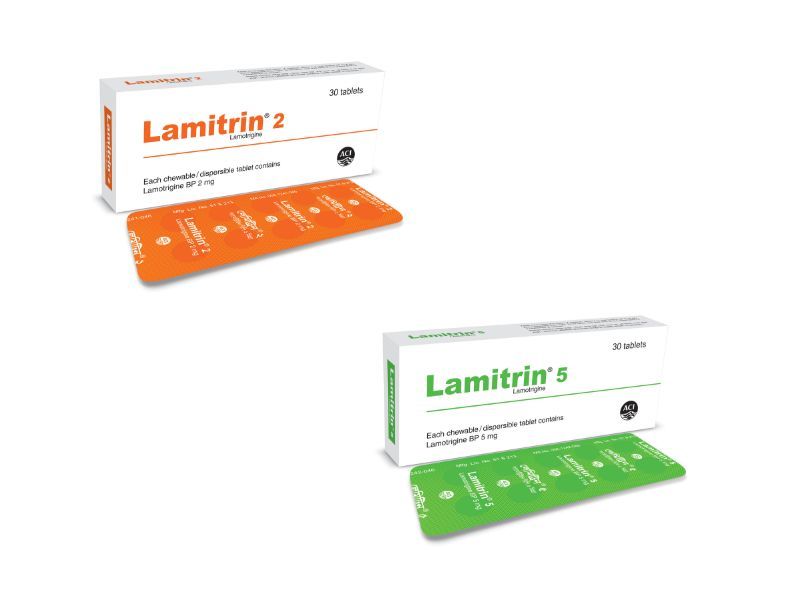
Lamitrin
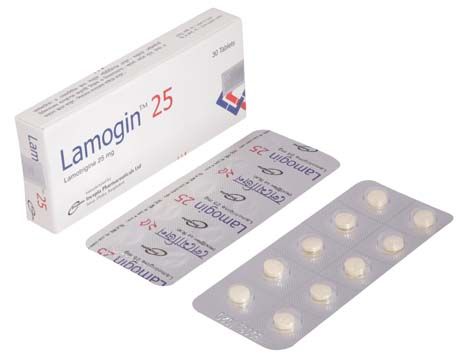
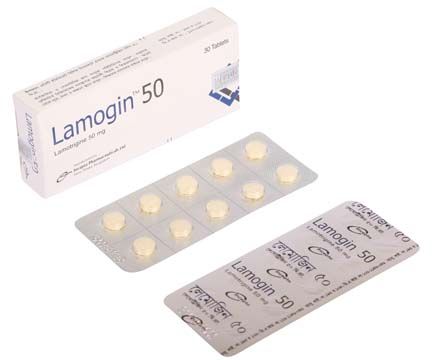
Cheaper & Alternative Brands
Same generic (Lamotrigine), same form (Dispersible Tablet)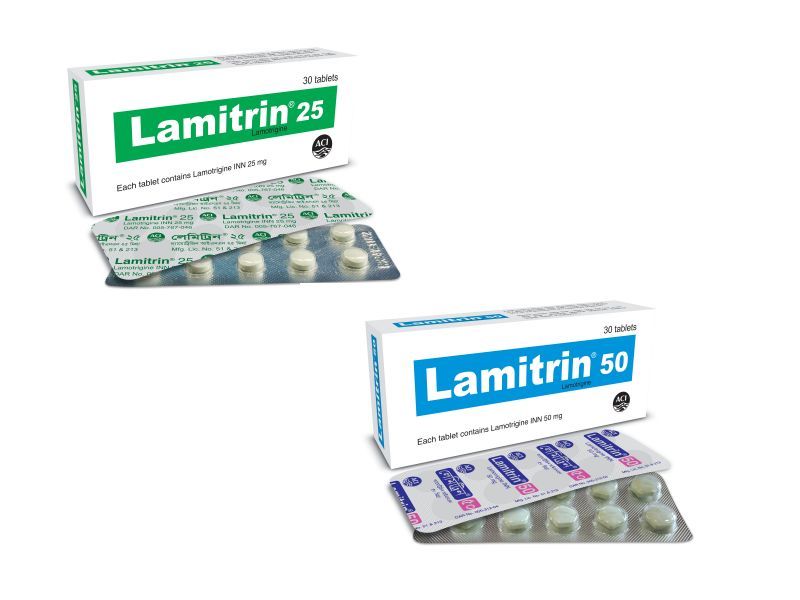
Clinical Prescribing Information
Medical monograph and safety information for healthcare professionals & patients.Indications & Clinical Uses
Lameptil is an antiepileptic drug (AED) indicated for:
Epilepsy- adjunctive therapy in patients aged 2 years and older:
Partial-onset seizures
Primary generalized tonic-clonic seizures
Generalized seizures of Lennox-Gastaut syndrome
Epilepsy- monotherapy in patients aged 16 years and older.
Bipolar disorder- patients aged 18 years and older.
Dosage & Administration
Epilepsy
-
Table-1:
Escalation Regimen for Lamotrigine in Patients Older than 12 Years with Epilepsy
Weeks 1 & 2:
In patients not taking Carbamazepine, Phenytoin, Phenobarbital, Primidone or Valproate: 25 mg every day
In patients taking Valproate: 25 mg every other day
In patients taking Carbamazepine, Phenytoin, Phenobarbital or Primidone and not taking Valproate: 50 mg/day
Weeks 3 & 4:
In patients not taking Carbamazepine, Phenytoin, Phenobarbital, Primidone or Valproate: 50 mg/day
In patients taking Valproate: 25 mg every day
In patients taking Carbamazepine, Phenytoin, Phenobarbital or Primidone and not taking Valproate: 100 mg/day (in 2 divided doses)
Week 5 onward to maintenance:
In patients not taking Carbamazepine, Phenytoin, Phenobarbital, Primidone or Valproate: Increase by 50 mg/day every 1 to 2 weeks
In patients taking Valproate: Increase by 25 to 50 mg/day every 1 to 2 weeks
In patients taking Carbamazepine, Phenytoin, Phenobarbital or Primidone and not taking Valproate: Increase by 100 mg/day every 1 to 2 weeks
Usual maintenance dose:
In patients not taking Carbamazepine, Phenytoin, Phenobarbital, Primidone or Valproate: 225 to 375 mg/day (in 2 divided doses)
In patients taking Valproate: 100 to 200 mg/day with Valproate alone 100 to 400 mg/day with Valproate and other drugs that induce glucuronidation (in 1 or 2 divided doses)
In patients taking Carbamazepine, Phenytoin, Phenobarbital or Primidone and not taking Valproate: 300 to 500 mg/day (in 2 divided doses)
Table-2: Escalation Regimen for Lamotrigine in Patients Aged 2 to 12 Years with Epilepsy
Weeks 1 & 2:
In patients not taking Carbamazepine, Phenytoin, Phenobarbital, Primidone or Valproate: 0.3 mg/kg/day in 1 or 2 divided doses
In patients taking Valproate: 0.15 mg/kg/day in 1 or 2 divided doses
In patients taking Carbamazepine, Phenytoin, Phenobarbital or Primidone and not taking Valproate: 0.6 mg/kg/day (in 2 divided doses)
Weeks 3 & 4:
In patients not taking Carbamazepine, Phenytoin, Phenobarbital, Primidone or Valproate: 0.6 mg/kg/day (in 2 divided doses)
In patients taking Valproate: 0.3 mg/kg/day in 1 or 2 divided doses
In patients taking Carbamazepine, Phenytoin, Phenobarbital or Primidone and not taking Valproate: 1.2 mg/kg/day (in 2 divided doses)
Week 5 onward to maintenance:
In patients not taking Carbamazepine, Phenytoin, Phenobarbital, Primidone or Valproate: The dose should be increased every 1 to 2 weeks as follows-calculate 0.6 mg/kg/day
In patients taking Valproate: The dose should be increased every 1 to 2 weeks as follows-calculate 0.3 mg/kg/day
In patients taking Carbamazepine, Phenytoin, Phenobarbital or Primidone and not taking Valproate: The dose should be increased every 1 to 2 weeks as follows-calculate 1.2 mg/kg/day
Usual maintenance dose:
In patients not taking Carbamazepine, Phenytoin, Phenobarbital, Primidone or Valproate: 4.5 to 7.5 mg/kg/day (maximum 300 mg/day in 2 divided doses)
In patients taking Valproate: 1 to 3 mg/kg/day with Valproate alone 1 to 5 mg/kg/day (maximum 200 mg/day in 1 or 2 divided doses)
In patients taking Carbamazepine, Phenytoin, Phenobarbital or Primidone and not taking Valproate: 5 to 15 mg/kg/day (maximum 400 mg/day in 2 divided doses)
Table-3:
The Initial Weight-Based Dosing Guide for Patients Aged 2 to 12 Years Taking Valproate (Weeks 1 to 4) with Epilepsy
Weeks 1 & 2:
If the patients weight is 6.7 kg to 14 kg: 2 mg every other day
If the patients weight is 14.1 kg to 27 kg: 2 mg every day
If the patients weight is 27.1 kg to 34 kg: 4 mg every day
If the patients weight is 34.1 kg to 40 kg: 5 mg every day
Weeks 3 & 4:
If the patients weight is 6.7 kg to 14 kg: 2 mg every day
If the patients weight is 14.1 kg to 27 kg: 4 mg every day
If the patients weight is 27.1 kg to 34 kg: 8 mg every day
If the patients weight is 34.1 kg to 40 kg: 10 mg every day
Bipolar disorder
-
Table-4: Escalation Regimen for Lamotrigine in Adults with Bipolar Disorder
Weeks 1 & 2:
In patients not taking Carbamazepine, Phenytoin, Phenobarbital, Primidone or Valproate: 25 mg daily
In patients taking Valproate: 25 mg every other day
In patients taking Carbamazepine, Phenytoin, Phenobarbital or Primidone and not taking Valproate: 50 mg daily
Weeks 3 & 4:
In patients not taking Carbamazepine, Phenytoin, Phenobarbital, Primidone or Valproate: 50 mg daily
In patients taking Valproate: 25 mg daily
In patients taking Carbamazepine, Phenytoin, Phenobarbital or Primidone and not taking Valproate: 100 mg daily (in divided doses)
Week 5:
In patients not taking Carbamazepine, Phenytoin, Phenobarbital, Primidone or Valproate: 100 mg daily
In patients taking Valproate: 50 mg daily
In patients taking Carbamazepine, Phenytoin, Phenobarbital or Primidone and not taking Valproate: 200 mg daily (in divided doses)
Week 6:
In patients not taking Carbamazepine, Phenytoin, Phenobarbital, Primidone or Valproate: 200 mg daily
In patients taking Valproate: 100 mg daily
In patients taking Carbamazepine, Phenytoin, Phenobarbital or Primidone and not taking Valproate: 300 mg daily (in divided doses)
Week 7:
In patients not taking Carbamazepine, Phenytoin, Phenobarbital, Primidone or Valproate: 200 mg daily
In patients taking Valproate: 100 mg daily
In patients taking Carbamazepine, Phenytoin, Phenobarbital or Primidone and not taking Valproate: up to 400 mg daily (in divided doses)
Side Effects & Adverse Reactions
Adult: Dizziness, headache, diplopia, ataxia, nausea, blurred vision, somnolence, pharyngitis, and rash.
Children: Vomiting, diarrhea, infection, fever, abdominal pain, and tremor.
Warnings & Precautions
Discontinue at the first sign of rash. Blood dyscrasias (e.g., neutropenia, thrombocytopenia, pancytopenia): may occur. Monitor for signs of anemia, unexpected infection, or bleeding. Suicidal behavior and ideation: Monitor for suicidal thoughts or behaviors. Aseptic meningitis: Monitor for signs of meningitis.
Pharmacology & Mechanism of Action
The exact mechanism of action of lamotrigine is not fully elucidated, as it may exert cellular activities that contribute to its efficacy in a range of conditions. Although chemically unrelated, lamotrigine actions resemble those of phenytoin and carbamazepine, inhibiting voltage-sensitive sodium channels, stabilizing neuronal membranes, thereby modulating the release of presynaptic excitatory neurotransmitters.
Lamotrigine likely acts by inhibiting sodium currents by selective binding to the inactive sodium channel, suppressing the release of the excitatory amino acid, glutamate. The mechanism of action of lamotrigine in reducing anticonvulsant activity is likely the same in managing bipolar disorder. Studies on lamotrigine have identified its binding to sodium channels in a fashion similar to local anesthetics, which could explain the demonstrated clinical benefit of lamotrigine in some neuropathic pain states.
Lamotrigine displays binding properties to several different receptors. In laboratory binding assays, it demonstrates weak inhibitory effect on the serotonin 5-HT3 receptor. Lamotrigine also weakly binds to Adenosine A1/A2 receptors, α1/α2/β adrenergic receptors, dopamine D1/D2 receptors, GABA A/B receptors, histamine H1 receptors, κ-opioid receptor (KOR), mACh receptors and serotonin 5-HT2 receptors with an IC50>100 µM. Weak inhibitory effects were observed at sigma opioid receptors. An in vivo study revealed evidence that lamotrigine inhibits Cav2.3 (R-type) calcium currents, which may also contribute to its anticonvulsant effects.