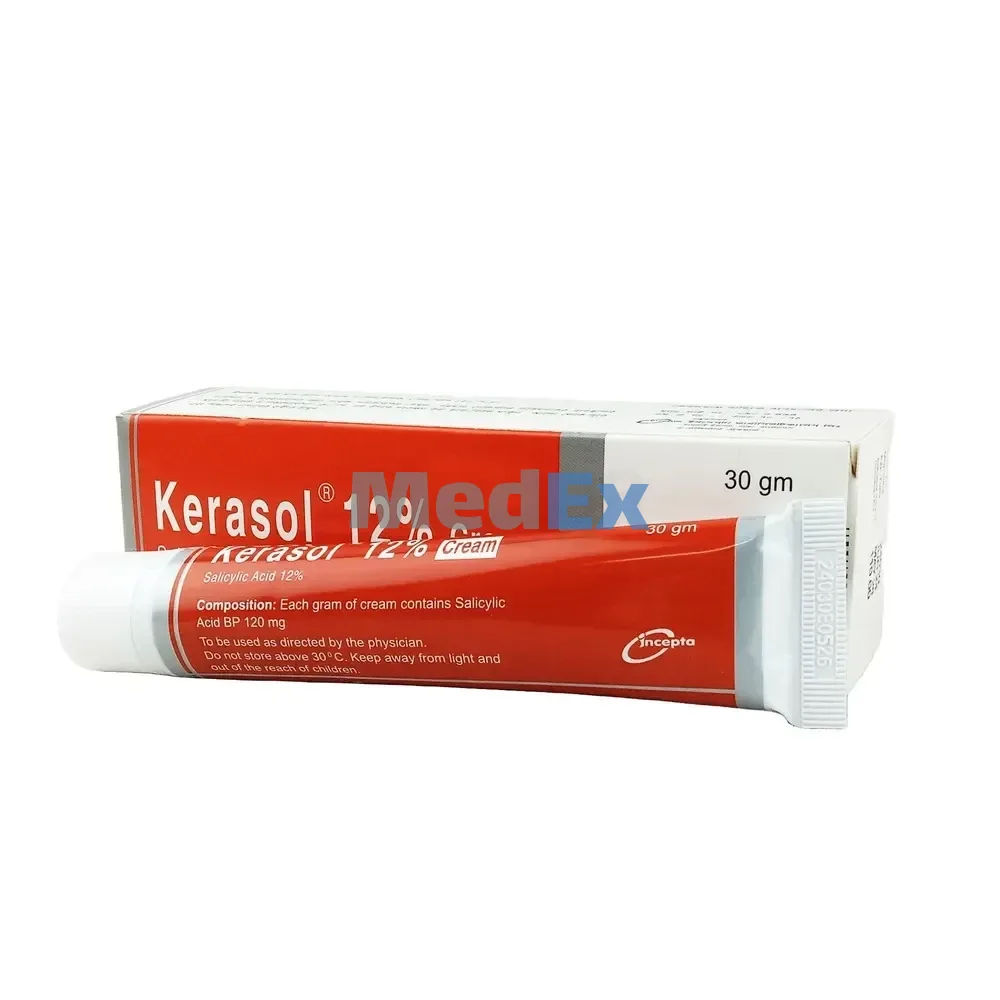
Kerasol
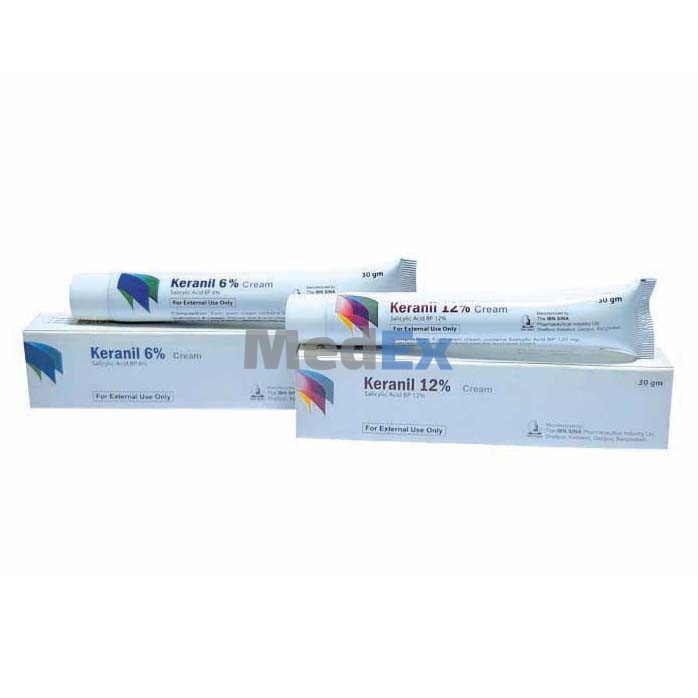
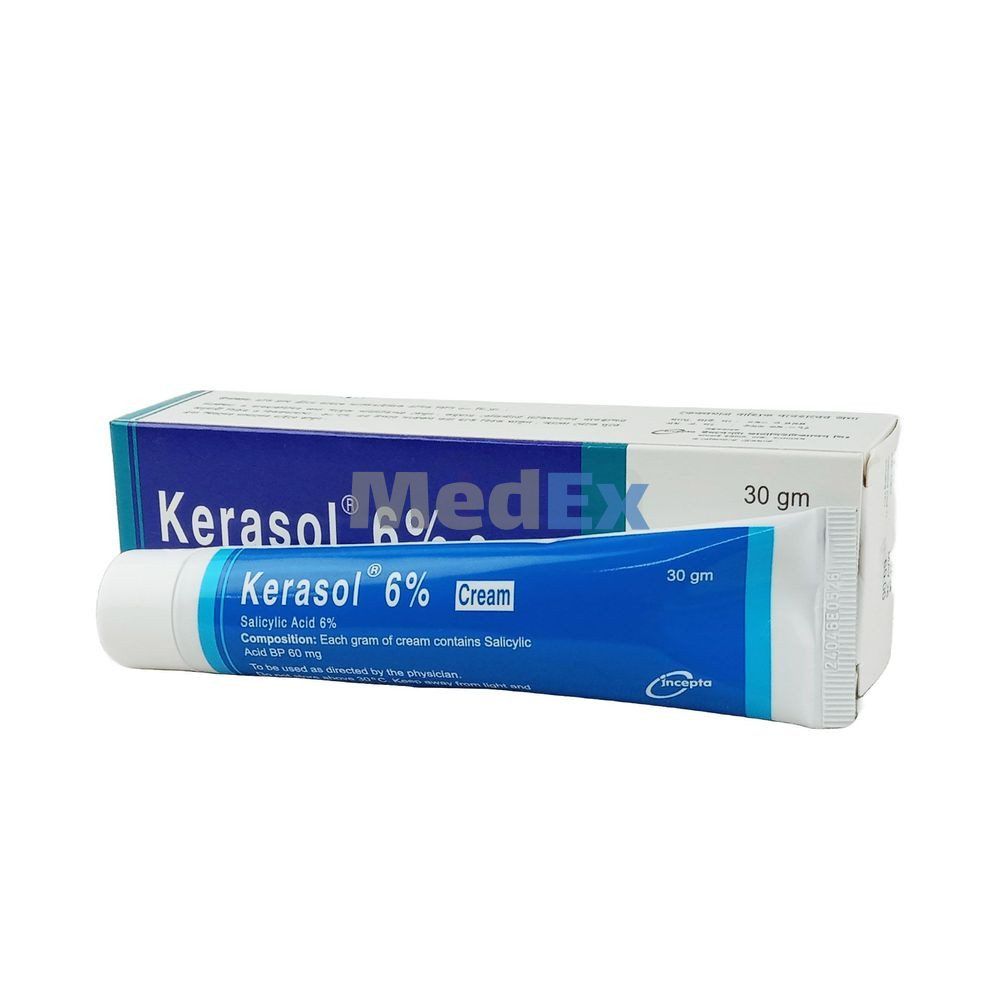
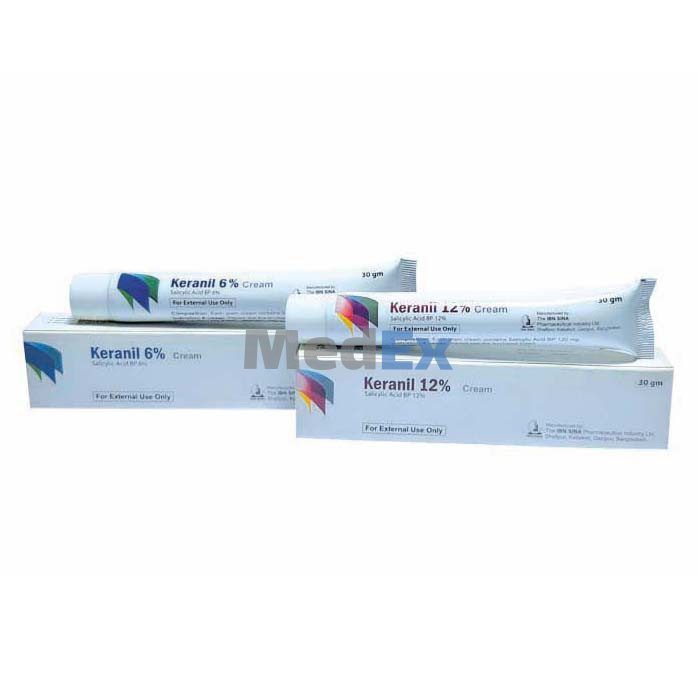
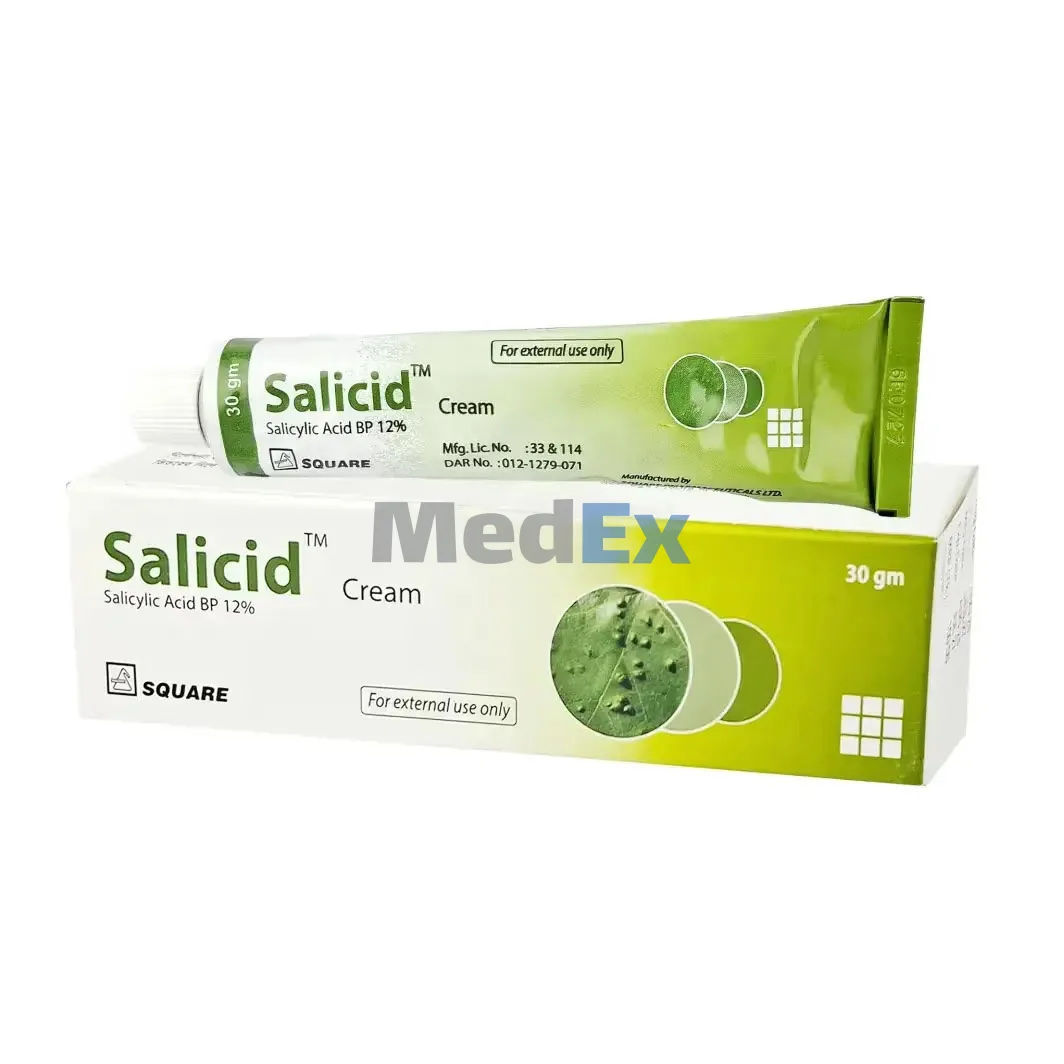
Cheaper & Alternative Brands
Same generic (Salicylic Acid), same form (Cream)
Clinical Prescribing Information
Medical monograph and safety information for healthcare professionals & patients.Indications & Clinical Uses
6% Glowderma cream
: This topical preparations treat the following common scaly conditions:
Chronic atopic dermatitis
Lichen simplex
Psoriasis
Seborrhoeic dermatitis
Ichthyosis
12% Glowderma cream
... Read more
6% Glowderma cream
: This topical preparations treat the following common scaly conditions:
Chronic atopic dermatitis
Lichen simplex
Psoriasis
Seborrhoeic dermatitis
Ichthyosis
12% Glowderma cream
: This topical preparations treat the following common scaly conditions:
Warts (small excessive growths of skin caused by a type of virus. Warts often occur on the fingers or on the back of the hands).
Verruca (occurs only on the sole of the feet and can be painful. It often looks like a small white ring of skin with a black dot in the centre).
Corns and Calluses (are hard, thick pads of skin caused by pressure and friction. They usually occur on the feet due to poorly fitting shoes and can occur on the hands).
2% Glowderma lotion
: This topical preparation is indicated in-
Mild to moderate acne
Blackheads and whiteheads
Redness & swelling of face
Pimples
To prevent future acne breakouts
Dosage & Administration
6% & 12% Salicylic Acid
: Apply to affected area once daily. Hydrate area for 5 minutes prior to application if possible. Occlude the area at night. Wash off in morning. Salicylic Acid is used in children over 2 years.
2% Salicylic Acid
: Apply enough medicine to cover the affected area once daily in 1st week then 2 to 3 times daily from 2nd week and rub gently. After 3-5 minutes rinse face with cool water. Salicylic Acid is used in children over 2 years.
Contraindications
It should not be used in any patient known to be sensitive to Salicylic Acid or any other listed ingredients.
Side Effects & Adverse Reactions
An allergic reaction (shortness of breath, closing of the throat, swelling of the lips, face or tongue or hives) or severe skin irritation.
Warnings & Precautions
For external use only. Avoid contact with eyes and other mucous membranes.
Pharmacology & Mechanism of Action
Salicylic Acid has a potent keratolytic & a slight antiseptic action when applied topically to the skin. In low concentrations, the drug has keratoplastic activity (correction of abnormal keratinization) & in higher concentrations, the drug has keratolytic activity (causes peeling of skin). Salicylic Acid softens & destroys the stratum corneum by increasing endogenous hydration (water concentration), probably because of decreased pH, which causes the cornified epithelium (horny layer of the skin) to swell, soften, & then desquamate. Necrosis of normal skin has been associated with overuse of the drug. At high concentrations, Salicylic Acid has a caustic effect. Moisture is essential for Salicylic Acid to exert its action on the skin and for maceration and desquamation of epidermal tissue to occur. The drug has weak antifungal & antibacterial activity.