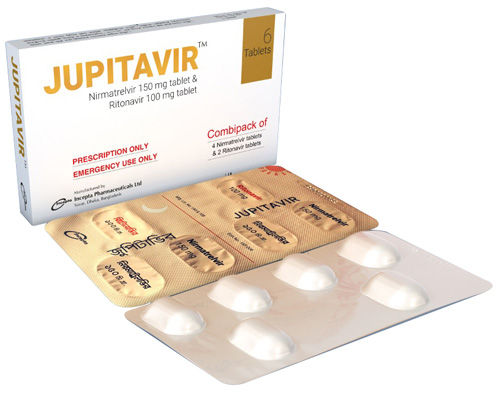
Jupitavir
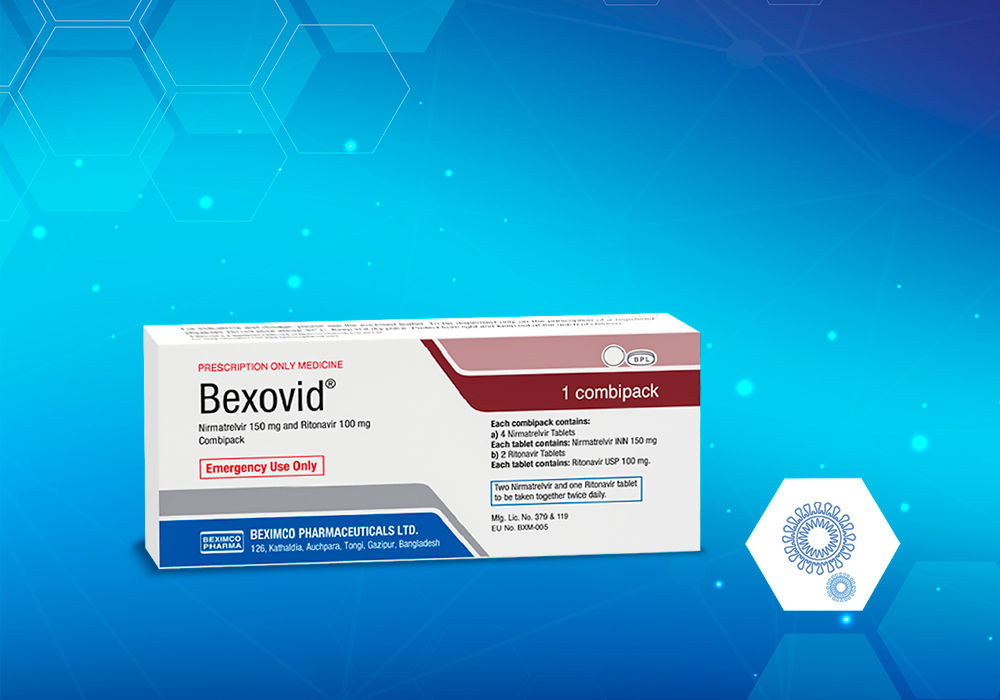
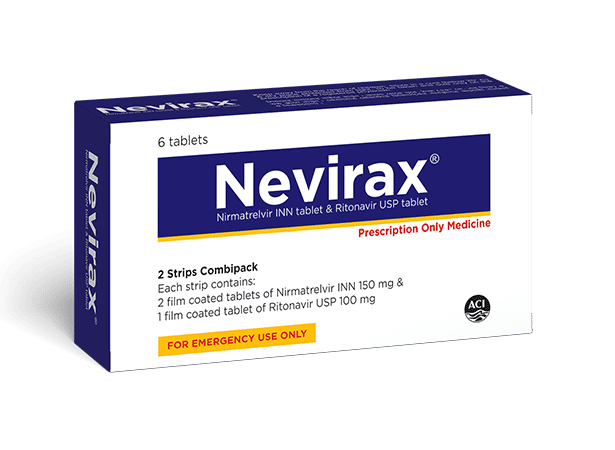
Cheaper & Alternative Brands
Same generic (Nirmatrelvir + Ritonavir), same form (Tablet)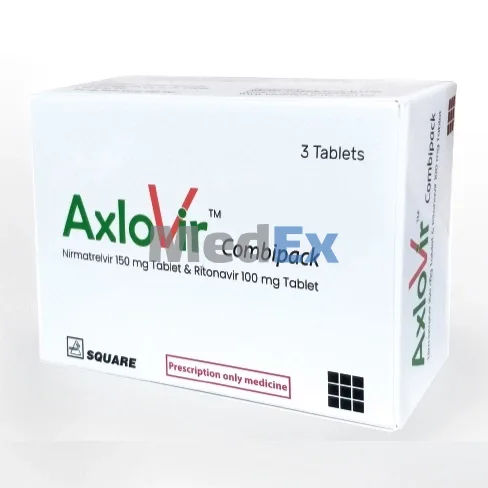
Clinical Prescribing Information
Medical monograph and safety information for healthcare professionals & patients.Indications & Clinical Uses
EUA of Nirmatrelvir, a SARS-CoV-2 main protease (Mpro: also referred to as 3CLpro or nsp5 protease) inhibitor, and Ritonavir, an HIV-1 protease inhibitor and CYP3A inhibitor, for the treatment of mild-to-moderate coronavirus disease 2019 (COVID-19) in adults and pediatric patients (12 years of age and
... Read more
EUA of Nirmatrelvir, a SARS-CoV-2 main protease (Mpro: also referred to as 3CLpro or nsp5 protease) inhibitor, and Ritonavir, an HIV-1 protease inhibitor and CYP3A inhibitor, for the treatment of mild-to-moderate coronavirus disease 2019 (COVID-19) in adults and pediatric patients (12 years of age and older weighing at least 40 kg) with positive results of direct severe acute respiratory syndrome coronavirus 2 (SARS-CoV-2) viral testing, and who are at high risk for progression to severe COVID-19, including hospitalization or death.
This is not authorized for-
initiation of treatment in patients requiring hospitalization due to severe or critical COVID-19.
pre-exposure or post-exposure prophylaxis for prevention of COVID-19.
use longer than 5 consecutive days
Dosage & Administration
Initiate this tablet treatment as soon as possible after diagnosis of COVID-19 and within 5 days of symptom onset. Administer orally with or without food.
Dosage: 300 mg Nirmatrelvir (two 150 mg tablets) with 100 mg Ritonavir (one 100 mg tablet), with all three tablets taken together twice daily for 5 days. Dose reduction for moderate renal impairment (eGFR ≥30 to <60 mL/min): 150 mg Nirmatrelvir (one 150 mg tablet) with 100 mg Ritonavir (one 100 mg tablet), with both tablets taken together twice daily for 5 days.
This tablet is not recommended in patients with severe renal impairment (eGFR <30 mL/min). This is not recommend in patients with severe hepatic impairment (Child-Pugh Class C).
Contraindications
History of clinically significant hypersensitivity reactions to the active ingredients (Nirmatrelvir or Ritonavir) or any other components.
Co-administration with drugs highly dependent on CYP3A for clearance and for which elevated concentrations are associated with serious and/or life-threatening reactions.
Co-administration with potent CYP3A inducers where significantly reduced Nirmatrelvir or Ritonavir plasma concentrations may be associated with the potential for loss of virologic response and possible resistance.
Side Effects & Adverse Reactions
Adverse events (incidence >1% and subject difference) were dysgeusia, diarrhea, hypertension, and myalgia.
Warnings & Precautions
The concomitant use of this tablet and certain other drugs may result in potentially significant drug interactions. Consult the full prescribing information prior to and during treatment for potential drug interactions.
Hepatotoxicity
: Hepatic transaminase elevations, clinical hepatitis, and jaundice have occurred in patients receiving Ritonavir.
HIV-1 Drug Resistance
: This tablet use may lead to a risk of HIV-1 developing resistance to HIV protease inhibitors in individuals with uncontrolled or undiagnosed HIV-1 infection.
Pharmacology & Mechanism of Action
Nirmatrelvir is a Peptidomimetic inhibitor of the SARS-CoV-2 main protease (Mpro), also referred to as 3C-like protease (3CLpro) or nsp5 protease. Inhibition of SARS-CoV-2 Mpro renders it incapable of processing polyprotein precursors, preventing viral replication. Nirmatrelvir inhibited the activity of recombinant SARS-CoV-2 Mpro in a biochemical assay with a ki value of 3.1 nM and an IC50 value of 19.2 nM. Nirmatrelvir was found to bind directly to the SARS-CoV-2 Mpro active site by X-ray crystallography. Ritonavir is an HIV-1 protease inhibitor but is not active against SARS-CoV-2 Mpro. Ritonavir inhibits the CYP3A-mediated metabolism of Nirmatrelvir, resulting in increased plasma concentrations of Nirmatrelvir.