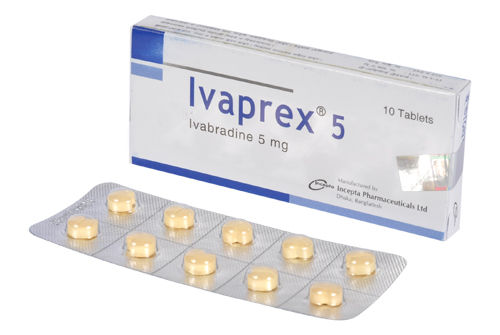
Ivaprex
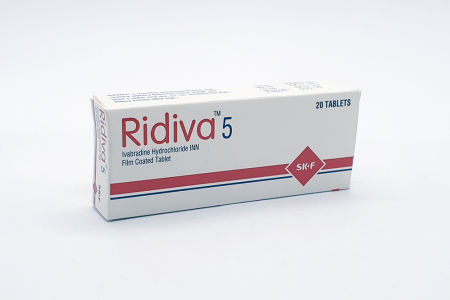
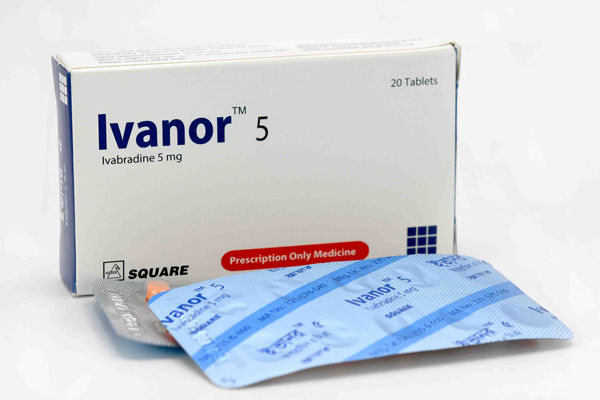
Cheaper & Alternative Brands
Same generic (Ivabradine), same form (Tablet)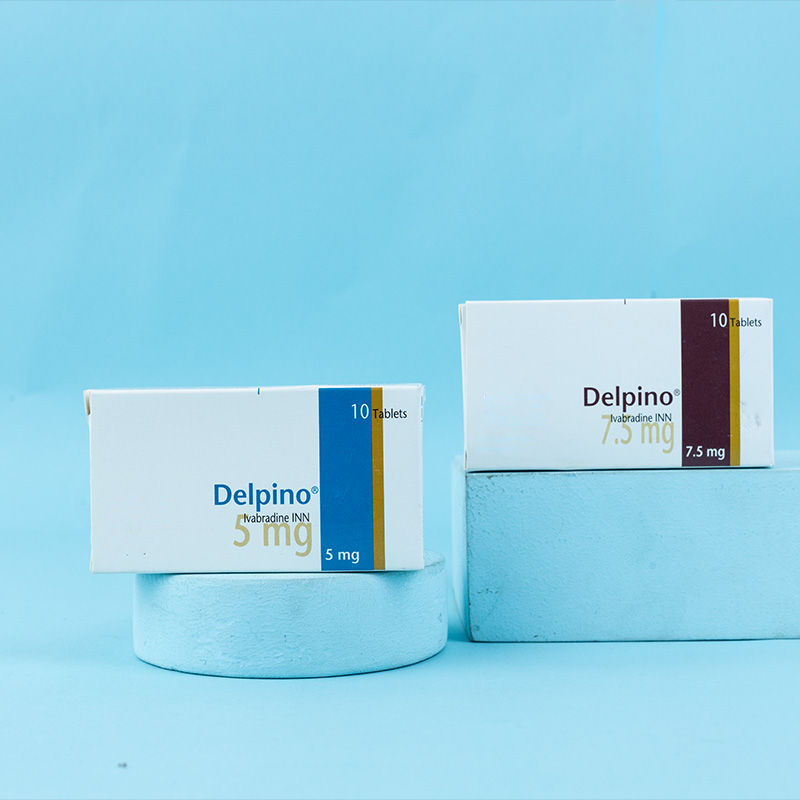

Clinical Prescribing Information
Medical monograph and safety information for healthcare professionals & patients.Indications & Clinical Uses
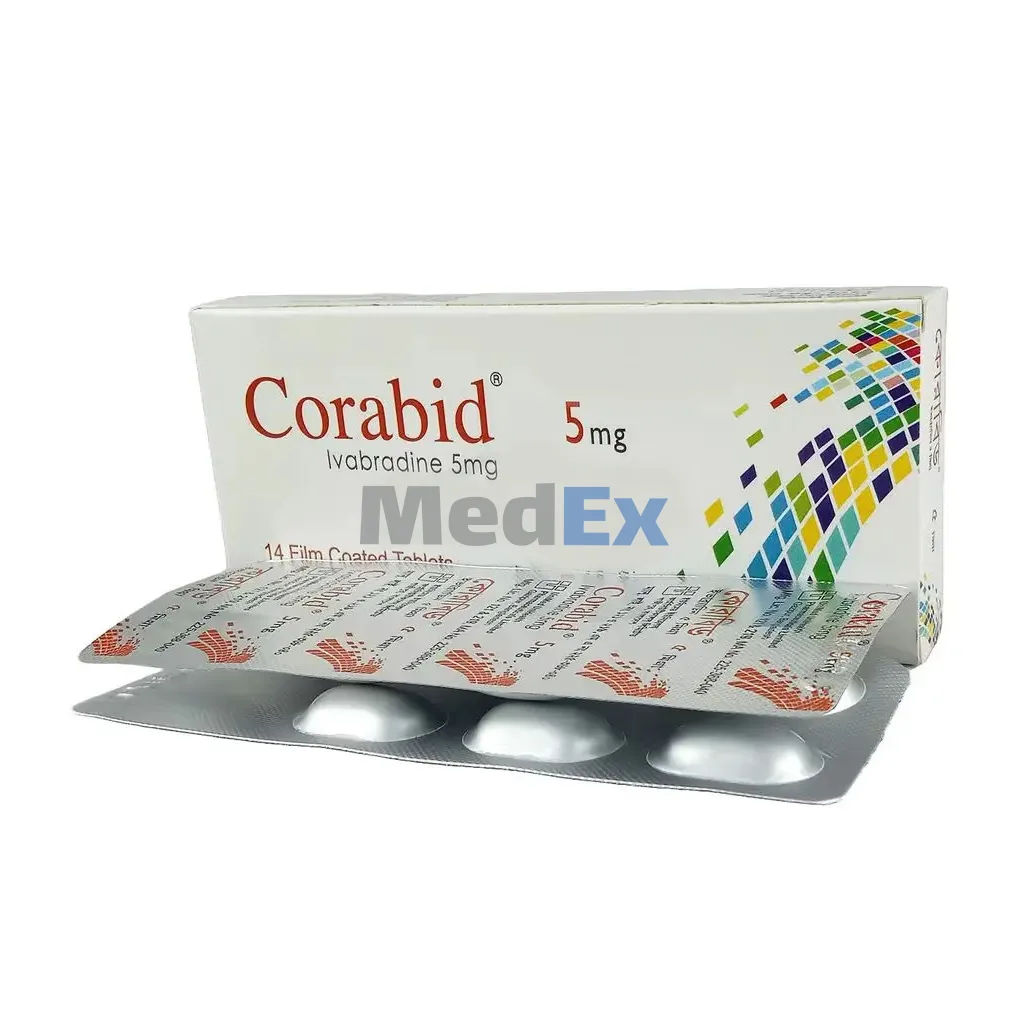
Symptomatic treatment of chronic stable angina pectoris in coronary artery disease patients with normal sinus rhythm. Corabid tablet is indicated:
In patients unable to tolerate or with a contra-indication to the use of beta-blockers or
In combination with beta-blockers in patients inadequately controlled with an optimal beta-blocker dose and whose heart rate is >60 bpm.
Dosage & Administration
Adult
: The usual recommended starting dose of Ivabradine is 5 mg twice daily which may be increased after 3-4 weeks of treatment to 7.5 mg twice daily, depending on therapeutic response. Usual dose is 1 tablet in the morning and 1 tablet in the evening during meals. If the heart rate decreases persistently below 50 bpm at rest or if symptoms related to bradycardia, the dose must be adjusted downwards to 2.5 mg twice daily (one half of the 5 mg tablet twice daily). Treatment must be discontinued if heart rate remains below 50 bpm or symptoms of bradycardia persist.
Elderly
: Since ivabradine has been studied in a limited number of patients aged 75 years or more, a lower starting dose should be considered for these patients (2.5mg twice daily i.e. one half 5mg tablet twice daily) before up-titration if necessary.
Renal insufficiency
: No dose adjustment is required in patients with renal insufficiency and creatinine clearance above 15ml/min. No data are available in patients with creatinine clearance below 15ml/min. Ivabradine should therefore be used with precaution in this population.
Hepatic impairment
: No dose adjustment is required in patients with mild hepatic impairment. Caution should be exercised when using ivabradine in patients with moderate hepatic impairment. Ivabradine is contra-indicated for use in patients with severe hepatic insufficiency.
Children and adolescents
: Ivabradine is not recommended for use in children and adolescents due to a lack of data on safety and efficacy.
Contraindications
History of hypersensitivity to Ivabradine or any of the excipients, resting heart rate below 60 bpm before treatment, cardiogenic shock, acute myocardial infarction, severe hypotension (<90/50 mmHg), severe hepatic insufficiency, sick sinus syndrome, sino-atrial block, heart failure, pacemaker dependent, unstable angina, 3
rd
degree AV block, combination with strong cytochrome P-450 3A4 inhibitors (such as azole antifungals, macrolide antibiotics, HIV protease inhibitors).
Side Effects & Adverse Reactions
Visual symptoms, blurred vision, bradycardia, 1st degree AV block, ventricular extrasystoles, headaches, and dizziness.
Warnings & Precautions
Mild to moderate hypotension, atrial fibrillation, patients with congenital QT syndrome or treated with QT wave prolonging medicinal products, Moderate hepatic insufficiency, severe renal insufficiency.
Pharmacology & Mechanism of Action
Ivabradine is a pure heart rate lowering agent. It acts by selective and specific inhibition of the cardiac pacemaker I f current that controls the spontaneous diastolic depolarization in the sinus node and regulates heart rate. By decreasing heart rate, Ivabradine decreases the cardiac workload and therefore oxygen consumption. Concomitantly, Ivabradine prolongs diastole allowing increased perfusion of coronary arteries and increased oxygen supply to the heart. The cardiac effects are specific to the sinus node with no effect on intra-atrial, atrioventricular or intraventricular conduction times, nor on myocardial contractility or ventricular repolarization.