Griseofulvin
Cheaper & Alternative Brands
Same generic (Griseofulvin [Ultra Microsize]), same form (Tablet)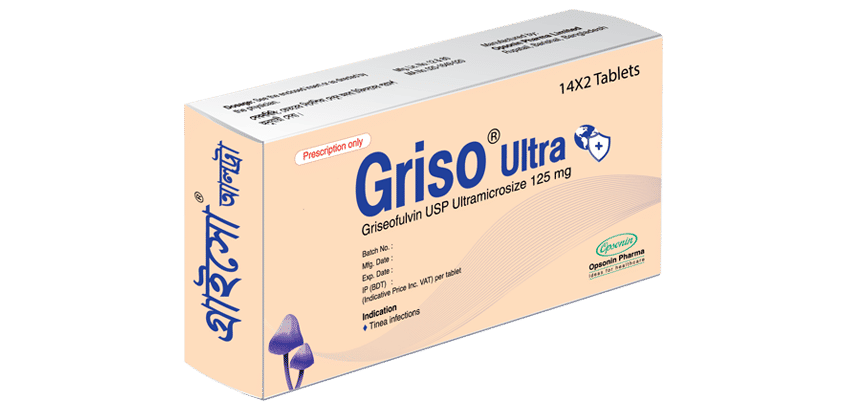
Clinical Prescribing Information
Medical monograph and safety information for healthcare professionals & patients.Indications & Clinical Uses
Ultramicrosize is indicated for the treatment of the following tinea infections;
tinea corporis
onychomycosis
tinea pedis
tinea cruris
tinea barbae
tinea capitis etc.
Contraindications
This drug is contraindicated in patients with porphyria or hepatocellular failure and in individuals with a history of hypersensitivity to griseofulvin.
Side Effects & Adverse Reactions
Side effects reported occasionally are oral thrush, nausea, vomiting, epigastric distress, diarrhea, headache, fatigue, dizziness, insomnia, mental confusion, and impairment of performance of routine activities. Proteinuria and leukopenia have been reported rarely.
Warnings & Precautions
Patients on prolonged therapy with any potent medication should be under close observation. Periodic monitoring of organ system function, including renal, hepatic and hematopoietic, should be done. Since Afuvin is derived from species of Penicillium, the possibility of cross sensitivity with penicillin exists; however, known penicillin-sensitive patients have been treated without difficulty. Since a photosensitivity reaction is occasionally associated with Afuvin therapy, patients should be warned to avoid exposure to intense natural or artificial sunlight. Lupus erythematosus or lupus-like syndromes have been reported in patients receiving Afuvin. Afuvin decreases the activity of warfarin-type anticoagulants so that patients receiving these drugs concomitantly may require dosage adjustment of the anticoagulant during and after Afuvin therapy. Barbiturates usually depress Afuvin activity and concomitant administration may require a dosage adjustment of the antifungal agent.
Pharmacology & Mechanism of Action
Griseofulvin is an orally active antibiotic derived from a species of Penicillium which is used to treat tinea infections. Griseofulvin has a fungistatic effect by its ability to disrupt the mitotic spindle structure of the fungal cell which arrests metaphase in cell division.
After oral administration, griseofulvin is deposited in the keratin precursor cells and has a greater affinity for diseased tissue. The drug is tightly bound to the new keratin which becomes highly resistant to fungal invasions. The efficiency of gastrointestinal absorption of ultramicrocrystalline griseofulvin is approximately one and one-half times that of the conventional microsize griseofulvin. This factor permits the oral intake of two-thirds as much ultramicrocrystalline griseofulvin as the microsize form. However, there is currently no evidence that this lower dose confers any significant clinical differences with regard to safety and/or efficacy.