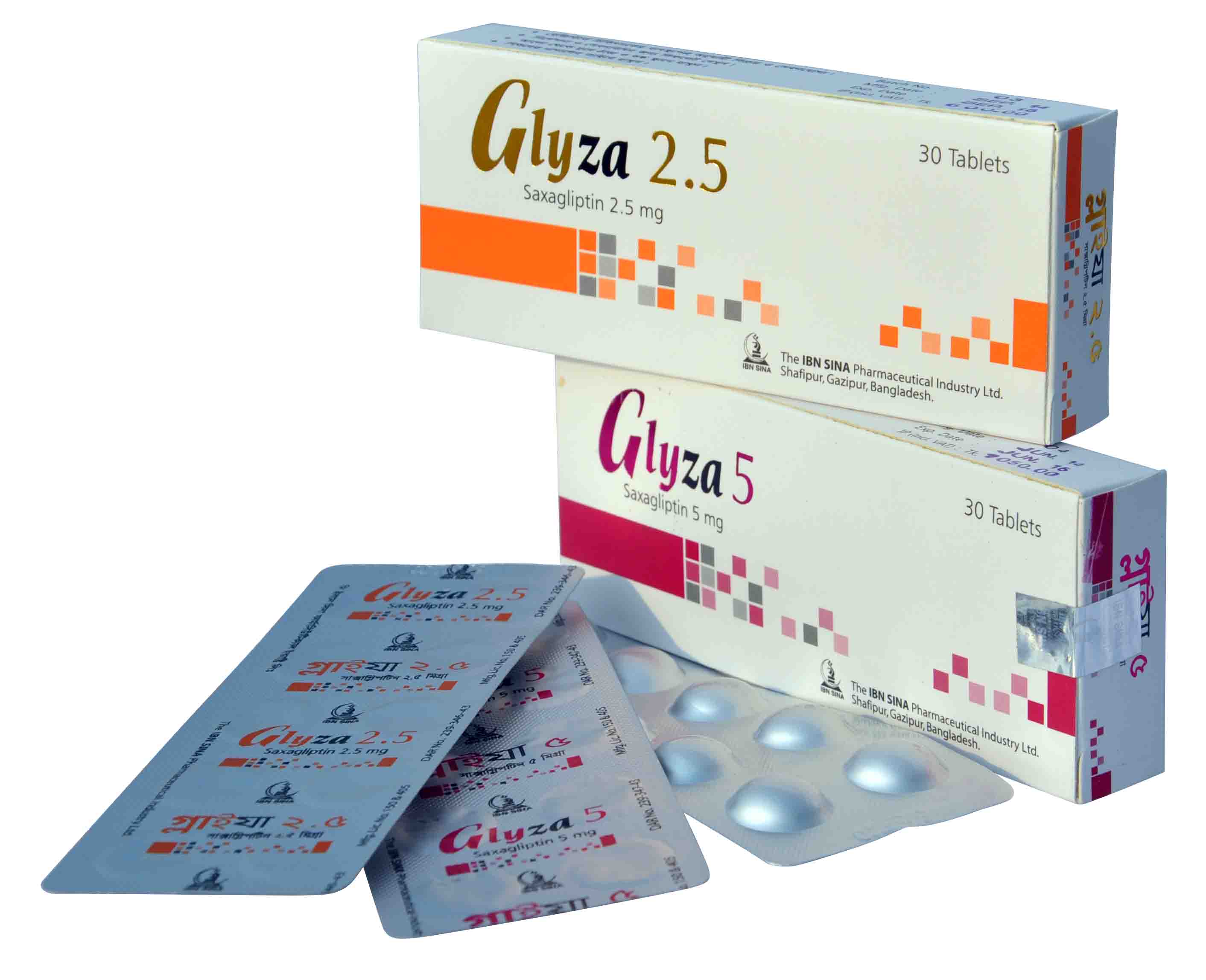
Glyza
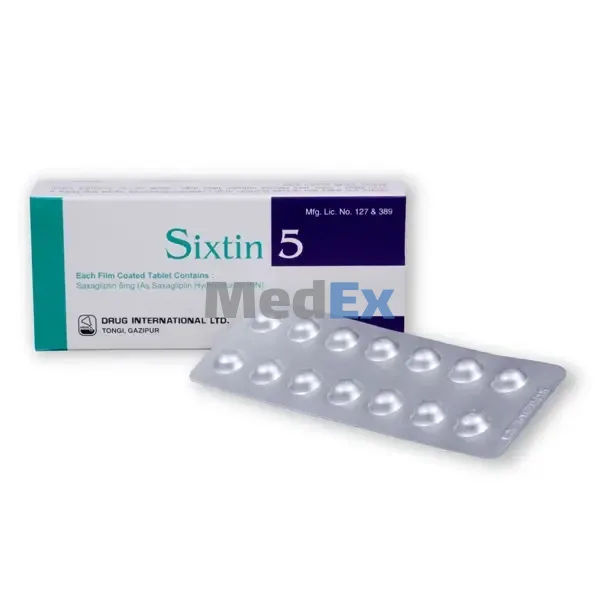
Cheaper & Alternative Brands
Same generic (Saxagliptin), same form (Tablet)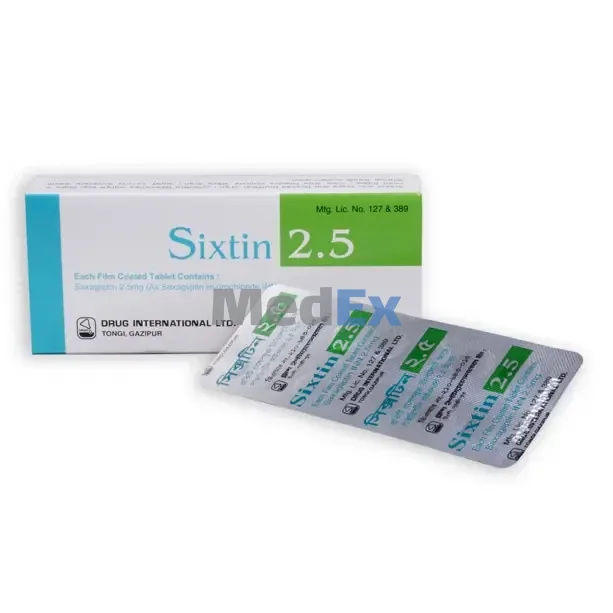
Clinical Prescribing Information
Medical monograph and safety information for healthcare professionals & patients.Indications & Clinical Uses
Monotherapy And Combination Therapy:
Glyza tablet is indicated as an adjunct to diet and exercise to improve glycemic control in adults with type 2 diabetes mellitus
Limitation Of Use
: Glyza tablet is not indicated for the treatment of type 1 diabetes mellitus or diabetic ketoacidosis, as it would not be effective in these settings.
Dosage & Administration
The recommended dose
: 2.5 mg or 5 mg once daily taken regardless of meals.
Patients with Renal Impairment
: No dosage adjustment is recommended for patients with mild renal impairment (creatinine clearance >50 mL/min). The dose is 2.5 mg once daily for patients with moderate or severe renal impairment, or with end-stage renal disease (ESRD) requiring hemodialysis (creatinine clearance < 50 mL/min). Saxagliptin should be administered following hemodialysis.
Saxagliptin has not been studied in patients undergoing peritoneal dialysis. Because the dose of Saxagliptin should be limited to 2.5 mg based upon renal function, assessment of renal function is recommended prior to initiation of Saxagliptin and periodically thereafter. Renal function can be estimated from serum creatinine using the Cockcroft-Gault formula or Modification of Diet in Renal Disease formula.
Contraindications
Saxagliptin is contraindicated in patients with known hypersensitivity to this drug.
Side Effects & Adverse Reactions
Adverse reactions reported in >5% of patients treated with Glyza and more commonly than in patients treated with placebo are: upper respiratory tract infection, urinary tract infection, and headache. Peripheral edema was reported more commonly in patients treated with the combination of Glyza and a thiazolidinedione (TZD) than in patients treated with the combination of placebo and TZD. Hypoglycemia was reported more commonly in patients treated with the combination of Glyza and sulfonylurea than in patients treated with the combination of placebo and sulfonylurea. Hypersensitivity-related events (e.g.,
urticaria, facial edema) were reported more commonly in patients treated with Glyza than in patients treated with placebo.
Warnings & Precautions
Dosage adjustment of Glyza is not recommended in case of rifampin, diltiazem, amprenavir, aprepitant, erythromycin, fluconazole, fosamprenavir, grapefruit juice, and verapamil. The dose of Glyza should be limited to 2.5 mg when coadministered with ketoconazole, atazanavir, clarithromycin, indinavir, itraconazole, nefazodone, nelfinavir, ritonavir, saquinavir, and telithromycin.
Pharmacology & Mechanism of Action
Saxagliptin is an orally-active inhibitor of the DPP4 enzyme. Saxagliptin is a competitive DPP4 inhibitor that slows the inactivation of the incretin hormones, thereby increasing their bloodstream concentrations and reducing fasting and postprandial glucose concentrations in a glucose-dependent manner in patients with type 2 diabetes mellitus.