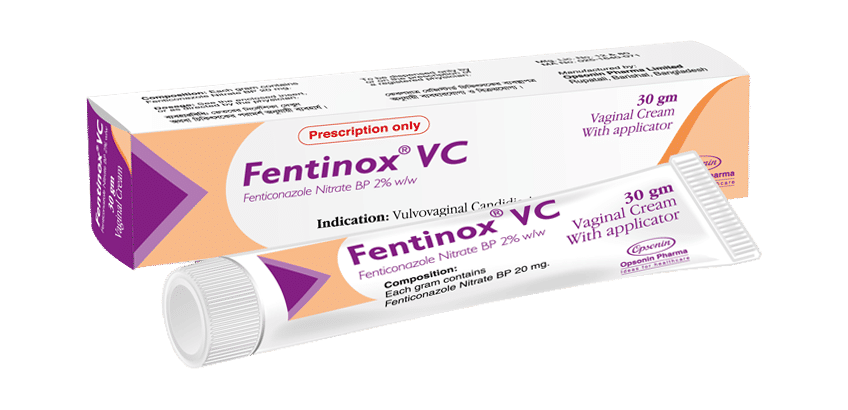
Fentinox VC
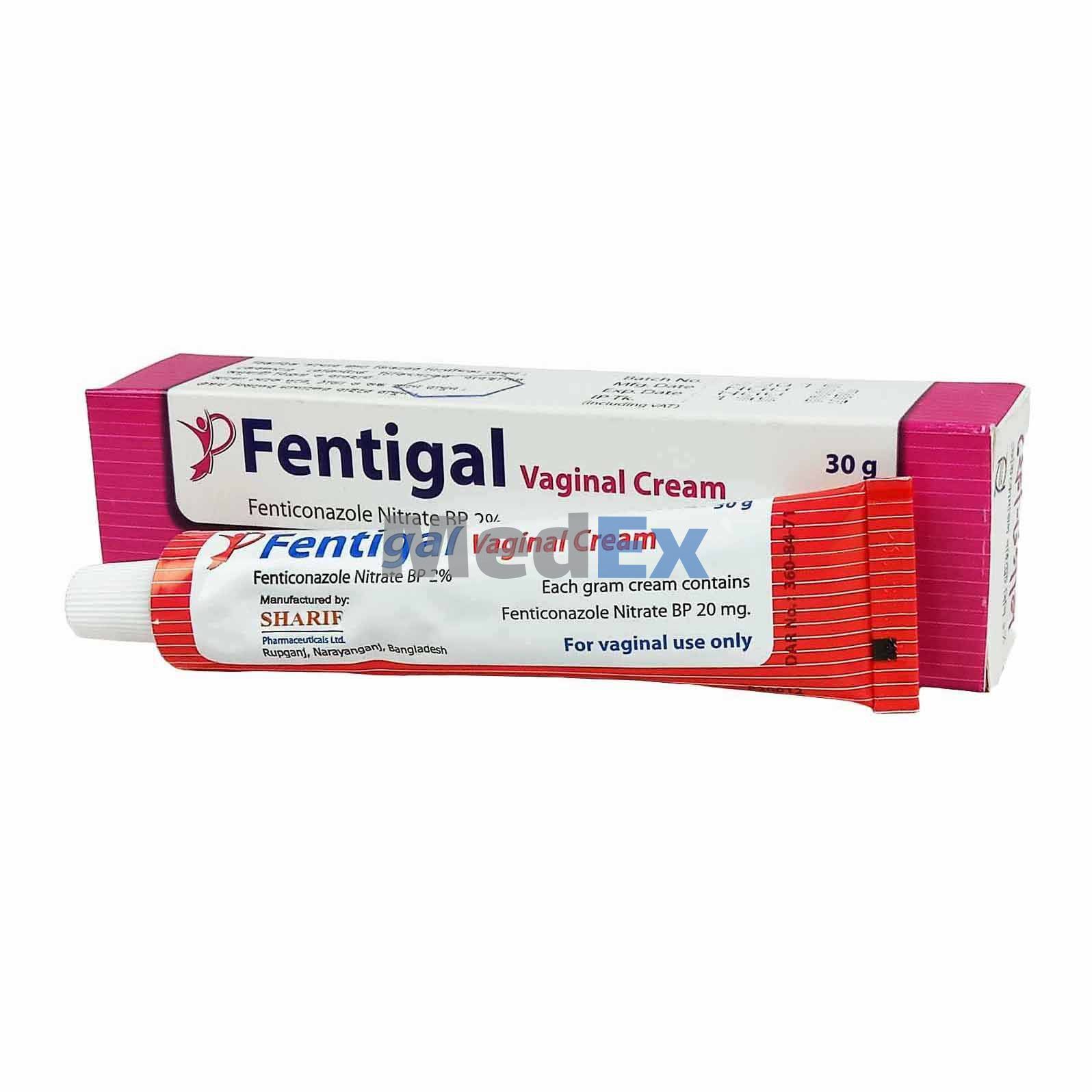
Cheaper & Alternative Brands
Same generic (Fenticonazole Nitrate), same form (Vaginal Cream)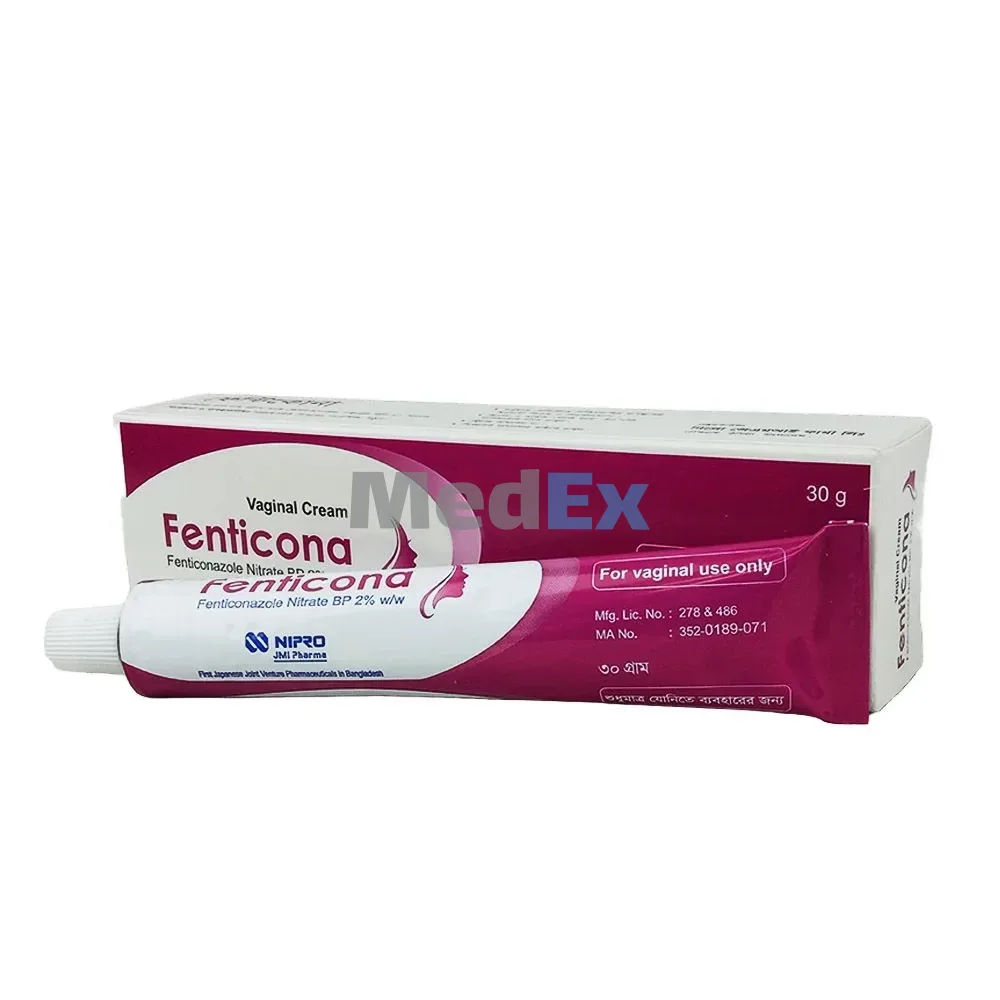
Clinical Prescribing Information
Medical monograph and safety information for healthcare professionals & patients.Indications & Clinical Uses
Fenticona vaginal cream is used for the treatment of vulvovaginal candidiasis.
Fenticona vaginal tablet is indicated for:
Vulvovaginal candidiasis
Trichomoniasis
Mixed Vaginal infections caused by Candida Albicans & Trichomonas vaginalis
Contraindications
Hypersensitivity to Fenticonazole or any component of the formulation.
Side Effects & Adverse Reactions
After intravaginal administration slight transient burning (which usually disappears rapidly) may occasionally happen. Prolonged topical application may cause sensitisation reactions. Fenticona is generally well tolerated by the mucous membranes; only exceptionally mild and transient erythematous reactions have been reported. After topical application or intravaginal administration, a slight burning sensation may occur, usually subsiding soon. Should more persistent irritation occur or resistant micro-organism develop, suspend the treatment and seek the doctor's advice. Due to poor absorption of Fenticona, no systemic effects should occur, provided the above instructions are carefully observed.
Warnings & Precautions
It should not be used in conjunction with barrier contraceptives. In the event of a hypersensitivity reaction or development of resistant organisms, treatment should be discontinued and take physician consultation.
Pharmacology & Mechanism of Action
Fenticonazole is a broad-spectrum antimycotic agent with activity against dermatophytes and yeasts. Fenticonazole has also been shown to exhibit antibacterial action, with a spectrum of activity that includes bacteria commonly associated with vaginal infections and antiparasitic action against the protozoan Trichomonas vaginalis. Therefore, Fenticonazole may be an ideal topical alternative to multi-agent treatment of mixed infections involving mycotic, bacterial, dermatophyte and/or Trichomonas spp.