
Elmood
Cheaper & Alternative Brands
Same generic (Dextromethorphan + Bupropion), same form (Tablet (Extended Release))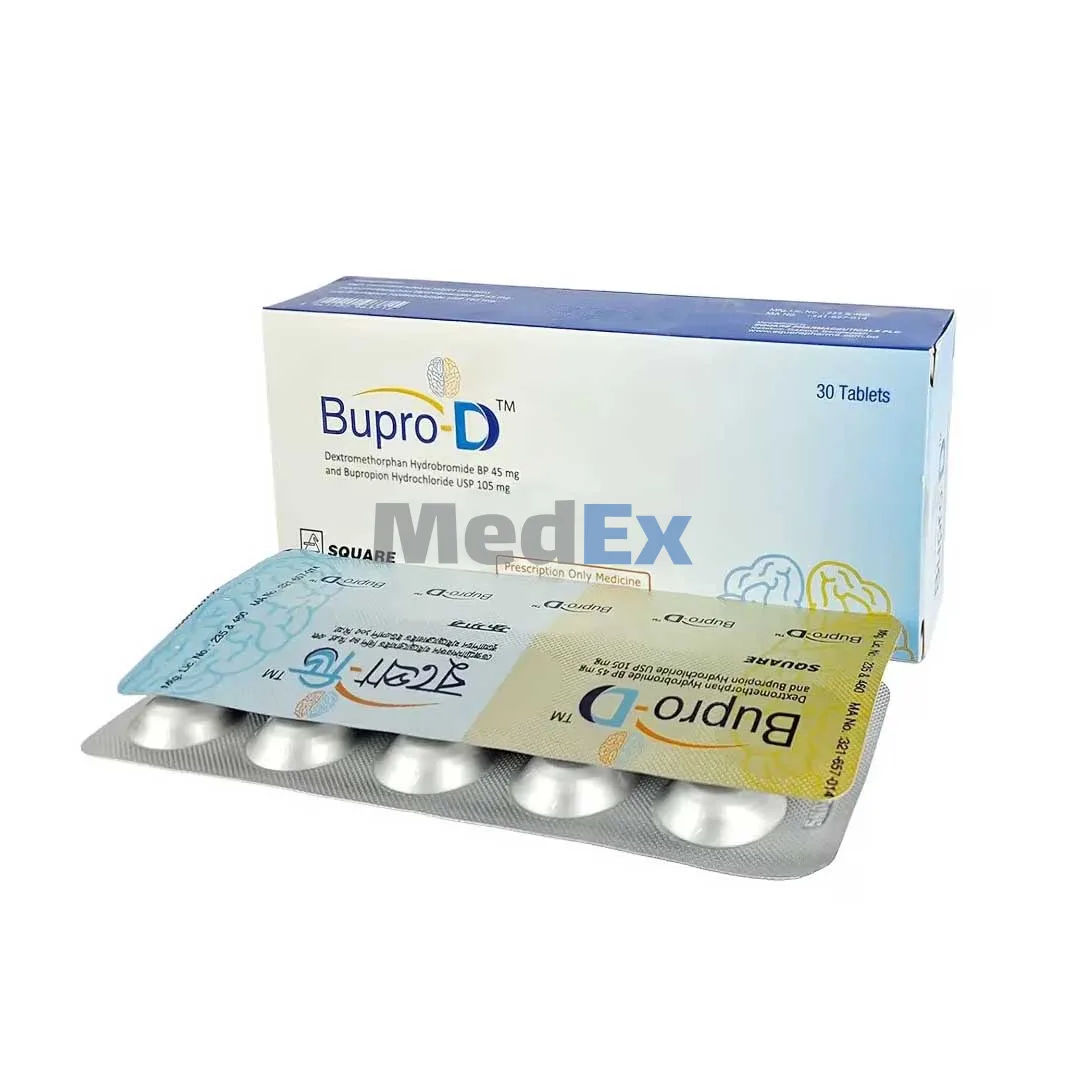
Clinical Prescribing Information
Medical monograph and safety information for healthcare professionals & patients.Indications & Clinical Uses
Bupro-D tablet is indicated in major depressive disorder (MDD) in adults.
Dosage & Administration
Starting dosage
: One tablet once daily in the morning. After 3 days, increase to the maximum recommended dosage of one tablet twice daily, separated by at least 8 hours. Do not exceed two doses within the same day.
Use in children & adolescents
: The safety and effectiveness of this tablet have not been established. Antidepressants, including bupropion, increase the risk of suicidal thoughts and behaviors in pediatric patients.
Moderate renal impairment
: One tablet by mouth once daily in the morning.
Contraindications
Seizure disorder.
Current or prior diagnosis of bulimia or anorexia nervosa.
Abrupt discontinuation of alcohol, benzodiazepines, barbiturates, and antiepileptic drugs.
Use with an MAOI or within 14 days of stopping treatment with this combination. Do not use this within 14 days of discontinuing an MAOI.
Known hypersensitivity.
Side Effects & Adverse Reactions
Dizziness, headache, somnolence
Diarrhea, dry mouth
Sexual dysfunction
Hyperhidrosis
Warnings & Precautions
Seizure
: Risk is dose-related. Discontinue if seizure occurs.
Increased Blood Pressure and Hypertension
: Bupro-D can increase blood pressure and cause hypertension. Assess blood pressure before initiating treatment and monitor periodically during treatment.
Activation of Mania or Hypomania
: Screen patients for bipolar disorder.
Psychosis and Other Neuropsychiatric Reactions
: Instruct patients to contact a healthcare provider if such reactions occur.
Pharmacology & Mechanism of Action
This is a combined preparation of Dextromethorphan Hydrobromide and Bupropion Hydrochloride. Dextromethorphan is an uncompetitive antagonist of the NMDA receptor (an ionotropic glutamate receptor) and a sigma-1 receptor agonist. The mechanism of Dextromethorphan in the treatment of MDD is unclear. The mechanism of action of bupropion in the treatment of MDD is unclear; however, it may be related to noradrenergic and/or dopaminergic mechanisms. Bupropion increases plasma levels of Dextromethorphan by competitively inhibiting cytochrome P450 2D6, which catalyzes a major biotransformation pathway for Dextromethorphan. Bupropion is a relatively weak inhibitor of the neuronal reuptake of norepinephrine and dopamine and does not inhibit monoamine oxidase or the reuptake of serotonin.