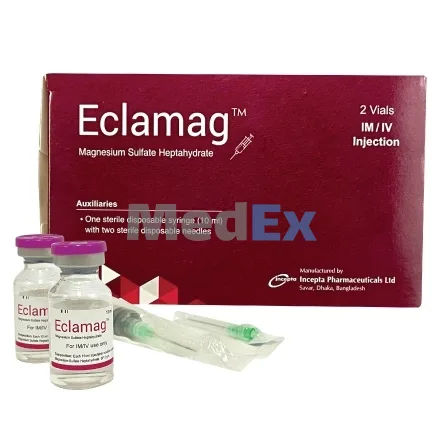
Eclamag
Cheaper & Alternative Brands
Same generic (Magnesium Sulfate), same form (IM/IV Injection)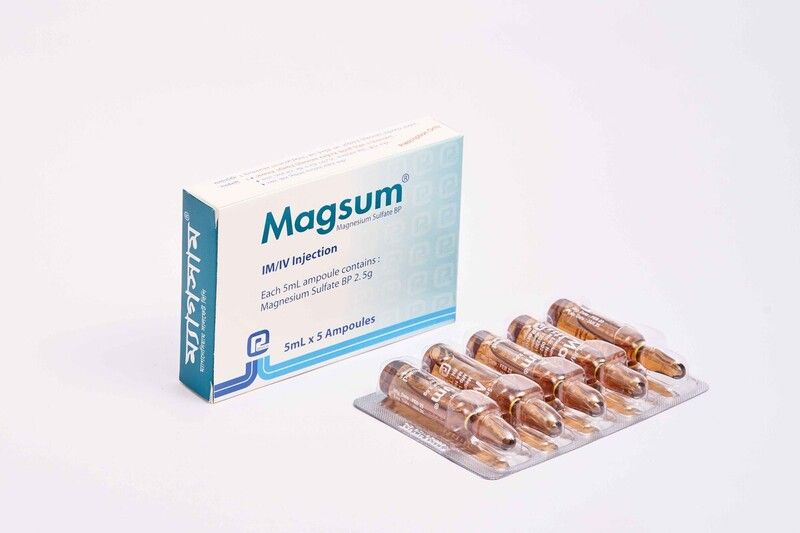
Clinical Prescribing Information
Medical monograph and safety information for healthcare professionals & patients.Indications & Clinical Uses
Acosolin injection is indicated mainly for the treatment of hypomagnesaemia and magnesium deficiency states. Irregular heart beats, some time it may be used as a laxative. Acosolin injection is used in the treatment of magnesium deficiency. Acosolin has anticonvulsant properties
... Read more
Acosolin injection is indicated mainly for the treatment of hypomagnesaemia and magnesium deficiency states. Irregular heart beats, some time it may be used as a laxative. Acosolin injection is used in the treatment of magnesium deficiency. Acosolin has anticonvulsant properties when administered parentally, it may be used to prevent or control of Seizures associated with acute uremia, hypothyroidism and eclampsia. It is also used in bronchial asthma & cardiovascular disorder.
Dosage & Administration
Adult dose
-
Intramuscular
: For severe hypomagnesemia, 1 to 5 g (2 to 10 mL of 50% solution) daily in divided doses; administration is repeated daily until serum levels have returned to normal. If the deficiency is not severe, 1 g (2 ml of 50% solution) can be given once or twice daily. Serum magnesium levels should serve as a guide to continued dosage.
Intravenous
: 1 to 4 g magnesium sulfate injection may be given intravenously in 10% to 20% solution, but only with great caution; the rate should not exceed 1.5 mL of 10% solution or equivalent per minute until relaxation is obtained.
Usual Dose Range
: 1 to 40 g daily.
Electrolyte Replenisher
: Intramuscular 1 to 2 g in 50% solution four times a day until serum magnesium is within normal limits.
Usual Pediatric Dose
-
Intramuscular
: 20 to 40 mg per kg of body weight in a 20% solution repeated as necessary.
For Eclampsia
: Initially, 1 to 2 g in 25% or 50% solution is given intramuscularly. Subsequently, 1 g is given every 30 minutes until relief is obtained. The blood pressure should be monitored after each injection.
Use in Children & Adolescents
: Magnesium Sulfate seems to be beneficial in the treatment of moderate to severe asthma in children as adjuvant therapy.
Contraindications
Magnesium Sulfate contra-indicated in the case of a defect of the heart's electrical message pathways resulting in decreased function of the heart (heart block), severe damage to the muscular wall of the heart (myocardium) and significantly decreased kidney function.
Side Effects & Adverse Reactions
Common
: Excessive administration of magnesium leads to the development of hypermagnesaemia. Symptoms of hypermagnesaemia may include nausea, vomiting, flushing of skin, thirst, hypotension due to peripheral vasodilatation, drowsiness, confusion, muscle weakness etc.
Rare
: Diarrhea or skin irritation after soaking may occur.
Warnings & Precautions
Acosolin salts should be administered with caution to patients with impaired renal function or those receiving digitalis glycosides. Parenteral administration of magnesium salts may enhance the effect of neuromuscular blocking agents or of central nervous system depressants. Monitor blood pressure, respiratory rate, urinary output and for signs of over dosage like loss of patellar reflex, weakness, nausea, sensation of warmth, flushing of skin, drowsiness, double, vision and slurred speech.
Pharmacology & Mechanism of Action
Magnesium is the second most plentiful cation of intracellular fluids. It is essential for the activity of many enzyme systems and plays an important role with regard to neurochemical transmission and muscular excitability. Deficits are accompanied by a variety of structural and functional disturbances.