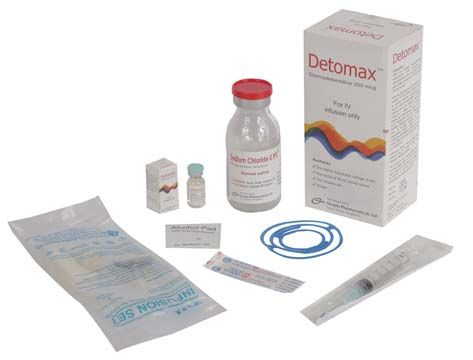
Detomax
Cheaper & Alternative Brands
Same generic (Dexmedetomidine), same form (IV Infusion)
Clinical Prescribing Information
Medical monograph and safety information for healthcare professionals & patients.Indications & Clinical Uses
Detomax is a relatively selective alpha2-adrenergic agonist indicated for:
Sedation of initially intubated and mechanically ventilated patients during treatment in an intensive care setting. Administer Detomax by continuous infusion not to exceed 24 hours.
Sedation of non-intubated patients prior to and/or during surgical and other procedures.
Dosage & Administration
Individualize and titrate Dexmeditomidine dosing to desired clinical effect.
Administer Dexmeditomidine using a controlled infusion device.
Dilute the 200 mcg/2 mL (100 mcg/mL) vial contents in 0.9% sodium chloride solution to achieve required concentration (4 mcg/mL) prior to administration.
The 200 mcg/50 mL single-use bottles do not require further dilution prior to administration.
For Adult Intensive Care Unit Sedation
: Generally initiate at one mcg/kg over 10 minutes, followed by a maintenance infusion of 0.2 to 0.7 mcg/kg/hour.
For Adult Procedural Sedation
: Generally initiate at one mcg/kg over 10 minutes, followed by a maintenance infusion initiated at 0.6 mcg/kg/hour and titrated to achieve desired clinical effect with doses ranging from 0.2 to 1 mcg/kg/hour.
Alternative Doses
: Recommended for patients over 65 years of age and awake fiberoptic
intubation patients.
Side Effects & Adverse Reactions
Body as a Whole
: Fever, hyperpyrexia, hypovolemia, light anesthesia, pain, rigors
Cardiovascular Disorders, General
: Blood pressure fluctuation, heart disorder, hypertension, hypotension, myocardial infarction
Central and Peripheral Nervous System Disorders
: Dizziness, headache, neuralgia, neuritis, speech disorder, convulsion
Gastrointestinal System Disorders
: Abdominal pain, diarrhea, vomiting, nausea
Liver and Biliary System Disorders
: Increased gamma-glutamyl transpeptidase, hepatic function abnormal, hyperbilirubinemia
Metabolic and Nutritional Disorders
: Acidosis, respiratory acidosis, hyperkalemia, thirst, hypoglycemia
Psychiatric Disorders
: Agitation, confusion, delirium, hallucination, illusion
Red Blood Cell Disorders
: Anemia
Renal Disorders
: Blood urea nitrogen increased, oliguria
Respiratory System Disorders
: Hypoventilation, hypoxia, pulmonary congestion
Skin Disorders
: Increased sweating
Vascular Disorders
: Hemorrhage
Vision Disorders
: Photopsia, abnormal vision.
Warnings & Precautions
Continuous monitoring is needed while patient receiving Detomax.
Pharmacology & Mechanism of Action
Dexmedetomidine is a specific and selective alpha-2 adrenoceptor agonist. By binding to the presynaptic alpha-2 adrenoceptors, it inhibits the release if norepinephrine, therefore, terminate the propagation of pain signals. Activation of the postsynaptic alpha-2 adrenoceptors inhibits the sympathetic activity decreases blood pressure and heart rate.