
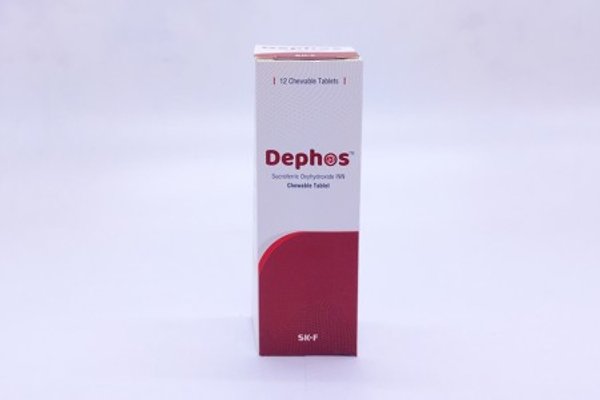
Dephos
 Generic: Sucroferric Oxyhydroxide
 Daily Dose:
 Duration:
Cheaper & Alternative Brands
Same generic (Sucroferric Oxyhydroxide), same form (Chewable Tablet)No other brands currently registered with this exact active generic and dosage form.
Clinical Prescribing Information
Medical monograph and safety information for healthcare professionals & patients.Indications & Clinical Uses
Hyperphosphatemia in Chronic Kidney Disease Patient.
Dosage & Administration
Sucroferric Oxyhydroxide tablets should be chewed or crushed. Do not swallow whole. The recommended starting dose of Dephos is 3 tablets (1,500 mg) per day, administered as 1 tablet (500 mg) 3 times daily with meals. Monitor serum phosphorus levels and titrate the dose of Sucroferric Oxyhydroxide in decrements or increments of 500 mg (1 tablet) per day as needed until an acceptable serum phosphorus level is reached, with regular monitoring afterwards. Titrate as often as weekly. Sucroferric Oxyhydroxide must be administered with meals. To maximize the dietary phosphate binding, distribute the total daily dose among meals. No additional fluid above the amount usually taken by the patient is required. If one or more doses of DephosrM are missed, the medication should be resumed with the next meal. Do not attempt to replace a missed dose.
Pediatric use
: The safety and efficacy of Sucroferric Oxyhydroxide have not been established in pediatric patients.
Side Effects & Adverse Reactions
The most common adverse drug reactions to Dephos chewable tablets in hemodialysis patients included discolored feces (12%) and diarrhea (6%).
Warnings & Precautions
Monitoring in Patients with Gastrointestinal Disorders or Iron Accumulation Disorders: Patients with peritonitis during peritoneal dialysis, significant gastric or hepatic disorders, following major gastrointestinal (Gl) surgery, or with a history of hemochromatosis or other diseases with iron accumulation have not been included in clinical studies with Dephos. Monitor effect and iron homeostasis in such patients.
Pharmacology & Mechanism of Action
Sucroferric Oxyhydroxide is a phosphate binder indicated for the control of serum phosphorus levels in patients with chronic kidney disease on dialysis. In the aqueous environment of the Gl tract, phosphate binding takes place by ligand exchange between hydroxyl groups and/or water in Sucroferric Oxyhydroxide and the phosphate in the diet. The bound phosphate is eliminated with feces. Both serum phosphorus levels and calcium-phosphorus product levels are reduced as a consequence of the reduced dietary phosphate absorption.