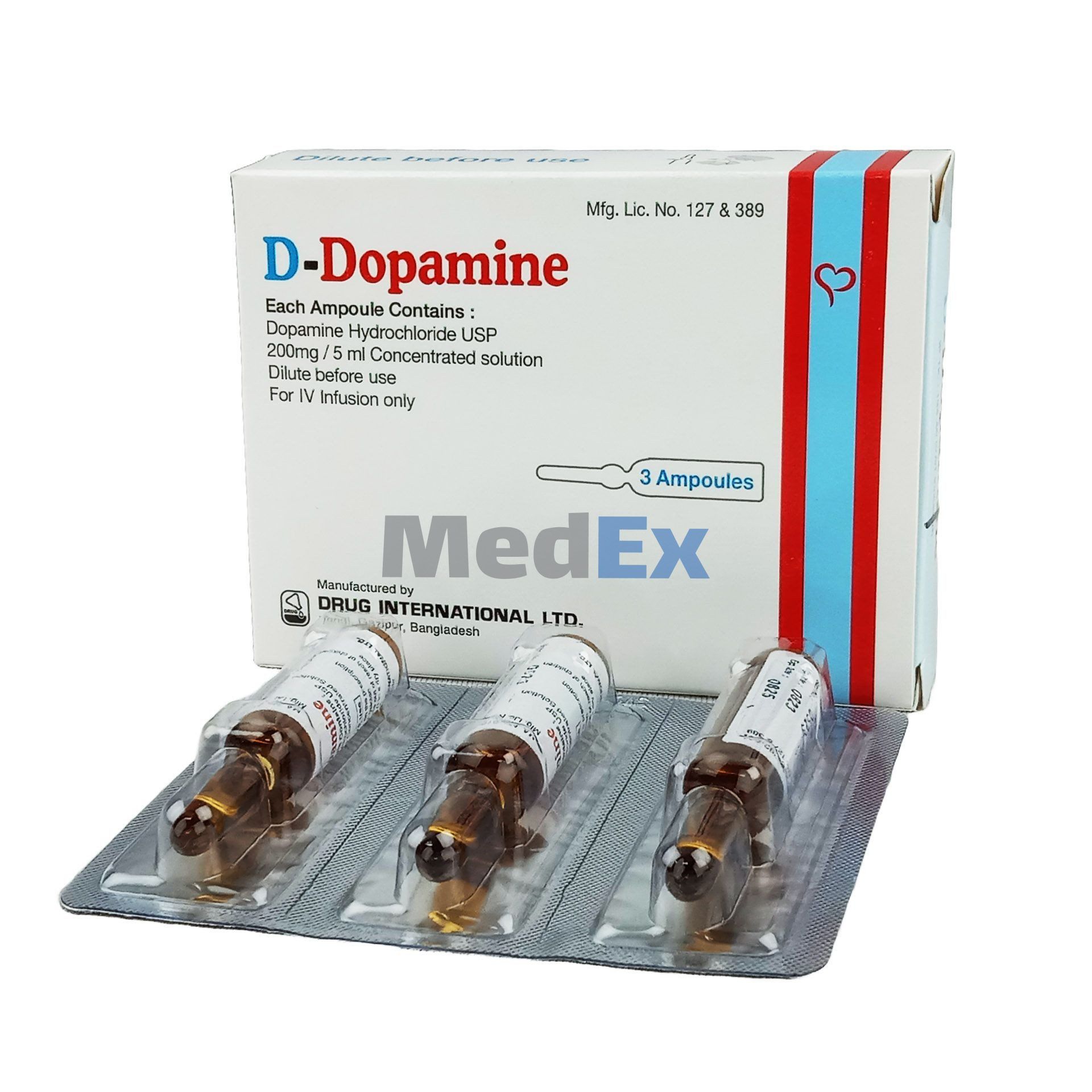
D-Dopamine
Cheaper & Alternative Brands
Same generic (Dopamine Hydrochloride), same form (IV Injection)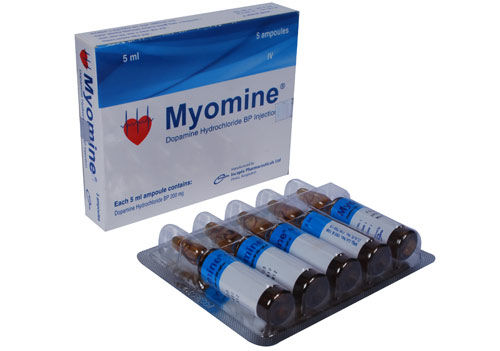
Clinical Prescribing Information
Medical monograph and safety information for healthcare professionals & patients.Indications & Clinical Uses
Cardopa is recommended for the correction of haemodynamic imbalance present in-
Acute hypotension or shock associated with myocardial infarction, endotoxic septicaemia, trauma and renal failure.
As an adjunct after open heart surgery, where there is persistent hypotension after correction of hypovolaemia.
In chronic cardiac decompensation as in congestive failure.
Contraindications
Dopamine hydrochloride is contraindicated in patients with known hypersensitivity to dopamine or any of its ingredients. It should not be used in patients with phaeochromocytoma, uncorrected tachyarrhythmias, or ventricular fibrillation. Dextrose solution without electrolytes should not be administered simultaneously with blood through the same infusion set because of the possibility of pseudoagglutination of red cells.
Side Effects & Adverse Reactions
The most frequent reported adverse reactions are ectopic beats, nausea, vomiting, tachycardia, anginal pain, palpitations, dyspnoea, headache, hypotension, hypertension and vasoconstriction. Other less frequent adverse reactions are aberrant ventricular conduction, bradycardia, piloerection, mydriasis, widened QRS complex, azotaemia and elevated blood pressure. Peripheral ischemic gangrene in patients with pre-existing vascular disease. Fatal ventricular arrhythmias have been reported on rare occasions.
Warnings & Precautions
Cardopa should not be administered in the presence of uncorrected tachyarrhythmia or ventricular fibrillation. It is metabolized in the tissues and blood by monoamine oxidase (MAO) and catechol-O-methyltransferase (COMT). Cardopa and its metabolites are almost completely excreted in the urine. Patients who have been treated with monoamine oxidase inhibitors (MAOI) prior to the administration of dopamine will require substantially reduced dosages of later. The starting dose in such patients should be reduced to at least one-tenth (1/10) of the usual dose. Excess administration of potassium-free solutions may result in significant hypokalemia. The intravenous administration of these solutions can cause fluid and/or solute overloading resulting in dilution of serum electrolyte concentration, overhydration, congested states or pulmonary oedema. Closely monitoring is advised in patients with impaired renal and hepatic function.
Hypovolaemia should be corrected where necessary prior to treatment with Cardopa. If a disproportionate rise in diastolic blood pressure (i.e. a marked decrease in pulse pressure) is observed, the infusion rate should be decreased and the patients observed carefully for further evidence of predominant vasoconstriction activity, unless such effect is desired. Cardopa infusion should be withdrawn gradually, to avoid unnecessary hypotension. Patients with a history of peripheral vascular disease (e.g. atherosclerosis, arterial embolism, Raynaud's disease, cold injury, diabetic endarteritis and Buerger's disease) should be closely monitored for any changes in color or temperature of the skin in the extremities. If ischemia occurs and is thought to be the result of vasoconstriction, the benefits of continued Cardopa infusion should be weighed against the risk of possible necrosis. These changes may be reversed by either decreasing the rate or discontinuing the infusion. Cardopa in 5% dextrose solution should be infused into a large vein whenever possible to prevent the possibility of infiltration of perivascular tissue adjacent to the infusion site. Extravasations may cause necrosis and sloughing of the surrounding tissue. Ischaemia can be reversed by infiltration of the affected area with 10-15ml of saline containing 5 to 10mg Phentolamine mesylate. Cardopa should be used with extreme caution in patients inhaling cyclopropane or halogenated hydrocarbon anaesthetics due to the arterial arrhythmogenic potential. Dextrose solutions should be used with caution in patients with known subclinical or over diabetes mellitus.
Pharmacology & Mechanism of Action
Dopamine is a preparation of Dopamine hydrochloride which can stimulate α, β and dopamine receptors. It is a natural catecholamine formed by the decarboxylation of 3,4-dihydroxyphenylalanine (DOPA). Dopamine is a precursor to norepinephrine in noradrenergic nerves and is also a neurotransmitter in certain areas of the central nervous system, especially in the nigrostriatal tract and in a few peripheral sympathetic nerves. It produces positive chronotropic and inotropic effects on the myocardium, resulting in increased heart rate and cardiac contractility. This is accomplished directly by exerting an agonist action on β-adrenoceptors and indirectly by causing release of norepinephrine from storage sites in sympathetic nerve endings. Dopamine does not cross the blood-brain barrier and so does not activate dopamine receptors in the brain.