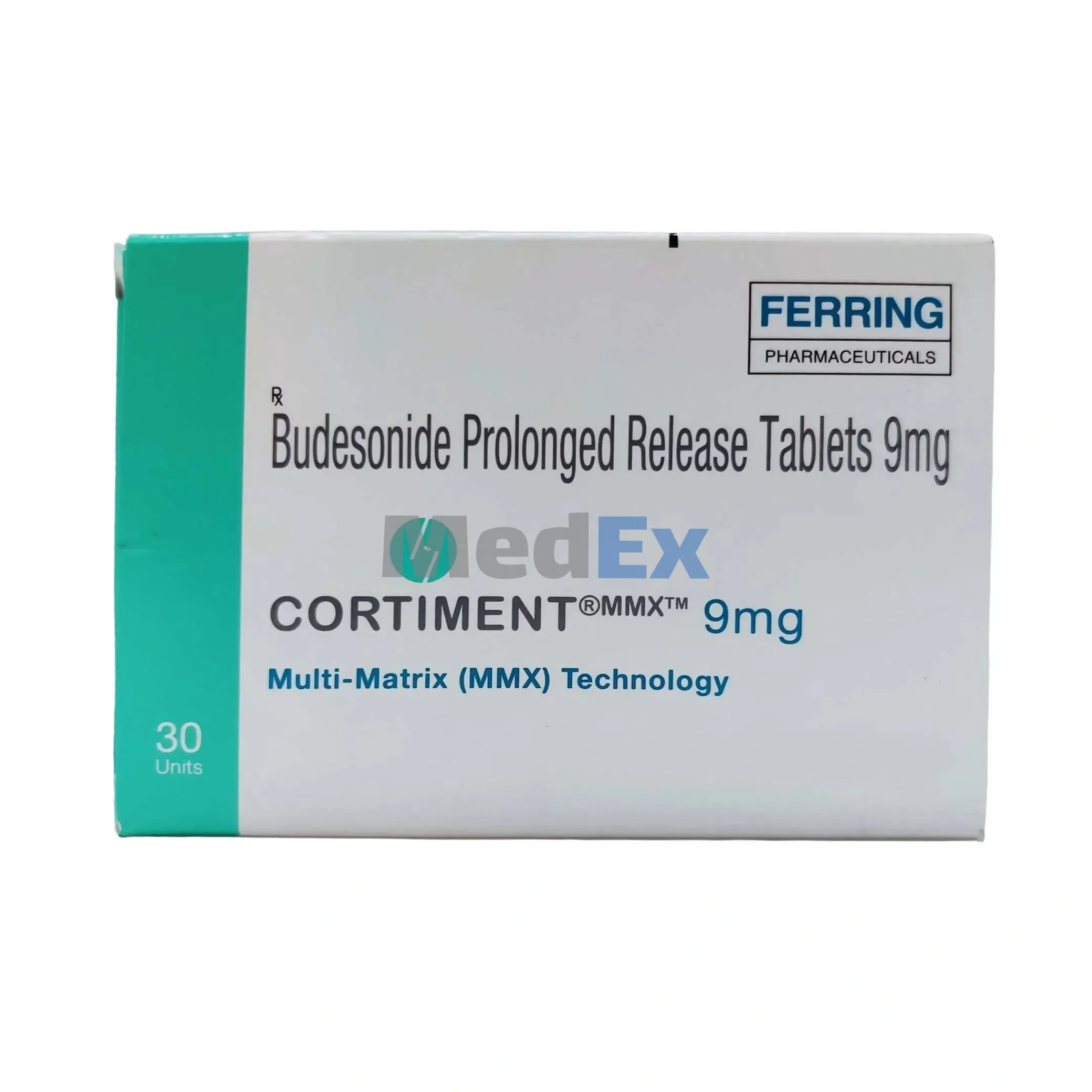
Cortiment
Cheaper & Alternative Brands
Same generic (Budesonide), same form (Tablet (Prolonged Release))No other brands currently registered with this exact active generic and dosage form.
Clinical Prescribing Information
Medical monograph and safety information for healthcare professionals & patients.Indications & Clinical Uses
Aeronid nebuliser suspension is indicated for the treatment of persistent bronchial asthma in patients where use of a pressurised inhaler or dry powder formulation is unsatisfactory or inappropriate. Very serious pseudocroup (laryngitis subglottica) in which hospitalisation is indicated.
Contraindications
Budesonide is not indicated for the treatment of acute dyspnoea or status asthmaticus. These conditions should be treated with short acting β-sympathomimetics and other bronchodilators.
Side Effects & Adverse Reactions
The following definitions apply to the incidence of undesirable effects: Very common (≥1/10); common (≥1/100 to <1/10); uncommon (≥1/1,000 to <1/100); rare (≥1/10,000 to <1/1,000); very rare (<1/10,000), not known (cannot be estimated from the available data).
Facial irritation, as an example of a hypersensitivity reaction, has occurred in some cases when a Nebuliser with a face mask has been used. To prevent irritation the facial skin should be washed with water after use of the face mask.
In-placebo controlled studies, cataract was also uncommonly reported in the placebo group.
Clinical trials with 13,119 patients on inhaled Aeronid and 7,278 patients on placebo have been pooled. The frequency of anxiety was 0.52% on inhaled Aeronid and 0.63% on placebo; that of depression was 0.67% on inhaled Aeronid and 1.15% on placebo.
There is an increased risk of pneumonia in patients with newly diagnosed COPD starting treatment with inhaled corticosteroids. However a weighted assessment of 8 pooled clinical trials involving 4643 COPD patients treated with Aeronid and 3,643 patients randomized to non-ICS treatments did not demonstrate an increased risk for pneumonia. The results from the first 7 of these 8 trials have been published as a meta-analysis.
Treatment with inhaled Aeronid may result in candida infection in the oropharynx. Experience has shown that candida infection occurs less often when inhalation is performed before meals and/or when the mouth is rinsed after inhalation. In most cases this condition responds to topical anti-fungal therapy without discontinuing treatment with inhaled Aeronid.
Coughing can usually be prevented by inhaling a beta-2 agonist (e.g. terbutaline) 5-10 minutes before administration of Aeronid 0.5mg Nebuliser Suspension.
Occasionally, signs or symptoms of systemic glucocorticosteroid-side effects may occur with inhaled glucocorticosteroids, probably depending on dose, exposure time, concomitant and previous corticosteroid exposure, and individual sensitivity. These may include adrenal suppression, growth retardation in children and adolescents, decrease in bone mineral density, cataract and glaucoma, and susceptibility to infections. The ability to adapt to stress may be impaired. The systemic effects described, however, are much less likely to occur with inhaled Aeronid than with oral corticosteroids.
Warnings & Precautions
The transfer of patients treated with oral corticosteroids to the inhaled corticosteroid and their subsequent management requires special care. The patients should be in a reasonably stable state before initiating a high dose of inhaled corticosteroid in addition to their usual maintenance dose of systemic corticosteroid. After about 10 days, withdrawal of the systemic corticosteroid is started by reducing the daily dose gradually (by for example 2.5 milligrams prednisolone or the equivalent each month) to the lowest possible level. It may be possible to completely replace the oral corticosteroid with inhaled corticosteroid. Transferred patients whose adrenocortical function is impaired may need supplementary systemic corticosteroid during periods of stress e.g. surgery, infection or worsening asthma attacks.
Patients who have required high dose emergency corticosteroid therapy or prolonged treatment at the highest recommended dose of inhaled corticosteroids, may also be at risk of impaired adrenal function. These patients may exhibit signs and symptoms of adrenal insufficiency when exposed to severe stress. Additional systemic corticosteroid treatment should be considered during periods of stress or elective surgery.
During transfer from oral therapy to inhaled Aeronid, symptoms may appear that had previously been suppressed by systemic treatment with glucocorticosteroids, for example symptoms of allergic rhinitis, eczema, muscle and joint pain. Specific treatment should be co-administered to treat these conditions.
Some patients may feel unwell in a non-specific way during the withdrawal of systemic corticosteroids despite maintenance or even improvement in respiratory function. Such patients should be encouraged to continue treatment with inhaled Aeronid and withdrawal of oral corticosteroid unless there are clinical signs to indicate the contrary, for example signs which might indicate adrenal insufficiency.
As with other inhalation therapies paradoxical bronchospasm may occur, manifested by an immediate increase in wheezing and shortness of breath after dosing. Paradoxical bronchospasm responds to a rapid-acting inhaled bronchodilator and should be treated straight away. Aeronid should be discontinued immediately, the patient should be assessed and, if necessary, alternative treatment instituted.
When an acute episode of dyspnoea occurs despite a well monitored treatment, a rapid-acting inhaled bronchodilator should be used and medical reassessment should be considered. If despite maximum doses of inhaled corticosteroids, asthma symptoms are not adequately controlled, patients may require short-term treatment with systemic corticosteroids. In such cases, it is necessary to maintain the inhaled corticosteroid therapy in association with treatment by the systemic route.
Systemic effects may occur with any inhaled corticosteroid, particularly at high doses prescribed for long periods. These effects are much less likely to occur with inhalation treatment than with oral corticosteroids.
Possible systemic effects include Cushing’s syndrome, Cushingoid features, adrenal suppression, growth retardation in children and adolescents, decrease in bone mineral density, cataract, glaucoma and more rarely, a range of psychological or behavioural effects including psychomotor hyperactivity, sleep disorders, anxiety, depression or aggression (particularly in children). It is important, therefore, that the dose of inhaled corticosteroid is titrated to the lowest dose at which effective control of asthma is maintained.
Influence on growth: It is recommended that the height of children receiving prolonged treatment with inhaled corticosteroids is regularly monitored. If growth is slowed, therapy should be re-evaluated with the aim of reducing the dose of inhaled corticosteroid. The benefits of the corticosteroid therapy and the possible risks of growth suppression must be carefully weighed. In addition, consideration should be given to referring the patient to a paediatric respiratory specialist.
Patients who have previously been dependent on oral corticosteroids may, as a result of prolonged systemic corticosteroid therapy, experience effects of impaired adrenal function. Recovery may take a considerable amount of time after cessation of oral corticosteroid therapy and hence oral steroid-dependent patients transferred to Aeronid may remain at risk from impaired adrenocortical function for some considerable time. In such circumstances hypothalamic pituitary adrenocortical (HPA) axis function should be monitored regularly.
Oral candidiasis may occur during the therapy with inhaled corticosteroids. This infection may require treatment with appropriate antifungal therapy and in some patients discontinuation of treatment may be necessary
Exacerbation of clinical symptoms of asthma may be due to acute respiratory tract bacterial infections and treatment with appropriate antibiotics may be required. Such patients may need to increase the dose of inhaled Aeronid and a short course of oral corticosteroids may be required. A rapid-acting inhaled bronchodilator should be used as “rescue” medication to relieve acute asthma symptoms.
Special care and adequate specific therapeutic control of patients with active and quiescent pulmonary tuberculosis is necessary before commencing treatment with inhaled Aeronid. Similarly patients with fungal, viral or other infections of the airways require close observation and special care and should use Aeronid only if they are also receiving adequate treatment for such infections.
In patients with excessive mucous secretion in the respiratory tract, short-term therapy with oral corticosteroids may be necessary.
In patients with severe hepatic dysfunction, treatment with inhaled Aeronid can result in a reduced elimination rate and hence enhanced systemic availability. Possible systemic effects may then result and therefore HPA axis function in these patients should be monitored at regular intervals.
Concomitant treatment with ketoconazole, HIV protease inhibitors or other potent CYP3A4 inhibitors should be avoided. If this is not possible the time interval between administration of the two drugs should be as long as possible.
Recent epidemiological studies show that there is an increased incidence of pneumonia in patients with Chronic Obstructive Pulmonary Disease (COPD) treated with inhaled corticosteroids, with an adjusted odds ratio of 1.7. Care should be exercised in prescribing Aeronid for those patients whose respiratory disease might have a component of COPD.
Visual disturbance: Visual disturbance may be reported with systemic and topical corticosteroid use. If a patient presents with symptoms such as blurred vision or other visual disturbances, the patient should be considered for referral to an ophthalmologist for evaluation of possible causes which may include cataract, glaucoma or rare diseases such as central serous chorioretinopathy (CSCR) which have been reported after use of systemic and topical corticosteroids.
Aeronid Nebuliser Suspension should be used with a jet Nebuliser device. An ultrasonic Nebuliser should not be used as this is not appropriate for Nebuliser suspensions.
Pharmacology & Mechanism of Action
Budesonide is a synthetic corticosteroid having potent glucocorticoid activity and weak mineralocorticoid activity. It has approximately a 200-fold higher affinity for the glucocorticoid receptor and a 1000-fold higher topical anti-inflammatory potency than cortisol. Corticosteroids have been shown to have a wide range of inhibitory activities against multiple cell types (e.g., mast cell, eosinophil, neutrophil, macrophage, and lymphocyte) and mediators (e.g., histamine, eicosanoids, leukotriene, and cytokine) involved in allergic mediated inflammation.