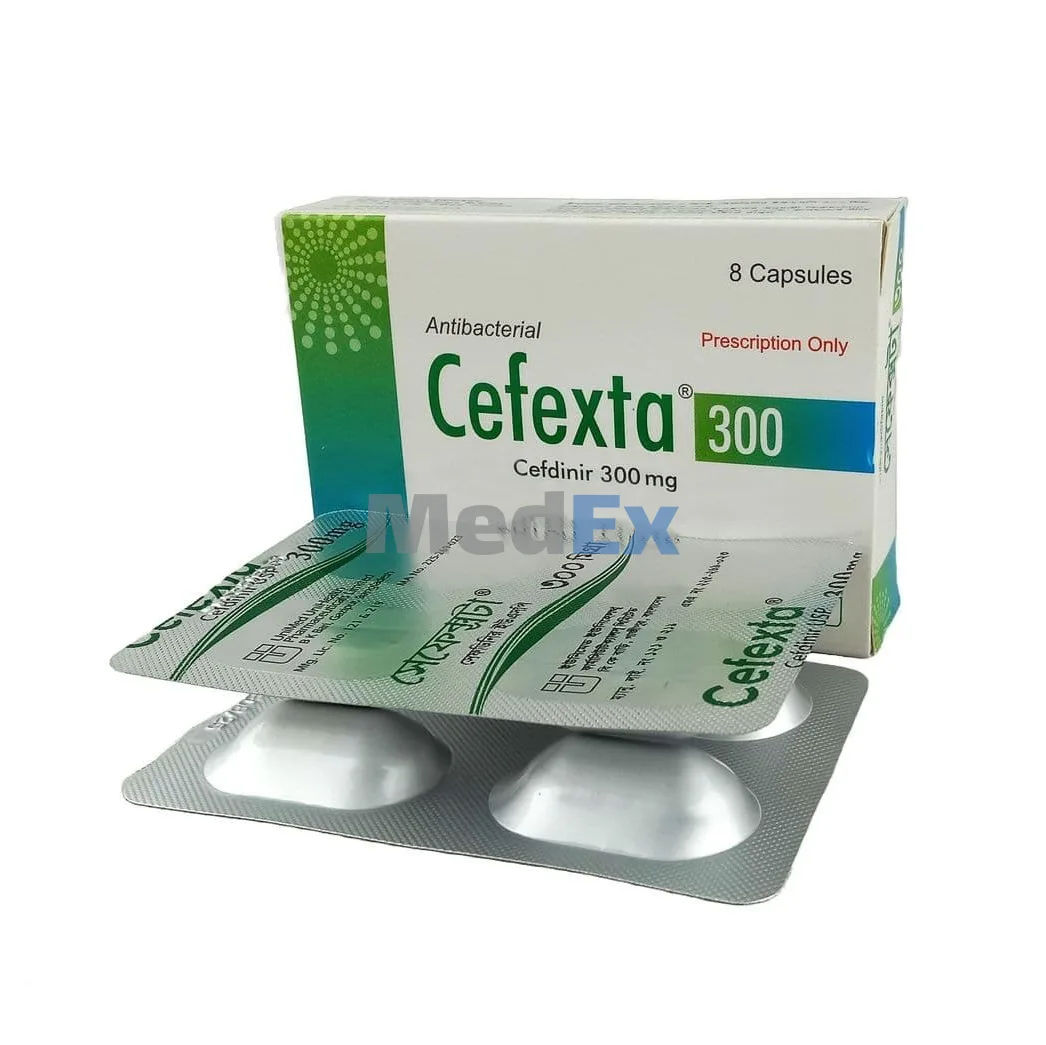
Cefexta
Cheaper & Alternative Brands
Same generic (Cefdinir), same form (Capsule)
Clinical Prescribing Information
Medical monograph and safety information for healthcare professionals & patients.Indications & Clinical Uses
Adinir is indicated in-
Community Acquired Pneumonia,
Acute Exacerbations of Chronic Bronchitis,
Acute Maxillary Sinusitis,
Pharyngitis/Tonsillitis,
Acute Bacterial Otitis Media and
Uncomplicated Skin and Skin Structure Infections.
Dosage & Administration
The total daily dose for all infections is 600 mg. The dosage schedule is given in the following:
Type of infection
Dosage
Duration
Acute Exacerbations of Chronic Bronchitis
300 mg two times daily or 600 mg once daily
5 to 10 days
Pharyngitis/Tonsillitis
Acute Bacterial Otitis Media
Acute Maxillary Sinusitis
300 mg two times daily or 600 mg once daily
10 days
Community Acquired Pneumonia
300mg two times daily
10 days
Uncomplicated Skin and Skin Structure Infections
Powder for Oral Suspension
: The total daily dose for all infections is 14 mg/kg body weight up to a maximum dose of 600 mg per day. The dosage schedule of oral suspension for pediatric patients as follows:
Type of infection
Dosage
Duration
Acute Bacterial Otitis Media
7mg/kg two times or 14 mg/kg once daily
5 to 10 days
Phayngitis/Tonsilitis
Acute Maxillary Sinusitis
7mg/kg two times or14 mg/kg once daily
10 days
Uncomplicated Skin and Skin Structure Infections
7mg/kg two times daily
10 days
Direction for Reconstitution of Powder for Suspension
: Shake the bottle well so that powder does not clog. Add 40 ml (8 x 5 ml spoonful) boiled and cooled water with the provided 5ml spoon to the bottle. Shake well until all powder is dispersed. Reconstituted suspension should be used within 10 days of preparation if kept at room temperature or within 14 days if kept in a refrigerator. Shake the bottle well before use.
Contraindications
Cefdinir is contraindicated in patients with known allergy to the cephalosporin class of antibiotics.
Side Effects & Adverse Reactions
Common side effects are Diarrhea, Vaginal moniliasis, Nausea & Vomiting, Headache, Rash etc.
Warnings & Precautions
Adinir, as with other broad-spectrum antibiotics, should be prescribed with caution in individuals with a history of colitis. In patients with transient or persistent renal insufficiency (creatinine clearance <30 ml/min), the total daily dose of Adinir should be reduced.
Pharmacology & Mechanism of Action
Cefdinir is a semisynthetic third generation oral cephalosporin antibotic. It has a broad spectrum bactericidal activity against a wide range of common pathogens, including b-lactamase producing strains like Staphylococcus aureus, Streptococcus pneumoniae, Streptococcus pyogenes, Haemophilus influenzae, Moraxella catarrhalis, E. coli, Klebsiella pneumoniae, and Proteus mirabilis. As with other cephalosporins, bactericidal activity of Cefexta results from inhibition of cell wall synthesis.