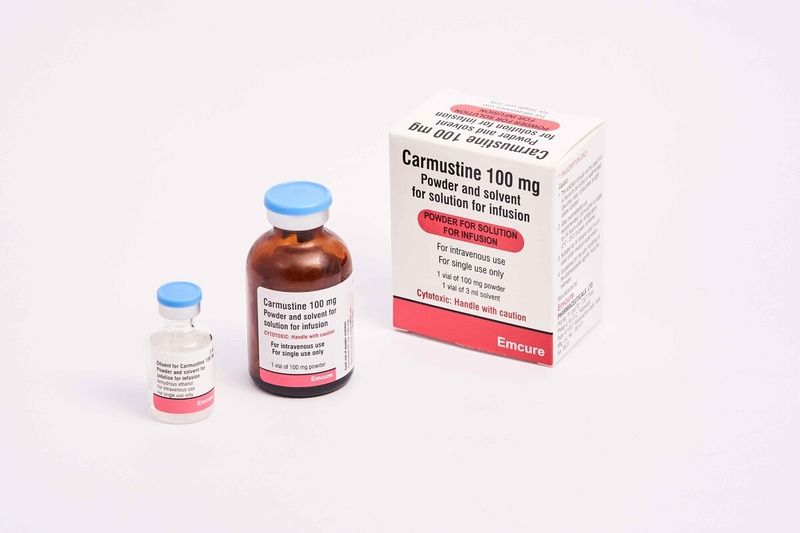
Carmustine
Cheaper & Alternative Brands
Same generic (Carmustine), same form (IV Infusion)No other brands currently registered with this exact active generic and dosage form.
Clinical Prescribing Information
Medical monograph and safety information for healthcare professionals & patients.Indications & Clinical Uses
Carmustine injection is indicated as palliative therapy as a single agent or in established combination therapy in the following:
Brain tumors glioblastoma, brainstem glioma, medulloblastoma, astrocytoma, ependymoma, and metastatic brain tumors.
Multiple myeloma in combination with prednisone.
Relapsed or refractory Hodgkin's lymphoma in combination with other approved drugs.
Relapsed or refractory Non-Hodgkin's lymphomas in combination with other approved drugs.
Dosage & Administration
Recommended Dosage
: As a single agent, 150 to 200 mg/m
2
carmustine intravenously every 6 weeks as a single dose or divided into daily injections such as 75 to 100 mg/m
2
on 2 successive days. Adjust dose for combination therapy or in patients with reduced bone marrow reserve
Administer reconstituted solution only as a slow intravenous infusion over at least 2 hours.
Contraindications
Carmustine is contraindicated in patients with previous hypersensitivity to Carmustine or its components.
Side Effects & Adverse Reactions
Most common adverse reactions (>1%) are nausea, vomiting, renal toxicity, pneumonitis, pulmonary toxicity, myelosuppression
Warnings & Precautions
Administration Reactions
: Extravasation may occur; monitor infusion site closely during administration.
Carcinogenicity
: Potentially carcinogenic to humans. Monitor patient periodically for such signs and apprise the patient of the symptoms for which they need to seek medical help.
Ocular Toxicity
: Has occurred when administered via unapproved intraarterial intracarotid route.
Embryo-Fetal toxicity
: Can cause fetal harm. Advise females of reproductive potential of the potential risk to a fetus and to avoid pregnancy.
Pharmacology & Mechanism of Action
The mechanism of action of carmustine is not fully understood. While carmustine alkylates DNA and RNA, it is not cross-resistant with other alkylators. As with other nitrosoureas, it may also inhibit several key enzymatic processes by carbamoylation of amino acids in proteins. The metabolites may contribute to antitumor activity and toxicities of carmustine.