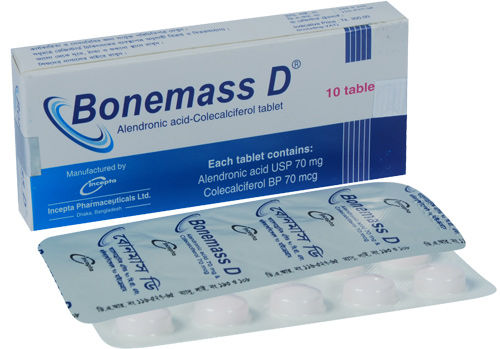
Bonemass D
Cheaper & Alternative Brands
Same generic (Alendronic Acid + Vitamin D3), same form (Tablet)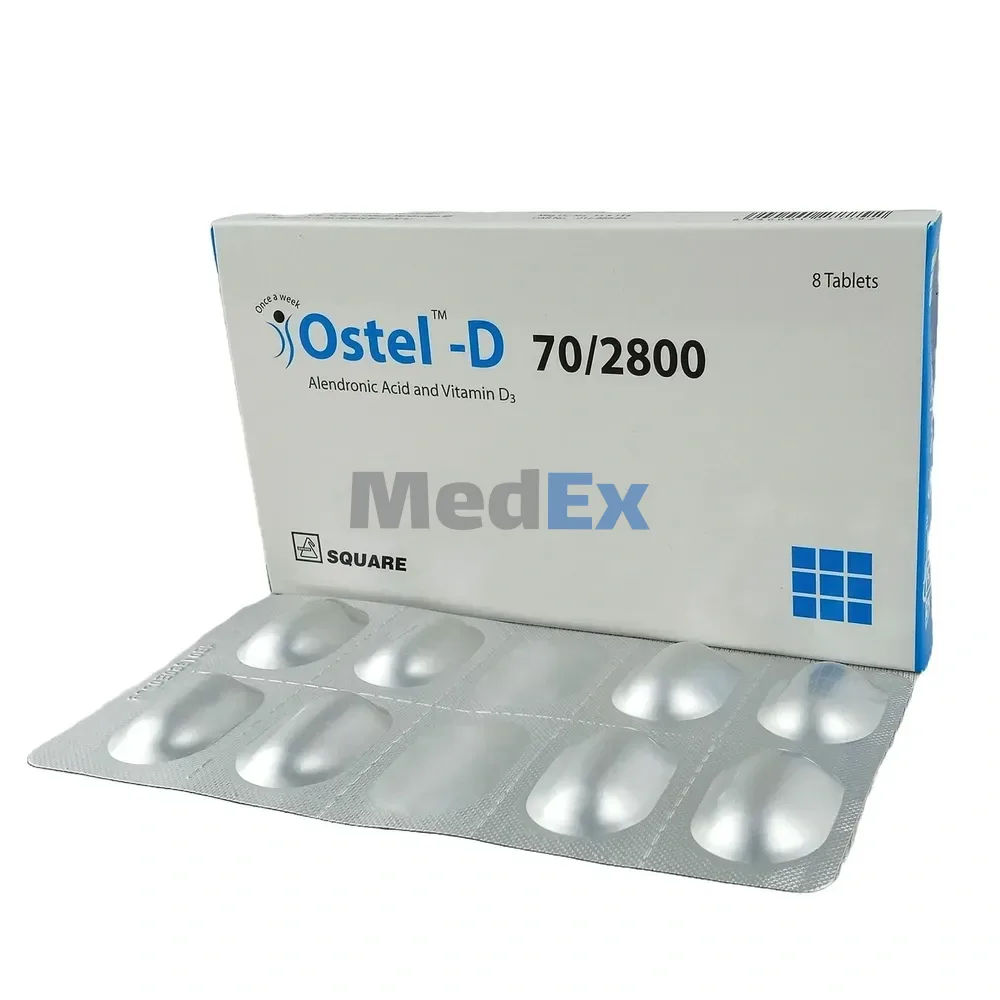
Clinical Prescribing Information
Medical monograph and safety information for healthcare professionals & patients.Indications & Clinical Uses
Alendronic Acid & Vitamin D3 is indicated in:
Treatment of osteoporosis in postmenopausal women.
Treatment of osteoporosis in men.
Treatment of osteoporosis as it increases the bone mass and reduces the incidence of fractures, including those of the hip and spine.
Contraindications
Abnormalities of the esophagus which delay esophageal emptying, such as stricture or achalasia.
Inability to stand or sit upright for at least 30 minutes.
Hypersensitivity to any component of this product.
Hypocalcaemia.
Side Effects & Adverse Reactions
Usually mild and generally do not require discontinuation of therapy. Side effects include esophageal reactions, abdominal pain and distension, diarrhoea or constipation, flatulence, musculoskeletal pain, headache, rash, erythema and transient decreases in serum calcium and phosphate.
Warnings & Precautions
Hypocalcaemia and other disturbances of mineral metabolism should be corrected before initiation of therapy. Alendronate can cause local irritation of the upper gastro-intestinal mucosa. Caution should be used when Alendronate is given to patients with active upper gastrointestinal problems such as dysphagia, esophageal disease, gastritis, duodenitis or ulcers. Patients should stop taking medicine and consult their physician if they develop esophageal diseases.
Pharmacology & Mechanism of Action
Alendronate Sodium is a bisphosphonate that acts as a specific inhibitor of osteoclast mediated bone resorption. Alendronate is effective when administered at least 30 minutes before breakfast. It transiently distributes to soft tissues following administration but is then rapidly distributed to bone or excreted in the urine. Protein binding in human plasma is approximately 78%. There is no evidence that Alendronate is metabolised in animals or humans. At the cellular level, Alendronate shows preferential localization to sites of bone resorption, specially under osteoclasts. It inhibits osteoclast activity. In addition, bone formation exceeds bone resorption, leading to progressive gains in bone mass. Vitamin D is required for normal bone formation. Vitamin D insufficiency develops when both sunlight exposure and dietary intake are inadequate. Insufficiency is associated with negative calcium balance, increased parathyroid hormone levels, bone loss, and increased risk of skeletal fracture.