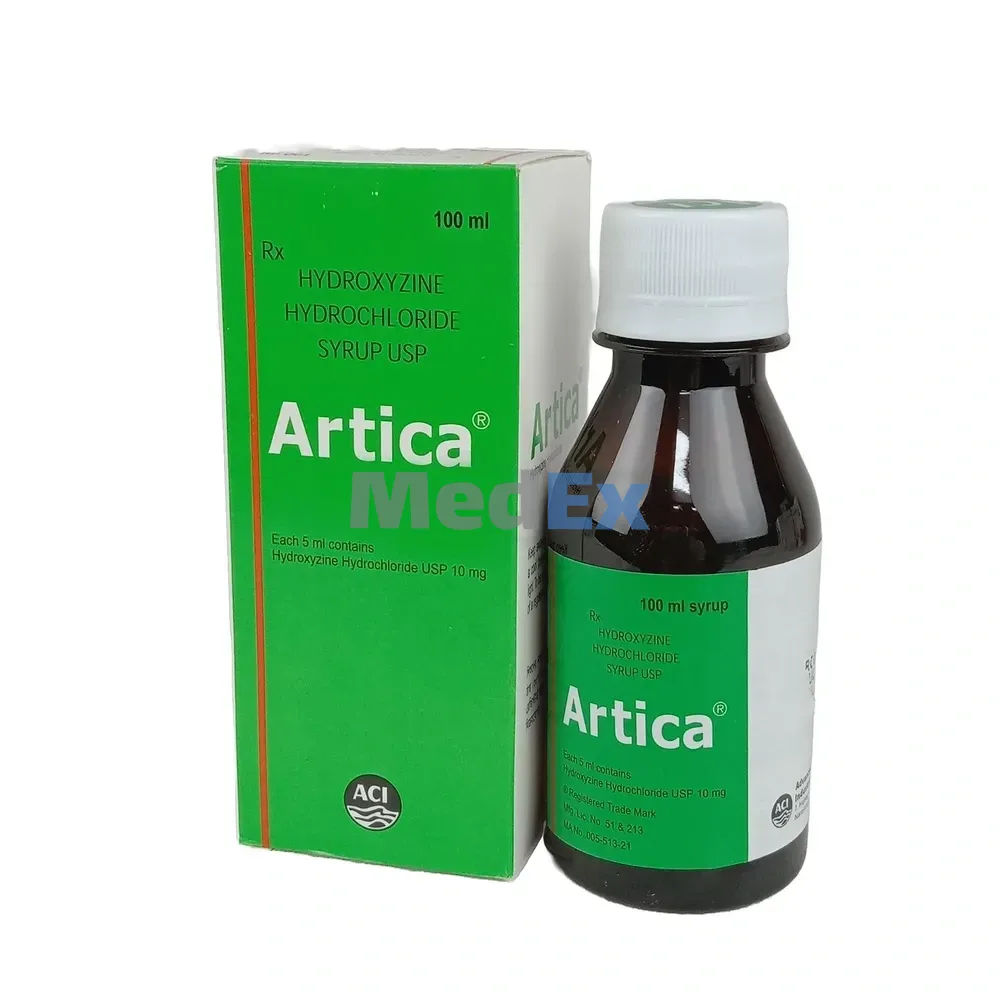
Artica
Cheaper & Alternative Brands
Same generic (Hydroxyzine Hydrochloride), same form (Syrup)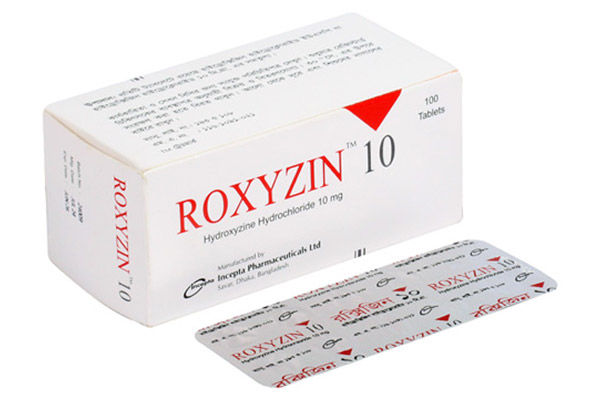

Clinical Prescribing Information
Medical monograph and safety information for healthcare professionals & patients.Indications & Clinical Uses
Artica Hydrochloride is indicated-
For symptomatic relief of anxiety and tension associated with psychoneurosis and as an adjunct in organic disease states in which anxiety is manifested.
Management of pruritus due to allergic conditions such as chronic urticaria and atopic and contact dermatoses, and histamine-mediated pruritus.
... Read more
Artica Hydrochloride is indicated-
For symptomatic relief of anxiety and tension associated with psychoneurosis and as an adjunct in organic disease states in which anxiety is manifested.
Management of pruritus due to allergic conditions such as chronic urticaria and atopic and contact dermatoses, and histamine-mediated pruritus.
As a sedative when used as premedication and following general anesthesia.
The effectiveness of Artica as an antianxiety agent for long-term use (>4 months) has not been assessed by systematic clinical studies. The physician should reassess periodically the usefulness of the drug for the individual patient.
Dosage & Administration
For symptomatic relief of anxiety and tension-
Adults: 50-100 mg 4 times daily.
Children (>6 years): 50-100 mg (5-10 teaspoonfuls) daily in divided doses.
Children (<6 years): 50 mg (5 teaspoonfuls) daily in divided doses.
Pruritus due to allergic conditions-
Adults: 25 mg 3 to 4 times daily.
Children ( 6 years): 50-100 mg (5-10 teaspoonfuls) daily in divided doses.
Children (<6 years): 50 mg (5 teaspoonfuls) daily in divided doses.
As a sedative (premedication and following general anesthesia)-
Adults: 50-100 mg.
Children: 0.6 mg/kg of body weight.
Contraindications
Hydroxyzine is contraindicated in patients with a known hypersensitivity to Hydroxyzine or any of its ingredients.
Side Effects & Adverse Reactions
Side effects reported with the administration of Artica Hhydrochloride are usually mild and transitory in nature. More common side effects include drowsiness, headache, psychomotor impairment, and antimuscarinic effects such as urinary retention, dry mouth, blurred vision, and gastrointestinal disturbances. Other rare side-effects of antihistamines include hypotension, palpitation, arrhythmias, extrapyramidal effects, dizziness, confusion, depression, sleep disturbances, tremor, convulsions, hypersensitivity reactions (including bronchospasm, angioedema, and anaphylaxis, rashes, and photosensitivity reactions), blood disorders, liver dysfunction, and angle-closure glaucoma.
Warnings & Precautions
The potentiating action of Artica must be considered when the drug is used in conjunction with central nervous system depressants such as narcotics, non-narcotic analgesics, and barbiturates. Therefore, when central nervous system depressants are administered concomitantly with Artica, their dosage should be reduced. Since drowsiness may occur with the use of Artica, patients should be warned of this possibility and cautioned against driving a car or operating dangerous machinery while taking Artica. Patients should be advised against the simultaneous use of other CNS depressant drugs and cautioned that the effect of alcohol may be increased.
Pharmacology & Mechanism of Action
Hydroxyzine Hydrochloride is an anxiolytic antihistamine of the piperazine class which is a H1 receptor antagonist. Hydroxyzine is not a cortical depressant, but its action may be due to a suppression of activity in certain key regions of the subcortical area of the central nervous system. Primary skeletal muscle relaxation has been demonstrated experimentally. Bronchodilator activity and antihistaminic and analgesic effects have been demonstrated experimentally and confirmed clinically. An antiemetic effect, both by the apomorphine test and the veriloid test, has been demonstrated. Hydroxyzine is rapidly absorbed from the gastrointestinal tract and clinical effects are usually noted within 15 to 30 minutes after oral administration.