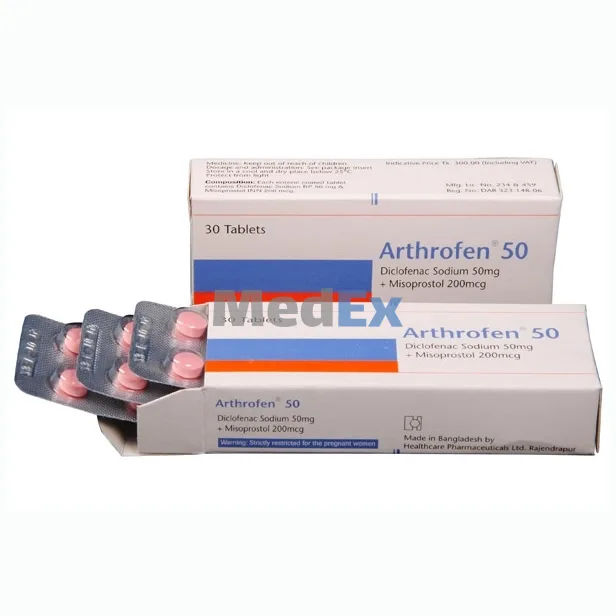
Arthrofen
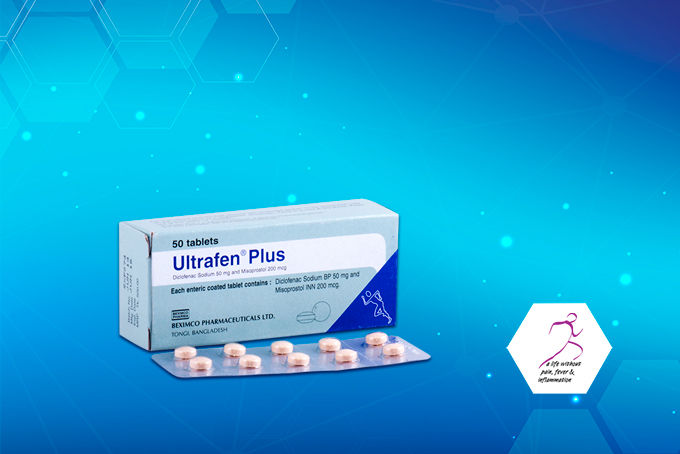
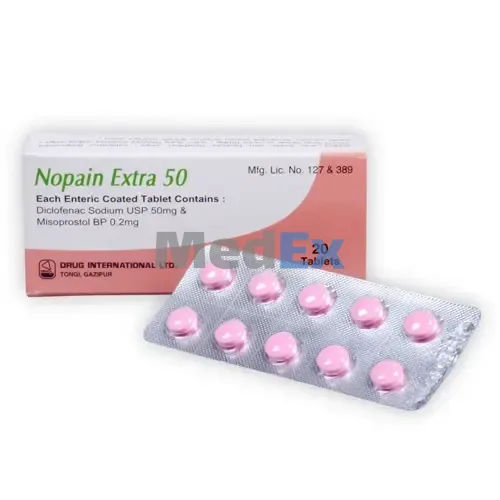
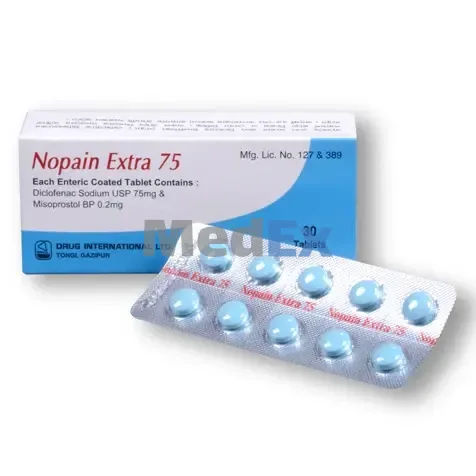
Cheaper & Alternative Brands
Same generic (Diclofenac Sodium + Misoprostol), same form (Tablet)
Clinical Prescribing Information
Medical monograph and safety information for healthcare professionals & patients.Indications & Clinical Uses
Arthrofen is indicated for treatment of the signs and symptoms of osteoarthritis or rheumatoid arthritis in patients at high risk of developing NSAID-induced gastric and duodenal ulcers and their complications.
Dosage & Administration
Osteoarthritis
: The recommended dosage for maximal GI mucosal protection is Diclofenac Sodium 50 mg & Misoprostol 200 µg tid. For patients who experience intolerance, Diclofenac Sodium 75 mg & Misoprostol 200 µg bid or Diclofenac Sodium 50 mg & Misoprostol 200 µg bid can be used.
Rheumatoid arthritis
: The recommended dosage is Diclofenac Sodium 50 mg & Misoprostol 200 µg tid or qid. For patients who experience intolerance, Diclofenac Sodium 75 mg & Misoprostol 200 µg bid or Diclofenac Sodium 50 mg & Misoprostol 200 µg bid can be used.
Contraindications
This is contraindicated in patients with hypersensitivity to Diclofenac, Misoprostol or to other prostaglandins. This should not be given to patients who have experienced asthma, urticaria or other allergic-type reactions after taking aspirin or other NSAIDs.
Side Effects & Adverse Reactions
The most common reported side effects are abdominal pain, diarrhea and other GI symptoms. Diarrhea and abdominal pain developed early in the course of therapy and were usually self-limited (resolved after 2 to 7 days). Rare instances of profound diarrhea leading to severe dehydration have been reported in patients receiving Misoprostol.
Warnings & Precautions
Patients with an underlying condition such as inflammatory bowel disease or those in whom dehydration should be monitored carefully if Diclofenac Sodium plus Misoprostol is prescribed.
Pharmacology & Mechanism of Action
It is a combination product containing Diclofenac Sodium, a nonsteroidal anti-inflammatory drug (NSAID) with analgesic properties and Misoprostol, a gastrointestinal (GI) mucosal protective prostaglandin E 1 analog. The mechanism of action of Diclofenac Sodium, like other NSAIDs, is not completely understood but may be related to prostaglandin synthetase inhibition. NSAIDs inhibit prostaglandin synthesis. A deficiency of prostaglandins within the gastric and duodenal may lead to diminish bicarbonate and mucosal secretion and may contribute to mucosal damage caused by NSAIDs. Misoprostol can increase bicarbonate and mucous production & prevents gastric and duodenal ulcers.