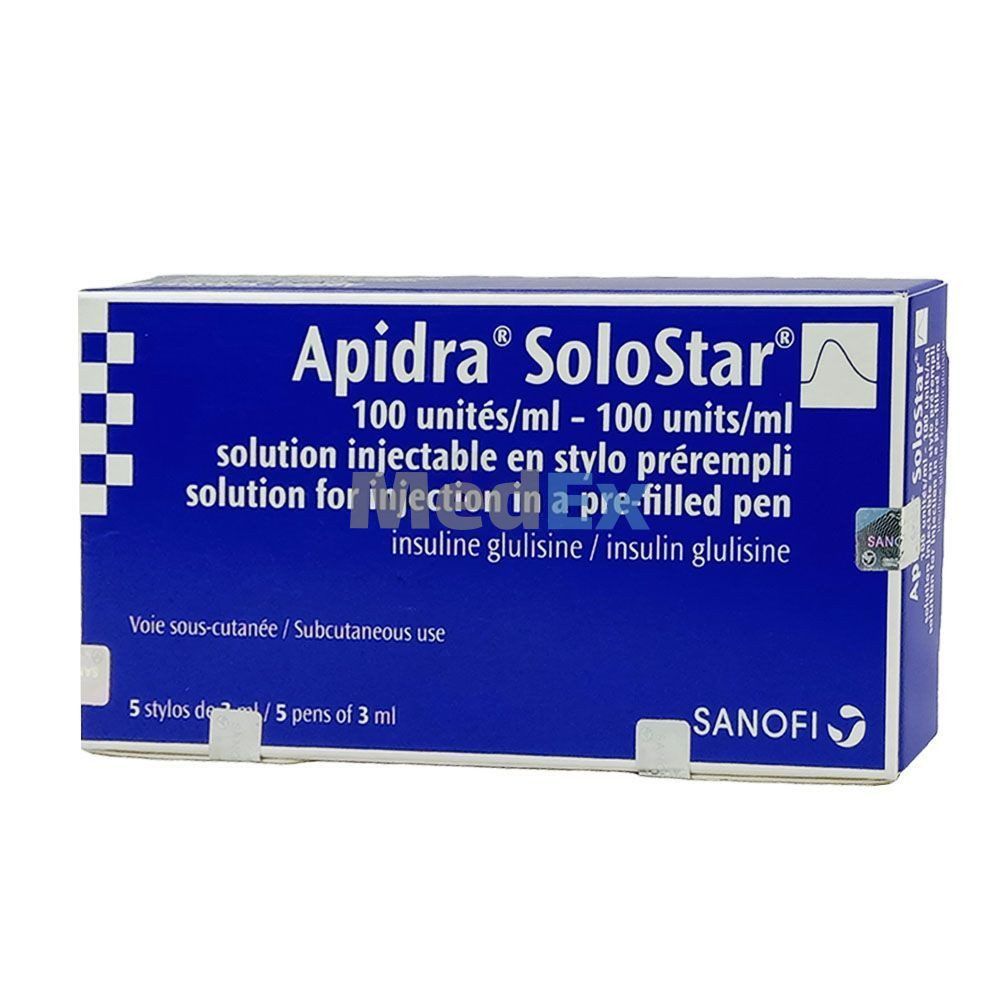
Apidra SoloStar
Cheaper & Alternative Brands
Same generic (Insulin Glulisine), same form (SC Injection)
Clinical Prescribing Information
Medical monograph and safety information for healthcare professionals & patients.Indications & Clinical Uses
Apidra is a rapid-acting human insulin analog indicated to improve glycemic control in adults and pediatric patients with diabetes mellitus.
Dosage & Administration
Individualize and adjust the dosage of insulin glulisine based on the route of administration, individual's metabolic needs, blood glucose monitoring results, and glycemic control goal.
Dosage adjustments may be needed when switching from another insulin, with changes in physical activity, changes in concomitant medications, changes in meal patterns, changes in renal or hepatic function or during acute illness.
Subcutaneous Injection:
Inject within 15 minutes before a meal or within 20 minutes after starting a meal into the abdomen, thigh, or upper arm.
Rotate injection sites within the same region to reduce the risk of lipodystrophy and localized cutaneous amyloidosis.
Should generally be used in regimens with intermediate or long-acting insulin.
Continuous Subcutaneous Infusion (Insulin Pump):
Administer by continuous subcutaneous infusion using an insulin pump in a region recommended in the instructions from the pump manufacturer.
Rotate infusion sites within the same region to reduce the risk of lipodystrophy and localized cutaneous amyloidosis.
Do not dilute or mix insulins in external insulin pumps.
Intravenous Administration: Administer only under medical supervision after diluting to concentrations from 0.05 to 1 unit/mL insulin glulisine in 0.9% sodium chloride injection, USP using polyvinyl chloride infusion bags.
Contraindications
Do not use during episodes of hypoglycemia.
Do not use in patients with hypersensitivity to insulin glulisine or any of its excipients.
Side Effects & Adverse Reactions
Adverse reactions commonly associated with APIDRA include hypoglycemia, allergic reactions, injection site= reactions, lipodystrophy, pruritus, rash, and weight gain.
Warnings & Precautions
Never share an Apidra injection pen between patients, even if the needle is changed.
Hyperglycemia or Hypoglycemia with Changes in Apidra Regimen
: Make changes to a patient's insulin regimen (e.g., insulin strength, manufacturer, type, injection site or method of administration) under close medical supervision with increased frequency of blood glucose monitoring.
Hypoglycemia
: May be life-threatening. Increase frequency of glucose monitoring with changes to: insulin dosage, coadministered glucose lowering medications, meal pattern, physical activity; and in patients with renal impairment or hepatic impairment or hypoglycemia unawareness.
Hypoglycemia Due to Medication Errors
: Accidental mix-ups between insulin products can occur. Instruct patients to check insulin labels before injection.
Hypokalemia
: May be life-threatening. Monitor potassium levels in patients at risk for hypokalemia and treat if indicated.
Hypersensitivity and Allergic Reactions
: Severe, life-threatening, generalized allergy, including anaphylaxis, can occur. Discontinue Apidra, monitor and treat if indicated.
Fluid Retention and Heart Failure Can Occur with Concomitant Use of Thiazolidinediones (TZDs)
: Observe for signs and symptoms of heart failure; consider dosage reduction or discontinuation of TZD if heart failure occurs.
Hyperglycemia and Ketoacidosis Due to Apidra Pump Device Malfunction
: Monitor glucose and administer Apidra by subcutaneous injection if pump malfunction occurs.
Pharmacology & Mechanism of Action
Regulation of glucose metabolism is the primary activity of insulins and insulin analogs, including insulin glulisine. Insulins lower blood glucose by stimulating peripheral glucose uptake by skeletal muscle and fat, and by inhibiting hepatic glucose production. Insulins inhibit lipolysis and proteolysis and enhance protein synthesis.