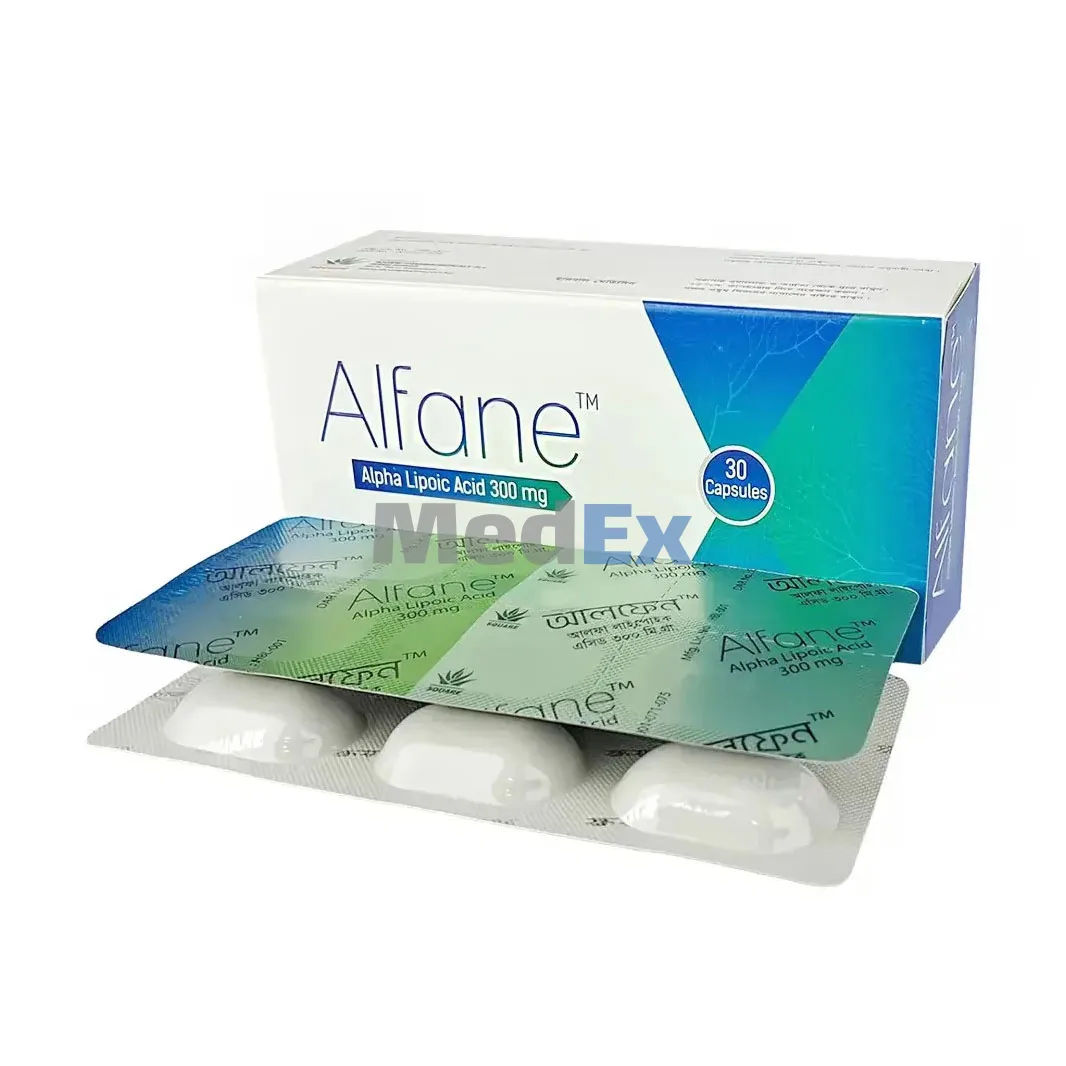
Alfane
Cheaper & Alternative Brands
Same generic (Alpha-Lipoic Acid), same form (Capsule)
Clinical Prescribing Information
Medical monograph and safety information for healthcare professionals & patients.Indications & Clinical Uses
ALA is a potent antioxidant and has neurotrophic properties. This helps to cope with the pain caused by:
Peripheral and diabetic neuropathies
Sciatica, backache, cervical syndrome, carpal tunnel syndrome
Migraine headaches
Dosage & Administration
For Adult use only. It is recommended to take 2 capsules once daily or 1 capsule twice daily, preferably on an empty stomach or as directed by physicians.
Contraindications
Alpha-lipoic acid can lower blood sugar levels, so people with diabetes or low blood sugar should take alpha-lipoic acid only under the supervision of their healthcare provider.
Side Effects & Adverse Reactions
Side effects are generally rare. But in rare cases, it may include insomnia, fatigue, diarrhea, and skin rash.
Warnings & Precautions
ALA is possibly safe for most adults when taken for up to 4 years. It is usually well-tolerated. ALA is possibly safe in children aged 10-17 years when taken by mouth in doses up to 600 mg daily for 3 months. But it is possibly unsafe for children to take large amounts of ALA by mouth.
Pharmacology & Mechanism of Action
Alpha-lipoic acid is an antioxidant that is made naturally in the body and found in foods. It is used to break down carbohydrates and to make energy. Alpha-lipoic acid can be eaten in foods, such as red meat, carrots, beets, spinach, broccoli, and potatoes. It is also available in supplements. Because alpha-lipoic acid seems to work like an antioxidant, it might provide protection to the brain. People most commonly use a -lipoic acid for nerve pain in people with diabetes. It is also used for obesity, altitude sickness, aging skin, high levels of cholesterol or other fats in the blood, and many other purposes.
Alpha-lipoic acid is a substance that can be naturally found in animal and plant tissues and maintains its activity both in aqueous cell compartments and in lipid membrane ones. Alpha-lipoic acid has multiple antioxidant mechanisms, including metal chelating, regenerating endogenous antioxidants such as vitamins C and E, and modulating several signaling pathways, Alpha-lipoic acid plays a significant role in managing peripheral neuropathy, particularly diabetic neuropathy, Alpha-lipoic acid can pass easily into the brain, it may help protect the brain and nerve tissue, a-lipoic acid helps lower blood sugar levels. Its ability to kill free radicals may help people with diabetic peripheral neuropathy, who have pain, burning, itching, tingling, and numbness in arms and legs from nerve damage, Alpha-lipoic acid has been found to reduce the expression of GLUT~4s (Glucose transporter type 4) in cells, responsible for glucose uptake, and hence reduce Insulin sensitivity.