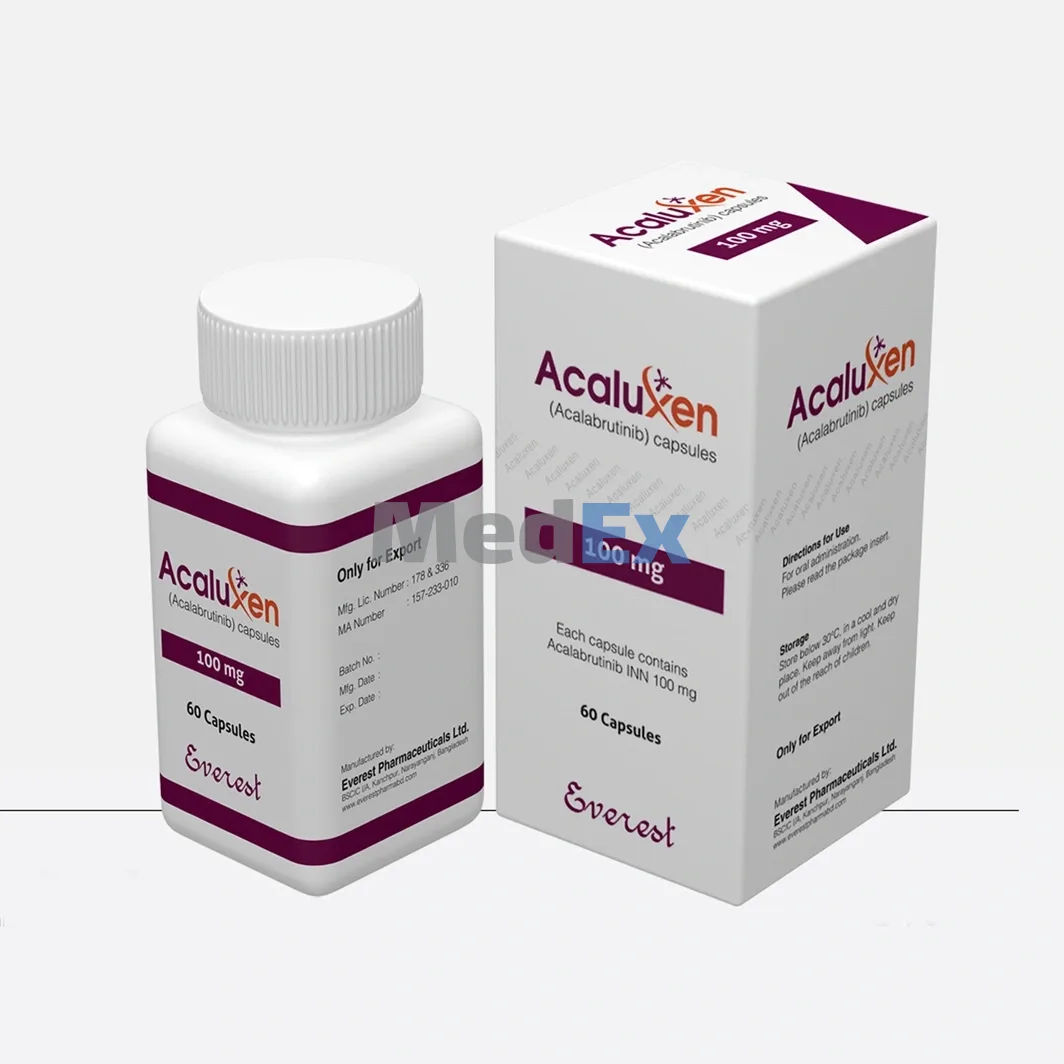
Acaluxen
Cheaper & Alternative Brands
Same generic (Acalabrutinib), same form (Capsule)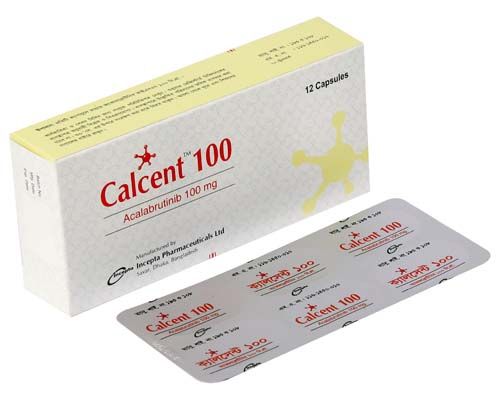
Clinical Prescribing Information
Medical monograph and safety information for healthcare professionals & patients.Indications & Clinical Uses
Acaluxen is a kinase inhibitor indicated for the treatment of adult patients with:
Mantle cell lymphoma (MCL) who have received at least one prior therapy
This indication is approved under accelerated approval based on overall response rate Continued approval for this indication may be contingent upon verification and description of clinical benefit in confirmatory trials
Chronic lymphocytic leukemia (CLL) or small lymphocytic lymphoma (SLL)
Dosage & Administration
The recommended dose of Acalabrutinib is 100 mg taken orally approximately every twelve hours until disease progression or unacceptable toxicity. Advise patients to swallow capsule whole with water. Advise patients not to open, break or chew the capsules. Acalabrutinib may be taken with or without food. If a dose of Acalabrutinib is missed by more than 3 hours, it should be skipped and the next dose should be taken at its regularly scheduled time. Extra capsules of Acalabrutinib should not be taken to make up for a missed dose.
Recommended Dose Modifications for Adverse Reactions
: Dosage of Acalabrutinib can be reduced up to 100 mg daily for the toxicity has resolved to Grade 1 or baseline level. If the adverse reaction occurrence more than four times Acalabrutinib can be Discontinue.
Side Effects & Adverse Reactions
Most common adverse reactions (incidence ≥30%) were: anemia, neutropenia, upper respiratory tract infection, thrombocytopenia, headache, diarrhea, and musculoskeletal pain.
Warnings & Precautions
Hemorrhage
: Serious hemorrhagic events, including fatal events, have occurred in the combined safety database of 612 patients with hematologic malignancies treated with Acaluxen monotherapy. Grade 3 or higher bleeding events, including gastrointestinal, intracranial, and epistaxis have been reported in 2% of patients. Overall, bleeding events including bruising and petechiae of any grade occurred in approximately 50% of patients with hematological malignancies. The mechanism for the bleeding events is not well understood. Acaluxen may further increase the risk of hemorrhage in patients receiving antiplatelet or anticoagulant therapies and patients should be monitored for signs of bleeding. Consider the benefit-risk of withholding Acaluxen for 3-7 days pre- and post-surgery depending upon the type of surgery and the risk of bleeding.
Infection
: Serious infections (bacterial, viral or fungal), including fatal events and opportunistic infections have occurred in the combined safety database of 612 patients with hematologic malignancies treated with Acaluxen monotherapy. Consider prophylaxis in patients who are at increased risk for opportunistic infections. Grade 3 or higher infections occurred in 18% of these patients. The most frequently reported Grade 3 or 4 infection was pneumonia. Infections due to hepatitis B virus (HBV) reactivation and progressive multifocaln leukoencephalopathy (PML) have occurred. Monitor patients for signs and symptoms of infection and treat as medically appropriate.
Cytopenias
: In the combined safety database of 612 patients with hematologic malignancies, patients treated with Acaluxen monotherapy experienced Grade 3 or 4 cytopenias, including neutropenia (23%), anemia (11%) and thrombocytopenia (8%) based on laboratory measurements. In the Acaluxen clinical Trial LY-004, patients’ complete blood counts were assessed monthly during treatment.
Second Primary Malignancies
: Second primary malignancies, including non-skin carcinomas, have occurred in 11% of patients with hematologic malignancies treated with Acaluxen monotherapy in the combined safety database of 612 patients. The most frequent second primary malignancy was skin cancer, reported in 7% of patients. Advise protection from sun exposure.
Atrial Fibrillation and Flutter
: In the combined safety database of 612 patients with hematologic malignancies treated with Acaluxen monotherapy, atrial fibrillation and atrial flutter of any grade occurred in 3% of patients, and Grade 3 in 1% of patients. Monitor for atrial fibrillation and atrial flutter and manage as appropriate.
Pharmacology & Mechanism of Action
Acalabrutinib is a small-molecule inhibitor of BTK. Acalabrutinib and its active metabolite, ACP-5862, form a covalent bond with a cysteine residue in the BTK active site, leading to inhibition of BTK enzymatic activity. BTK is a signaling molecule of the B cell antigen receptor (BCR) and cytokine receptor pathways. In B cells, BTK signaling results in activation of pathways necessary for B-cell proliferation, trafficking, chemotaxis, and adhesion. In nonclinical studies, acalabrutinib inhibited BTK-mediated activation of downstream signaling proteins CD86 and CD69 and inhibited malignant B-cell proliferation and tumor growth in mouse xenograft models.