Sunitinib
💊 Brand Formulations & Prices
7 brands sorted by unit price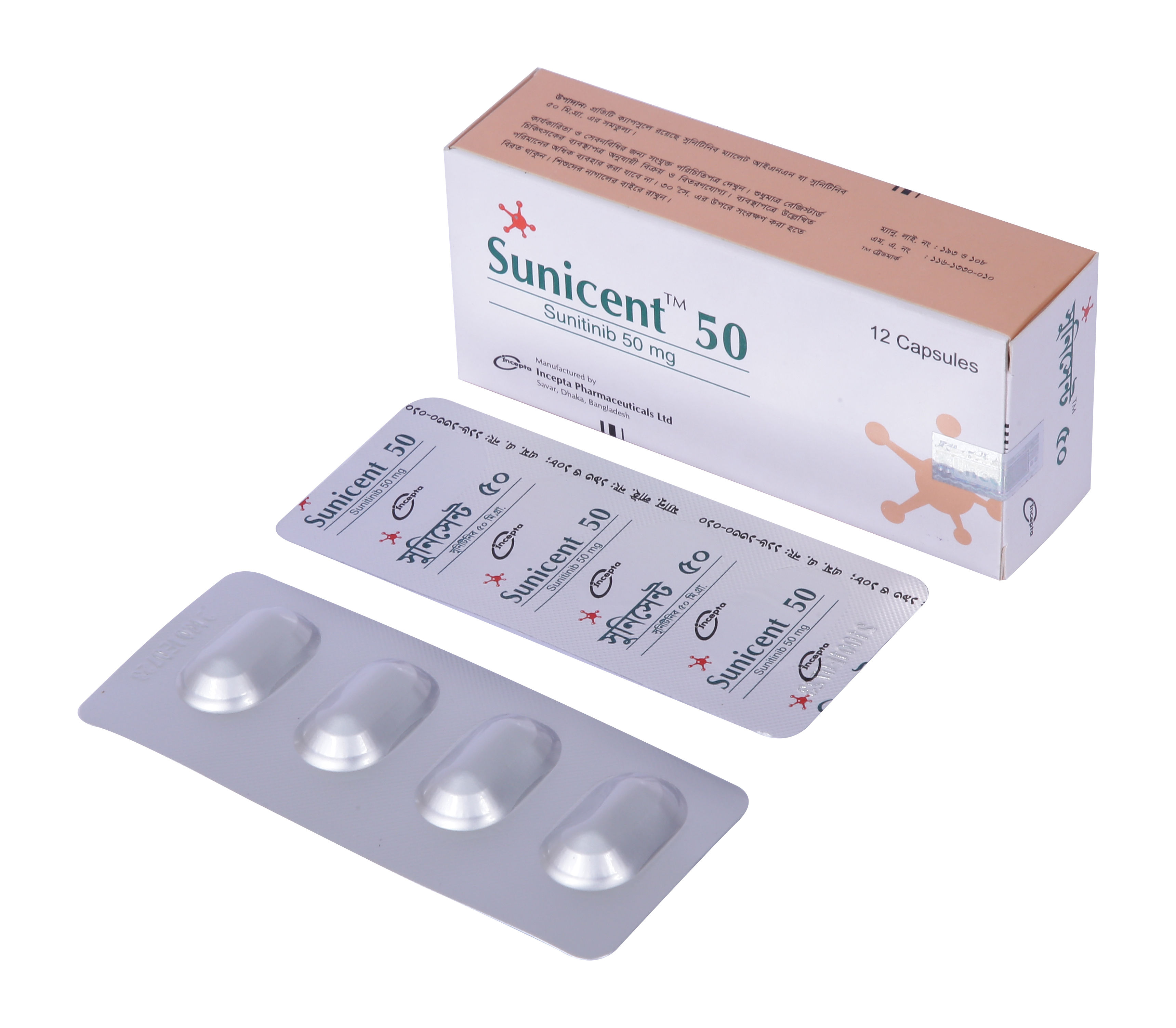
Sunicent

Sutib
Sunitix
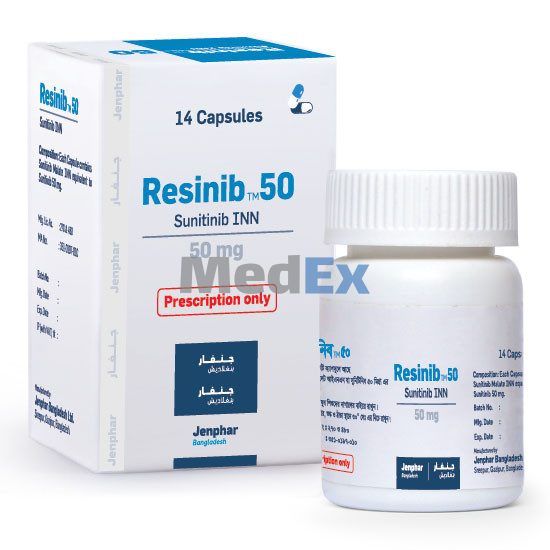
Resinib
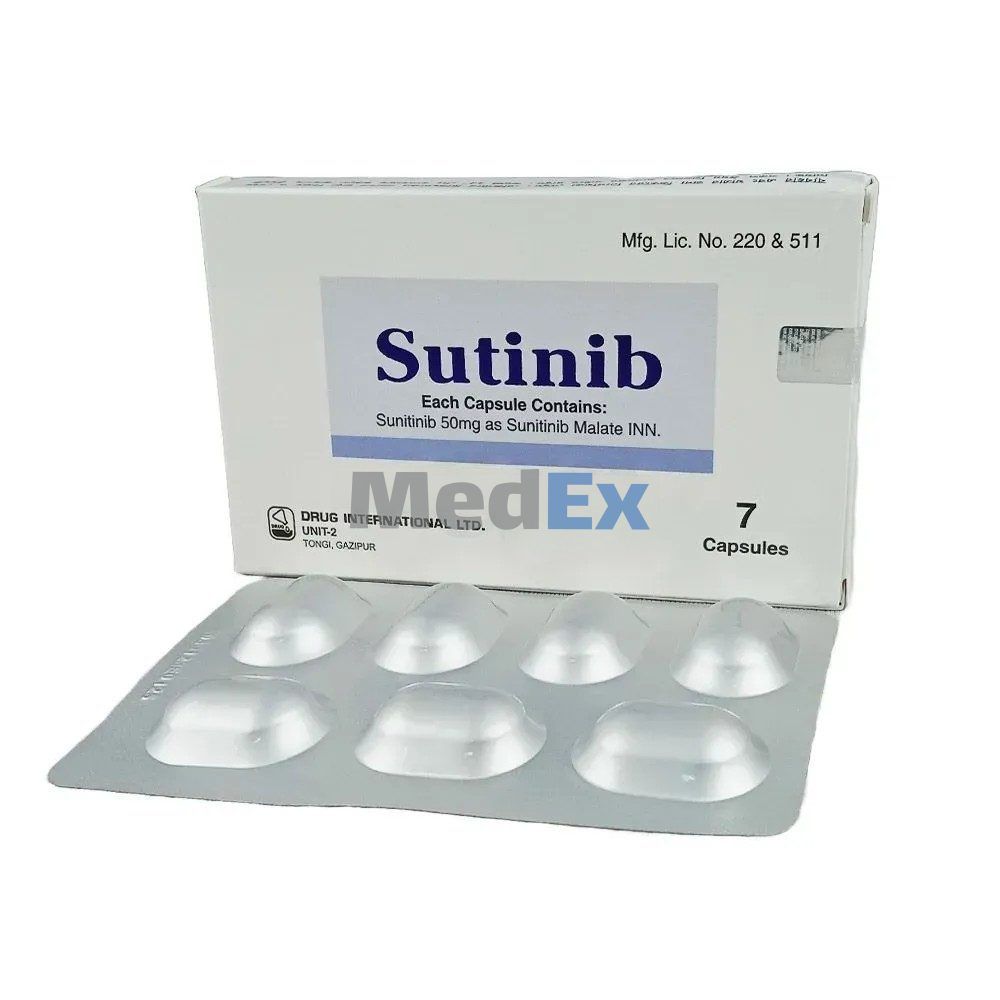
Sutinib
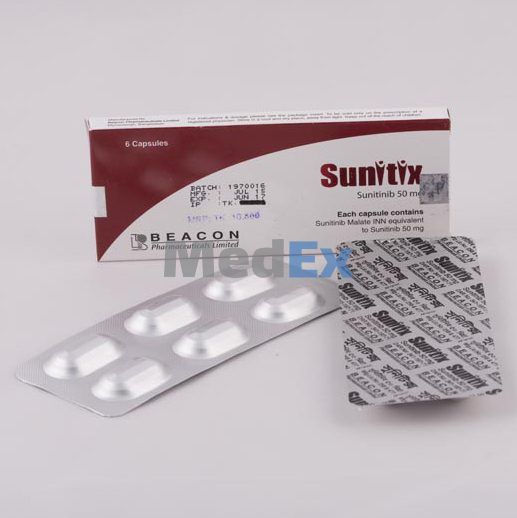
Sunitix
Sutib
📖 Official Clinical Monograph
DGDA Approved Prescribing GuidelinesResinib capsule is indicated in-
Gastrointestinal Stromal Tumor (GIST)
: It is indicated for the treatment of gastrointestinal stromal tumor after disease progression on or intolerance to Imatinib Mesylate.
Advanced Renal Cell Carcinoma (RCC)
:
... Read more
Resinib capsule is indicated in-
Gastrointestinal Stromal Tumor (GIST)
: It is indicated for the treatment of gastrointestinal stromal tumor after disease progression on or intolerance to Imatinib Mesylate.
Advanced Renal Cell Carcinoma (RCC)
: It is indicated for the treatment of advanced renal cell carcinoma.
Adjuvant Treatment of Renal Cell Carcinoma (RCC)
: It is indicated for the adjuvant treatment of adult patients at high risk of recurrent RCC following nephrectomy.
Advanced Pancreatic Neuroendocrine Tumors (pNET)
: It is indicated for the treatment of progressive, well-differentiated pancreatic neuroendocrine tumors in patients with unresectable locally advanced or metastatic disease.
Recommended Dose for GIST and Advanced RCC
: The recommended dose of Sutinib for gastrointestinal stromal tumor (GIST) and advanced renal cell carcinoma (RCC) is one 50 mg oral dose taken once daily, on a schedule of 4 weeks on treatment followed by 2 weeks off (Schedule 4/2). It may be taken with or without food.
Recommended Dose for Adjuvant Treatment of RCC
: The recommended dose of Sutinib for the adjuvant treatment of RCC is 50 mg taken orally once daily, on a schedule of 4 weeks on treatment followed by 2 weeks off (Schedule 4/2), for nine 6-week cycles. It may be taken with or without food.
Recommended Dose for pNET
: The recommended dose of Sutinib for pancreatic neuroendocrine tumors (pNET) is 37.5 mg taken orally once daily continuously without a scheduled off-treatment period. It may be taken with or without food.
It is contraindicated in patients with known hypersensitivity to Sunitinib or any other components of this product.
The most common side effects are: Hepatotoxicity, Cardiovascular Events, QT Interval Prolongation and
Torsade de Pointes, Hypertension, Hemorrhagic Events, Tumor Lysis Syndrome (TLS), Thrombotic Microangiopathy, Proteinuria, Dermatologic Toxicities, Thyroid Dysfunction, Hypoglycemia, Osteonecrosis of the Jaw (ONJ), Wound Healing.
Sunitinib is a small molecule that inhibits multiple receptor tyrosine kinases (RTKs), some of which are implicated in tumor growth, pathologic angiogenesis, and metastatic progression of cancer. Sunitinib was evaluated for its inhibitory activity against a variety of kinases (>80 kinases) and was identified as an inhibitor of platelet-derived growth factor receptors (PDGFRα and PDGFRβ), vascular endothelial growth factor receptors (VEGFR1, VEGFR2, and VEGFR3), stem cell factor receptor (KIT), Fms-like tyrosine kinase-3 (FLT3), colony stimulating factor receptor Type 1 (CSF-1R), and the glial cell-line derived neurotrophic factor receptor (RET). Sunitinib inhibition of the activity of these RTKs has been demonstrated in biochemical and cellular assays, and inhibition of function has been demonstrated in cell proliferation assays. The primary metabolite exhibits similar potency compared to sunitinib in biochemical and cellular assays.