Spiramycin
💊 Brand Formulations & Prices
1 brands sorted by unit price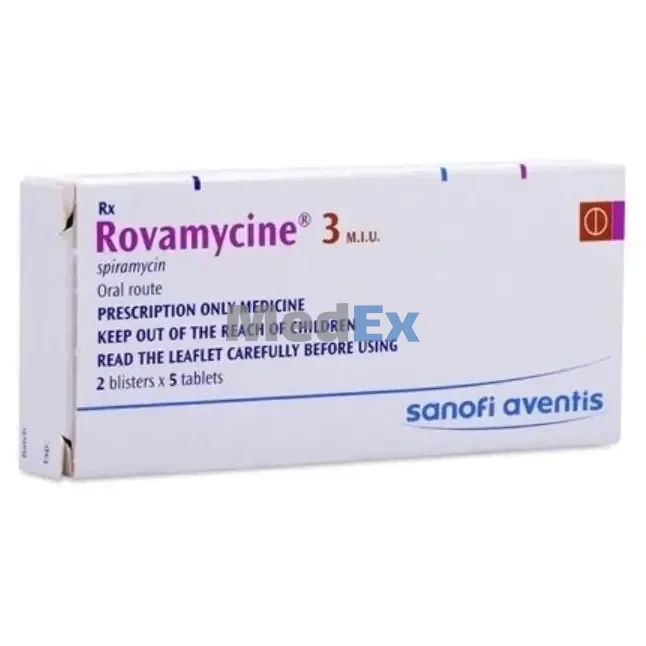
📖 Official Clinical Monograph
DGDA Approved Prescribing GuidelinesRovamycine is indicated for the treatment of infections of the respiratory tract, buccal cavity, skin and soft tissues due to susceptible organisms. Neisseria gonorrhoeae: as an alternate choice of treatment for gonorrhea in patients allergic to the penicillins. Before treatment of gonorrhea, the possibility of concomitant infection due to T. pallidum should be excluded.
Spiramycin is contraindicated in patients with known hypersensitivity to the drug. The levels of spiramycin attained in the cerebrospinal fluid are much lower than those in the blood and are too low to be clinically useful. Therefore Spiramycin must not be used in patients with meningitis.
Side effects of include: nausea, vomiting, diarrhea, inflamed bowels, pruritus (itchy skin), tingling or numbness in the skin.
Administer antibiotics, including Rovamycine cautiously to any patient who has demonstrated some form of allergy, particularly to drugs. The possibility of superinfection caused by overgrowth of nonsusceptible organisms should be kept in mind during prolonged or repeated therapy. If superinfection occurs, discontinue the drug and take appropriate measures.
The mechanism of action of macrolides has been a matter of controversy for some time. Spiramycin, a 16-membered macrolide, inhibits translocation by binding to bacterial 50S ribosomal subunits with an apparent 1 : 1 stoichiometry. This antibiotic is a potent inhibitor of the binding to the ribosome of both donor and acceptor substrates. The primary mechanism of action is done by stimulation of dissociation of peptidyl-tRNA from ribosomes during translocation.