Spinosad
💊 Brand Formulations & Prices
5 brands sorted by unit price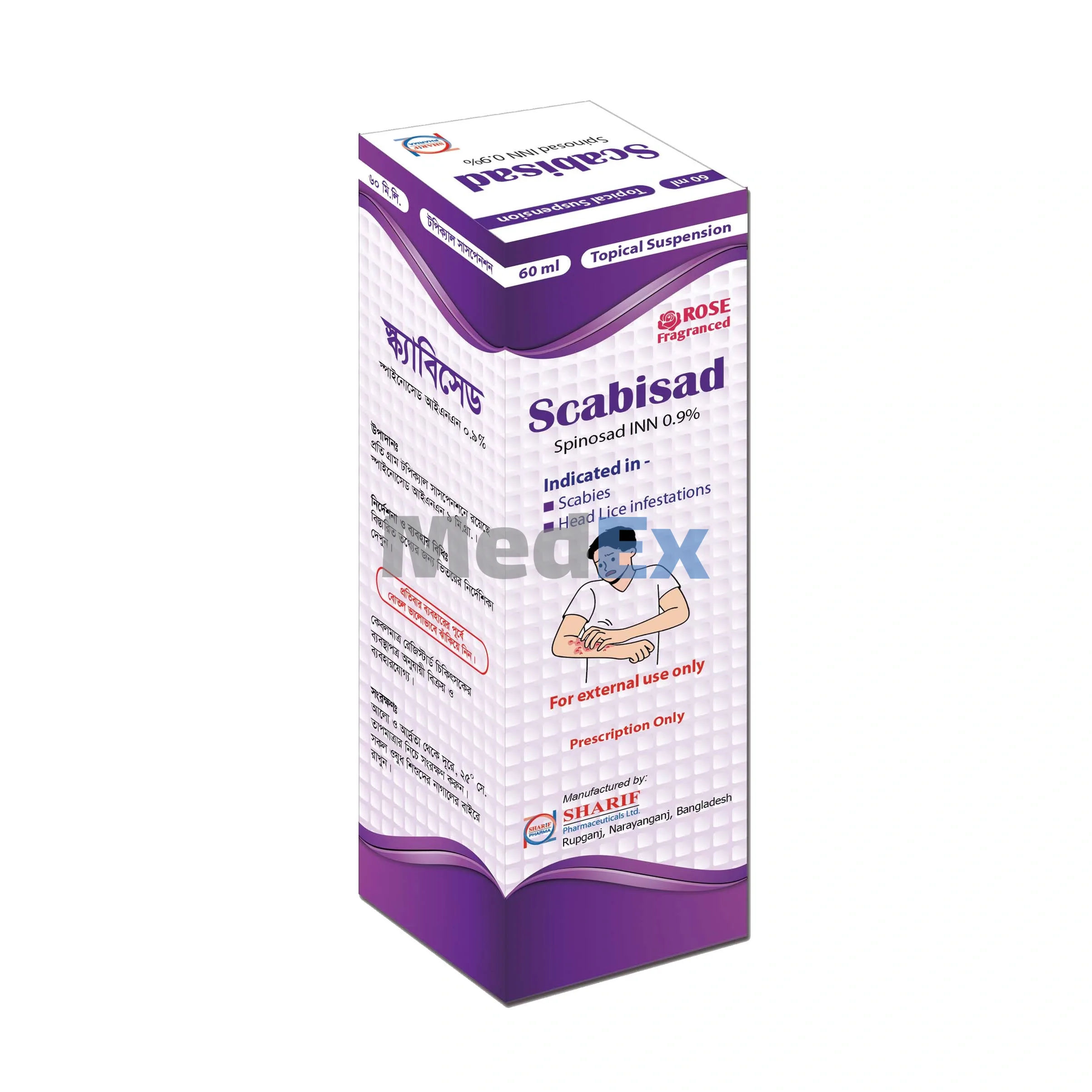
Scabisad
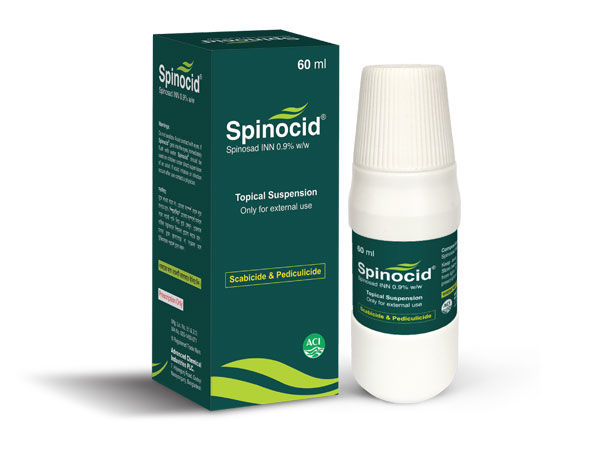
Spinocid
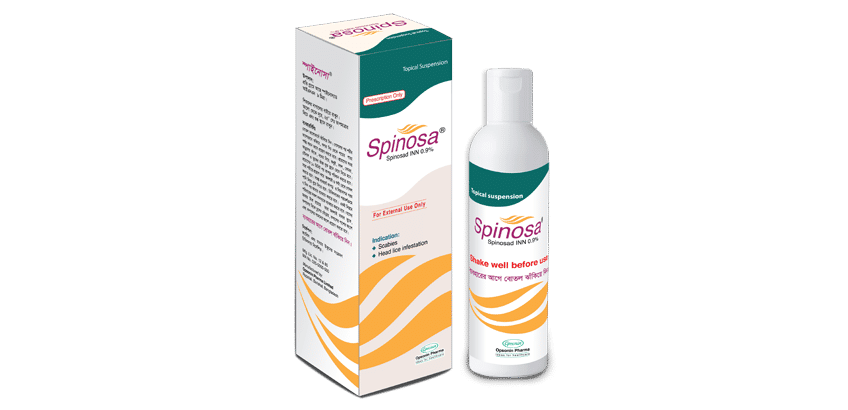
Spinosa
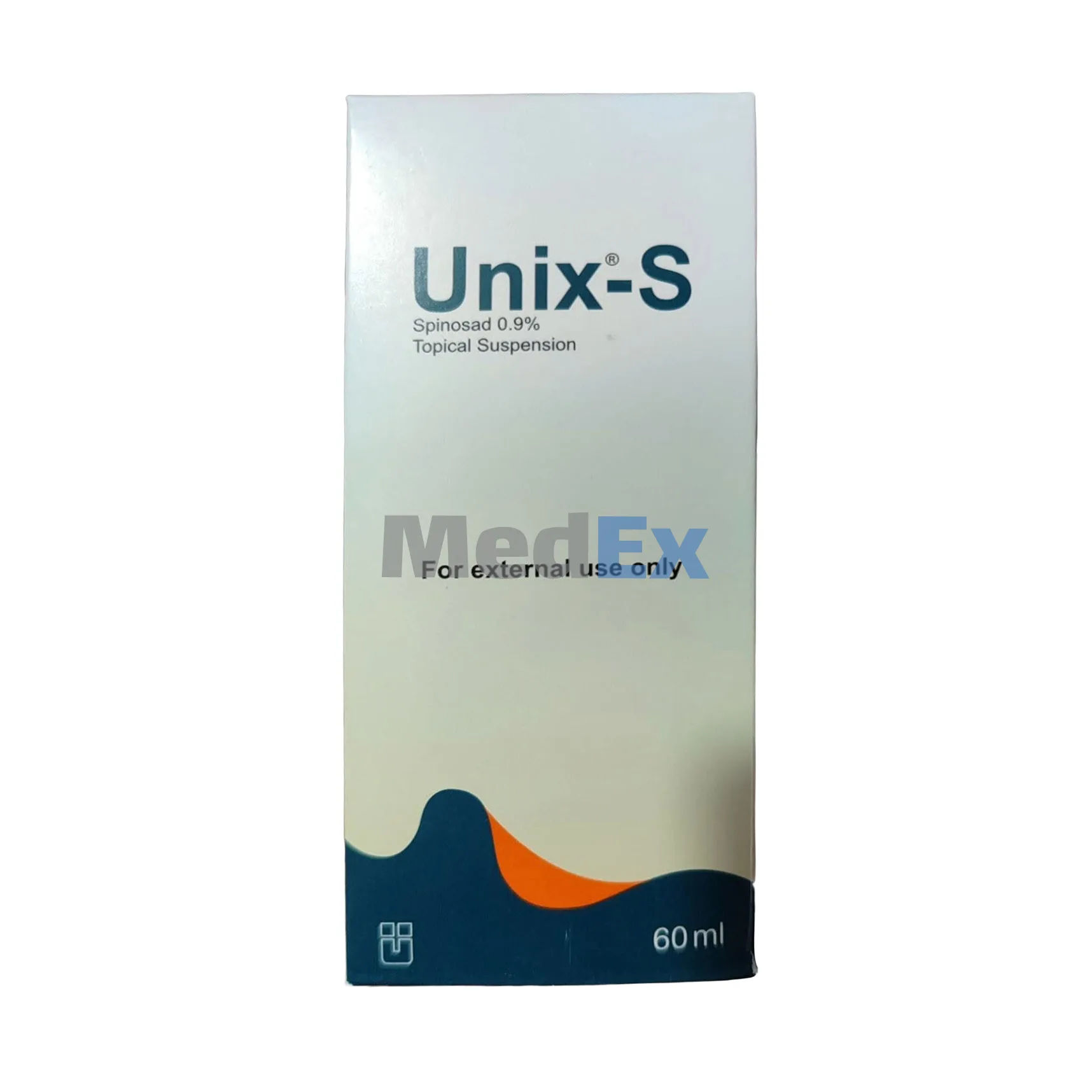
Unix-S
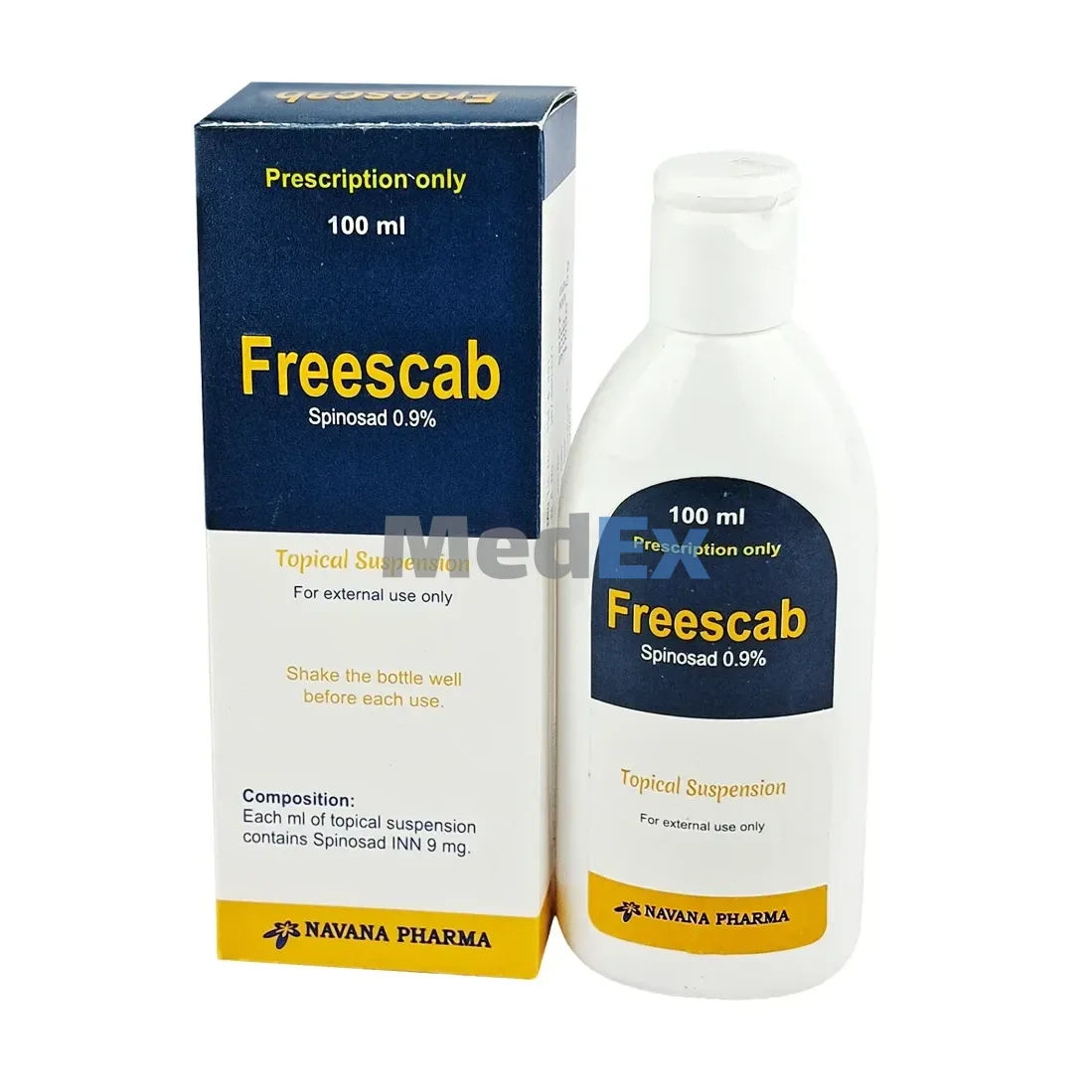
Freescab
📖 Official Clinical Monograph
DGDA Approved Prescribing GuidelinesScabies Infestations
: Freescab Topical Suspension is a scabicide Indicated for the topical treatment of scabies infestations in adult and paediatric patients 4 years of age and older.
Head Lice Infestations
: Freescab Topical Suspension is a pediculicide indicated for the topical treatment of head lice infestations in adult and paediatric patients 6 months of age and older.
For topical use only. Not for oral, ophthalmic, or intravaginal use.
Treatment of Scabies Infestations
:
The bottle should be shaken well before use
The medication should be thoroughly rubbed into the entire body from the neck down to the soles of the feet
Patients with balding scalp should also apply the medication to the scalp, hairline, temples, and forehead
Sufficient time should be allowed for the medication to absorb into the skin and dry for 10 minutes before dressing
Bathing should be avoided for at least 6 hours after application
Treatment of Head Lice Infestations
:
The bottle should be shaken well before use
The medicine should be applied thoroughly so that the scalp is completely covered. Then the medication should be applied to dry hair
After 10 minutes, the hair should be rinsed with warm water
If live lice are observed 7 days after the first treatment, the treatment should be repeated or as directed by the physician.
Use in Children & Adolescents
Scabies Infestation
: The safety and effectiveness of Spinosad Topical Suspension have not been established in pediatric patients less than 4 years of age with scabies infestation.
Head Lice Infestation
: The safety and effectiveness of Spinosad Topical Suspension for the topical treatment of head lice infestation have been established in pediatric patients 6 months of age and older. Drug Interactions
No information is available.
Most common adverse reactions for:
Scabies treatment (>1%) are application site irritation and dry skin
Lice treatment (>1%) are application site erythema and ocular erythema
Freescab Topical Suspension contains benzyl alcohol and is not approved for use in neonates and infants below the age of 6 months. Systemic exposure to benzyl alcohol has been associated with serious adverse reactions and death in neonates and low birth-weight infants when administered intravenously.
Spinosad causes neuronal excitation in insects. After periods of hyperexcitation, lice and mites become paralyzed and die.
Pharmacokinetics
: When applied topically, spinosad shows minimal absorption into the bloodstream. After topical application, detectable plasma levels of spinosad are either very low or absent. In clinical studies, plasma spinosad concentrations were below the level of quantification in most subjects following a single topical application to the scalp for lice treatment. The absorption in children follows a similar pattern, with minimal systemic exposure. Spinosad remains localized to the treated area, specifically targeting lice and scabies on the surface of the skin and scalp. Due to its minimal absorption, significant distribution into systemic circulation is not observed. Because spinosad is minimally absorbed, metabolism within the body is very limited. If any trace amounts are absorbed, spinosad is likely metabolized by the liver's CYP450 enzyme system. Spinosad is predominantly excreted as unchanged drug through the skin or external means (e.g., through washing off). Minimal amounts, if any, are excreted via urine or feces due to low systemic absorption. Due to its negligible systemic absorption, spinosad's systemic half-life is not well-defined in humans. It primarily remains active on the surface of the skin until washed off.