Propofol
💊 Brand Formulations & Prices
5 brands sorted by unit price
Propofol
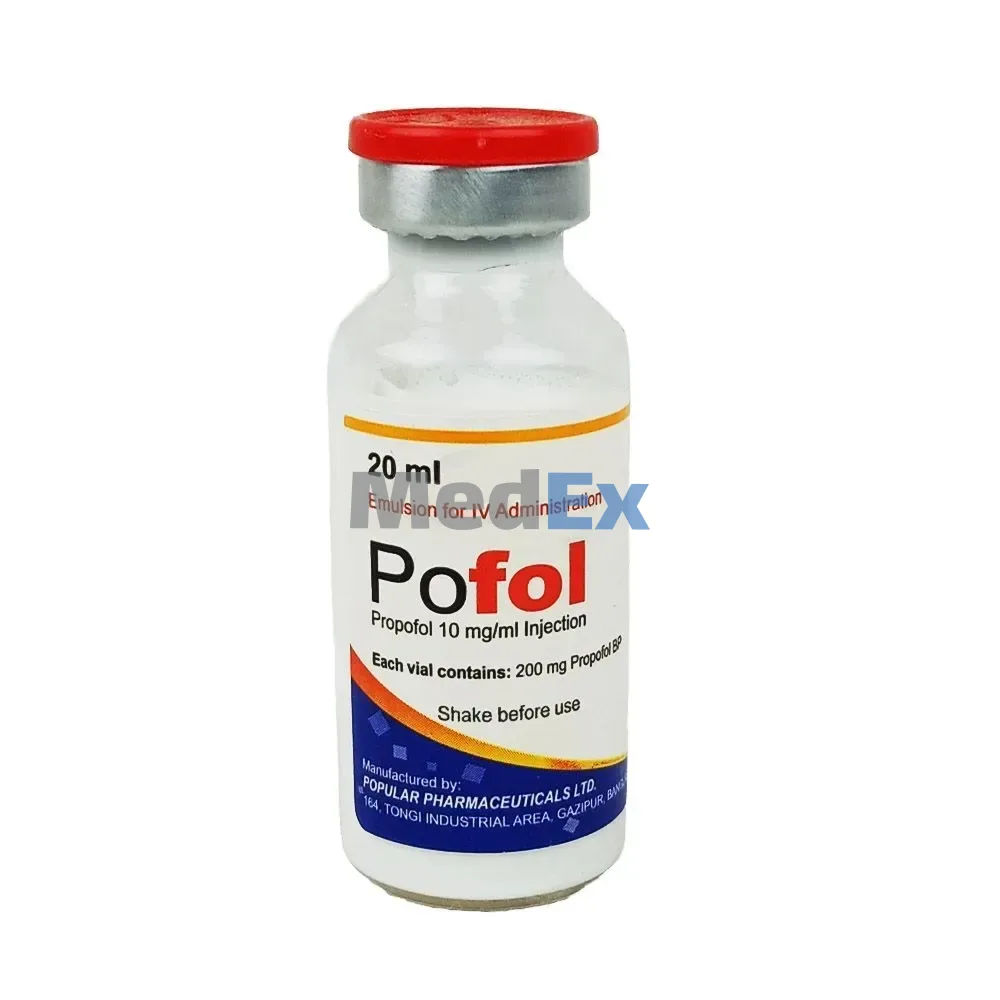
Pofol
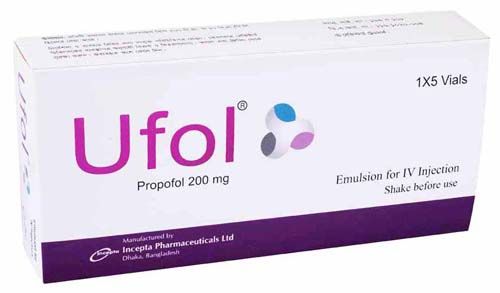
Ufol
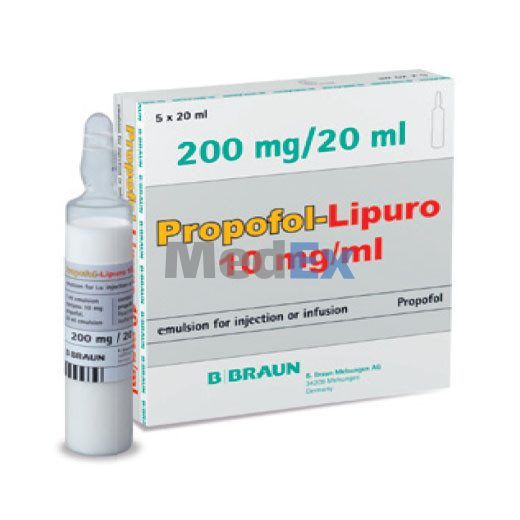
Lipuro
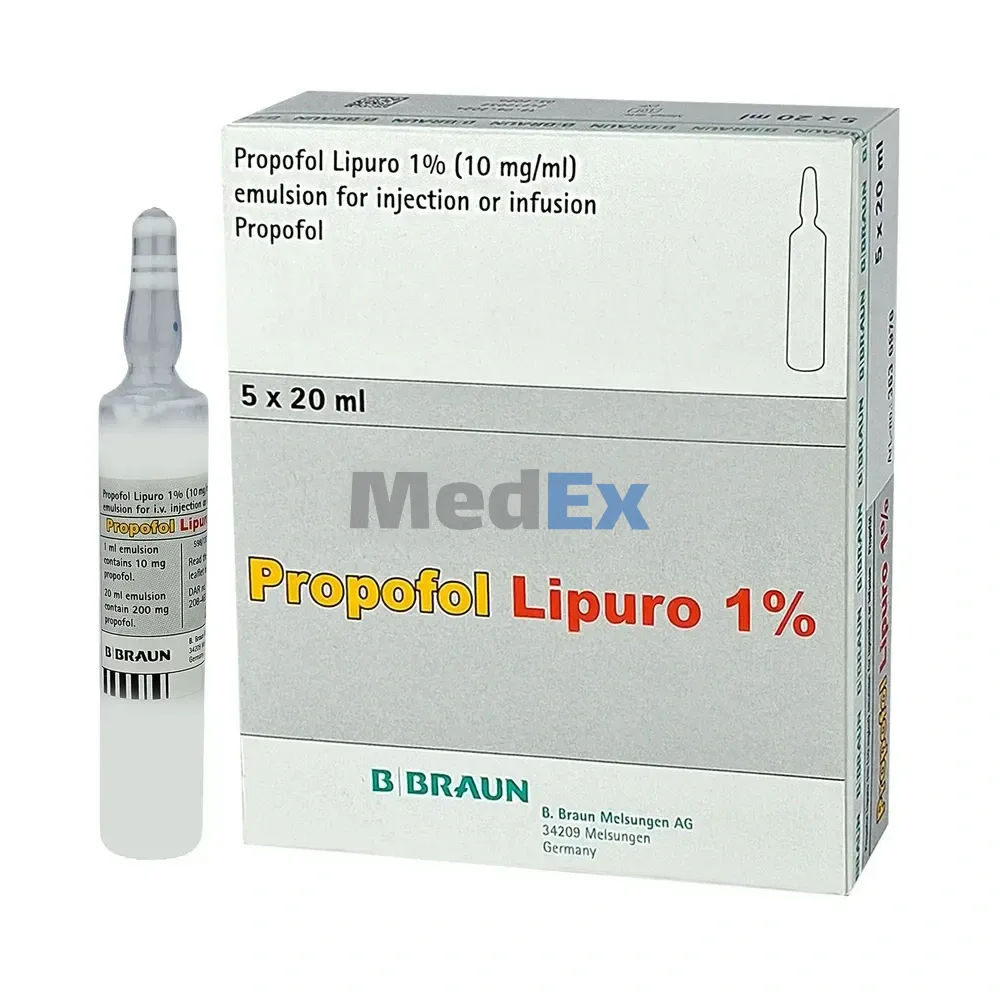
Propofol MCT
📖 Official Clinical Monograph
DGDA Approved Prescribing GuidelinesLipuro is indicated in-
Induction and maintenance of general anaesthesia.
Sedation during intensive care.
Sedation for surgical and diagnostic procedures.
Allergy to propofol or any other ingredient in the preparation.
Local
: Lipuro is normally well tolerated. Its most common undesirable effect is pain at the site of injection that can be reduced by mixing the preparation with lidocaine or by injecting it into one of the larger veins of the forearm or the intercubital fossa. Thrombosis and phlebitis are rare.
General
: Hypotension and transient apnea may occur at the induction of anaesthesia, and may be severe especially in patients who are in a poor general condition. Epileptic movement, convulsions and dystonic reactions have been seen in rare cases. Pulmonary oedema has also been reported. Headache, nausea and, more rarely, vomiting may occur in some patients during recovery. Recovery may also be associated with another short period of impaired consciousness. Hypersensitivity has been reported in some cases, connected with anaphylactic symptoms such as marked hypotension, bronchospasm, oedema and facial erythema. Some cases of cardiac arrest have occurred in connection with the administration of Lipuro. In connection with long-term administration of Lipuro, green or reddish brown discolouration of urine may occur. This is caused by the quinol metabolites of Lipuro, and is not dangerous. As with other anaesthetics, altered sexual behaviour may occur.
Lipuro should only be given by specialists in anaesthesiology or under their supervision. The physician performing a surgical or diagnostic procedure should not administer Lipuro. Facilities for resuscitation in case of any complication should be available at the treatment unit. During the administration of Lipuro, patients shall be monitored continuously to observe possible hypotension, obstruction in the respiratory tract, hypoventilation or insufficient oxygen intake at a sufficiently early stage. Special attention shall be paid to patients sedated by Lipuro for a surgical or diagnostic procedure, who are not artificially ventilated. Caution shall be taken in administering Lipuro to patients with cardiac, respiratory, renal or hepatic insufficiency. Hypovolemic patients and those with poor general condition form another risk group.
Since Lipuro lacks vagolytic activity, bradycardia, even asystole, may occur. Intravenous administration of an anticholinergic agent before induction and during maintenance of anaesthesia should be considered, especially if Lipuro is used in conjunction with other agents likely to cause bradycardia and in situations where vagal tone is likely to predominate. Since Lipuro is a lipid emulsion, appropriate care should be applied in patients with severe disorders of fat metabolism such as pathological hyperlipidemia. If Lipuro is administered to a patient for whom excessive fat intake may be risky, blood lipid values shall be monitored and Lipuro dosage decreased if necessary. If the patient is receiving other paranteral lipid emulsions in addition to Lipuro, the amount of lipid in Lipuro (0.1 g/ ml) shall be taken into account, when calculating the total intake of fat. In epileptic patients, Lipuro may lead to convulsions. The analgetic effect of Lipuro as such is insufficient. Analgetics shall be used to ensure sufficient analgesia. Full recovery from general anaesthesia shall be confirmed prior to discharge. It shall be noted that the aftermath of general anaesthesia may impair the patient's ability to understand instructions given postoperatively.
Propofol is a sedative-hypnotic agent for use in the induction and maintenance of anesthesia or sedation. Intravenous injection of a therapeutic dose of propofol produces hypnosis rapidly with minimal excitation, usually within 45 seconds from the start of an injection (the time for one arm-brain circulation). The action of propofol involves a positive modulation of the inhibitory function of the neurotransmitter gama-aminobutyric acid (GABA) through GABA-A receptors.
Propofol is a highly lipid soluble, short-acting intravenous general anesthetic. Onset of general anesthesia occurs in most patients within 15-45 seconds. Most patients return to consciousness rapidly and recover without confusion or nausea. They are usually completely orientated within only a few minutes from recovery, and fit for discharge after only a few hours. Contrary to many other anesthetic agents, Propofol is not clinically significantly accumulated during maintenance dosage. It is therefore most suitable for sedation during intensive care. Propofol sets standards that inspire imitators.
The clinical benefits of MCT/LCT are Superior to conventional LCT or MCT emulsions.
Through Propofol- Technology, there is 30% less free, lipophilic and low-water soluble drug substance that can cause pain on injection compared to products dissolved in water, e.g., for Propofol।
Remains the only formulation proven to reduce pain on injection site.