Pentazocine
💊 Brand Formulations & Prices
1 brands sorted by unit price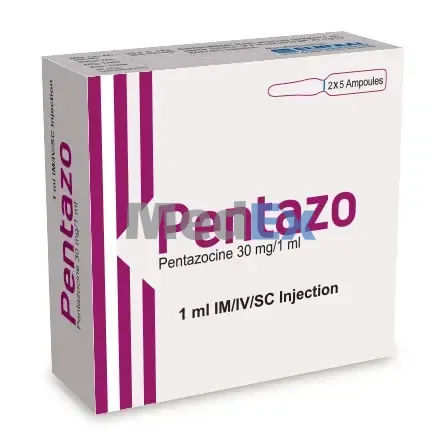
📖 Official Clinical Monograph
DGDA Approved Prescribing GuidelinesPentazo is indicated for the relief of moderate to severe pain. It may also be used for preoperative or preanesthetic medication and as a supplement to surgical anesthesia.
Usual Adult Dose for Anesthesia & Moderate to severe pain
: 30 mg by IV, IM or SC. This may be repeated every 3 to 4 hours. Doses in excess of 30 mg intravenously or 60 mg intramuscularly or subcutaneously are not recommended. Maximum daily dose: 360 mg
Usual Adult Dose for Labor Pain
: 30 mg intramuscularly once has been the most common dose administered. An intravenous 20 mg dose has given adequate pain relief to some patients in labor when contractions become regular. This dose may be given two or three times at two or three hour intervals as needed.
Dose for Children >1 year old
: 0.5 mg/kg by intramuscular injection.
Pentazocine should not be administered to patients who are hypersensitive to it.
The most commonly occurring reactions are: nausea, dizziness or light-headedness, vomiting, euphoria. Several dermatologic, respiratory, cardiovascular, gastrointestinal side effects may also happen.
Pentazo should be administered only with caution and in low dosage to patients with respiratory depression. Although laboratory tests have not indicated that Pentazo causes or increases renal or hepatic impairment, the drug should be administered with caution to patients with such impairment. Pentazo is a mild narcotic antagonist. Some patients previously given narcotics, including methadone for the daily treatment of narcotic dependence, have experienced withdrawal symptoms after receiving Pentazo. Caution should be used when Pentazo is administered to patients prone to seizures; seizures have occurred in a few such patients in association with the use of Pentazo. Concomitant use of CNS depressants with parenteral Pentazo may produce additive CNS depression.
Pentazocine is an opioid (narcotic) analgesic. It works in the brain and nervous system to decrease pain. It produces analgesia by an agonistic effect at the kappa receptor. It weakly antagonizes effects of opiates at μ-receptor.
Onset
: IM/subcutaneous is 15 to 20 min; IV is 2 to 3 min.
Distribution
: Moderate protein binding.
Metabolism
: Hepatic.
Elimination:
Excreted primarily by the kidney. Half-life is 2 to 3 h.